Spanish Immersion
Spanish Immersion Kindergarten in Woodbury: What Parents Should Know
A clear parent guide to Spanish immersion Kindergarten in Woodbury, MN. How the 90/10 model works, what to look for, and how to choose the right fit for your child.
Melissa Thaemert
School Director
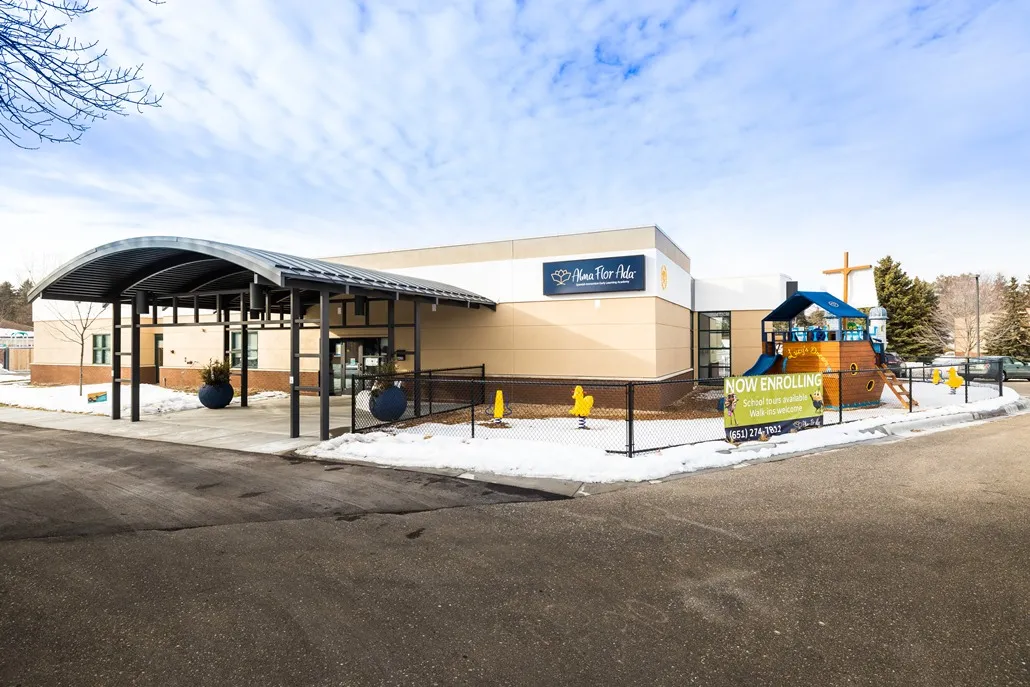
Choosing a kindergarten is one of the bigger decisions a Woodbury family makes, and Spanish immersion Kindergarten adds a wonderful layer to that choice. If your child will be five this year, you may be weighing a bilingual start against the traditional path, and wondering what immersion actually looks like once it becomes a full kindergarten grade. This guide walks through the questions parents ask us most, so you can decide with confidence rather than guesswork.
At Alma Flor Ada in Woodbury, Kindergarten is taught entirely through our 90/10 Spanish immersion model by native Spanish-speaking teachers. It is a true kindergarten grade with real academic standards, not a daycare add-on. Here is what that means for your child, and how to tell whether it is the right fit.
What is a Spanish immersion kindergarten?
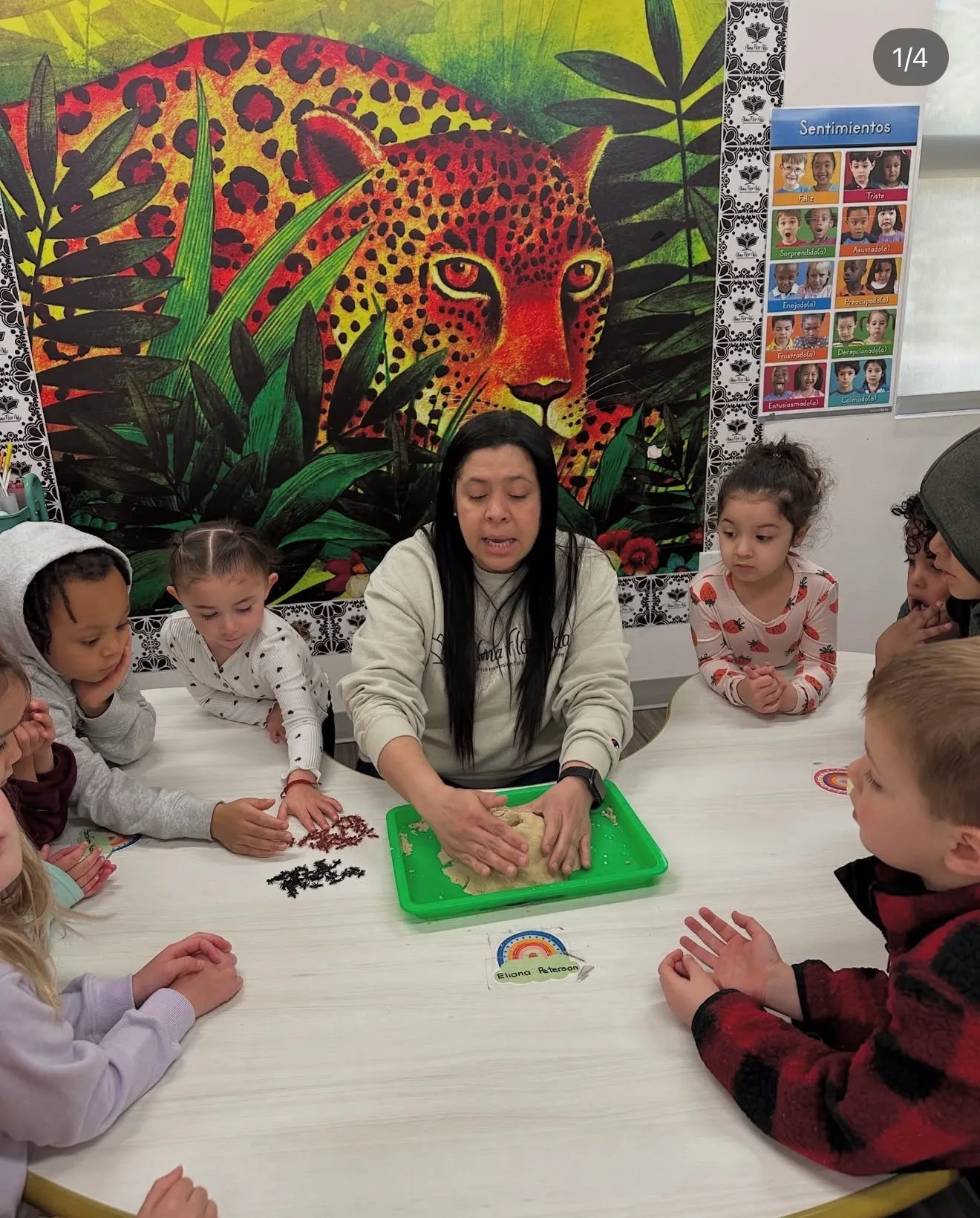
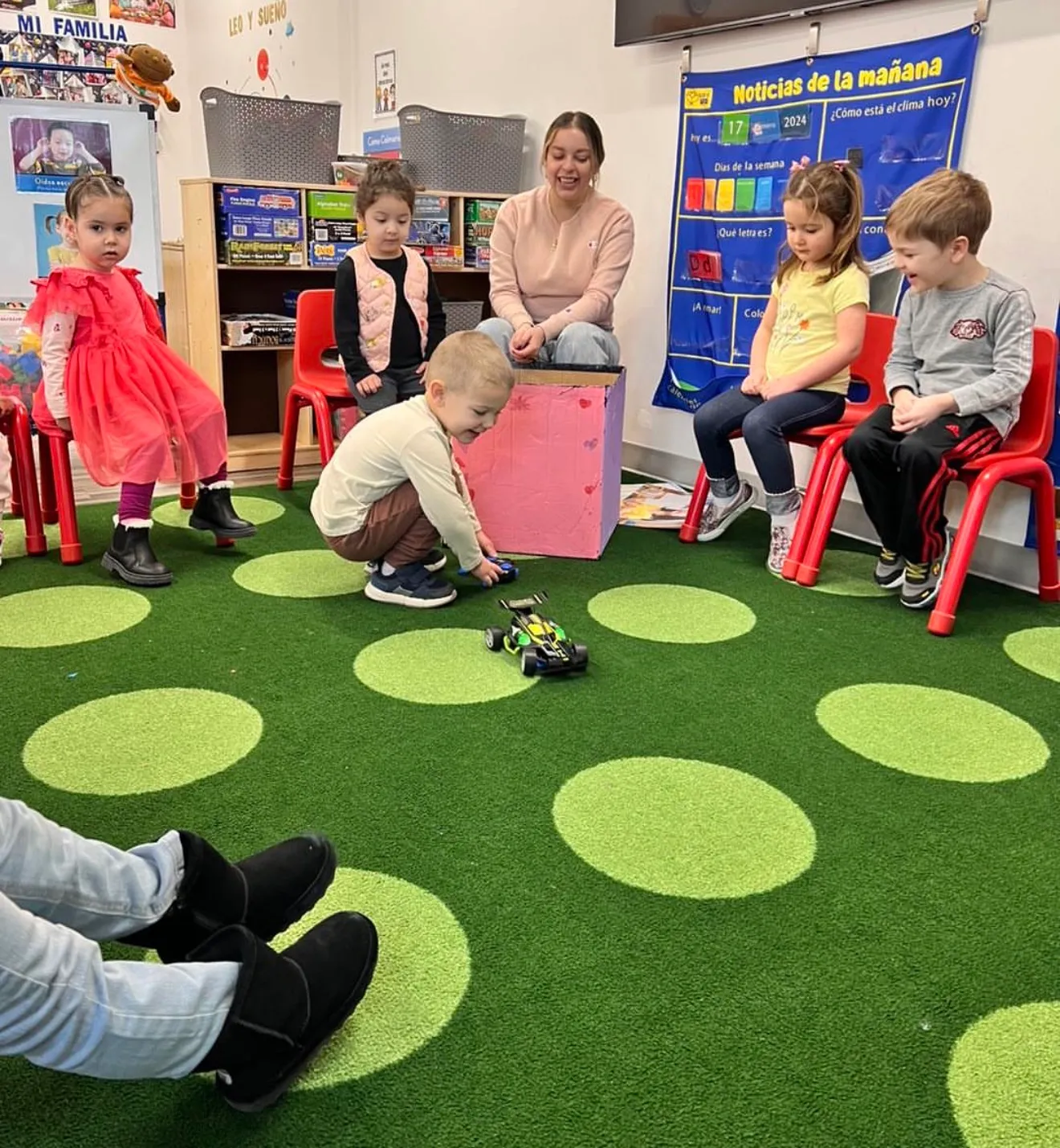
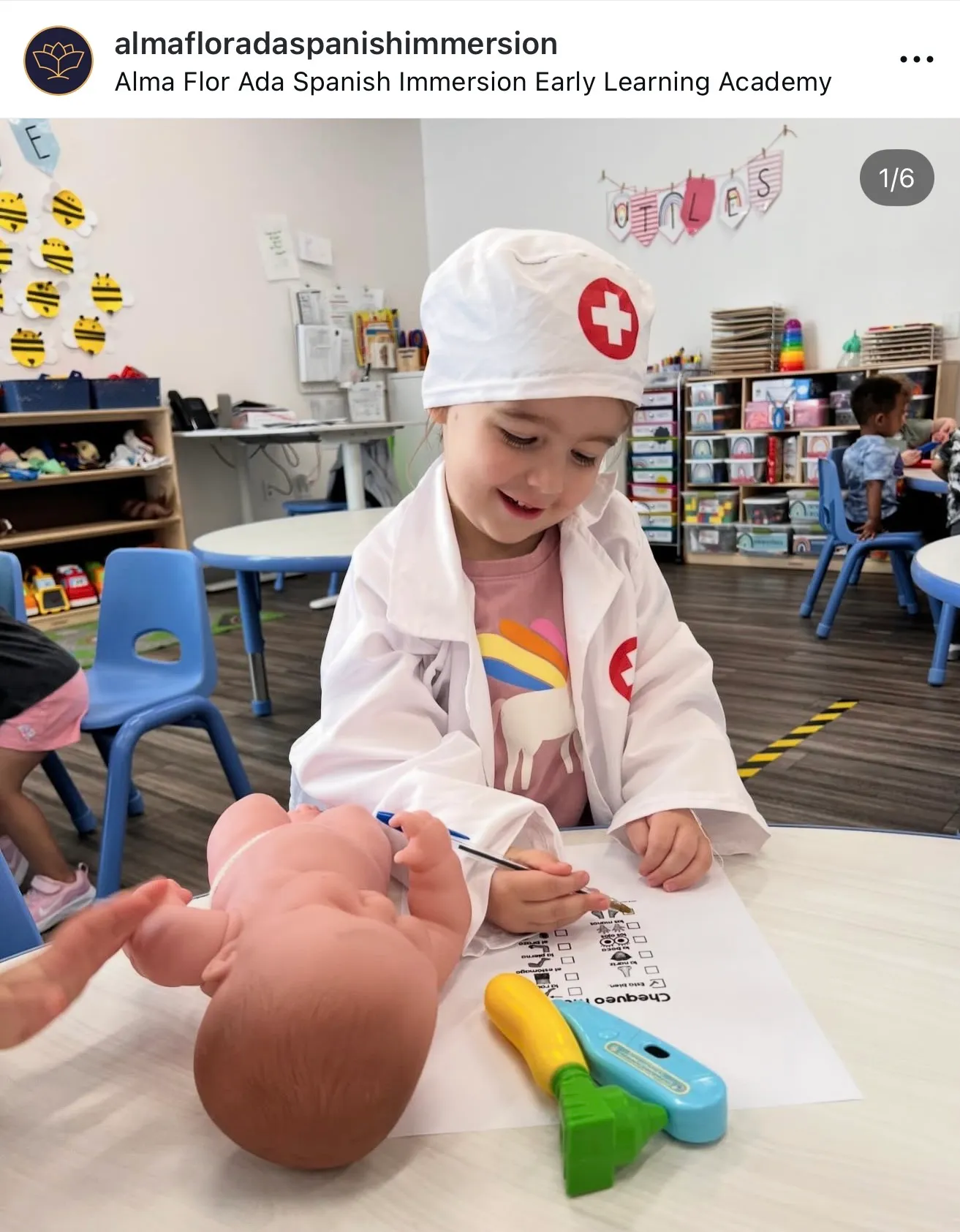
A Spanish immersion kindergarten teaches the regular kindergarten curriculum, math, literacy, science, and social skills, mostly in Spanish rather than English. Children learn the language by using it all day, the same natural way they learned their first language, instead of studying it as a separate subject.
The point is not to slow down academics. It is to deliver the same strong kindergarten foundation while your child quietly becomes bilingual. Letters, numbers, stories, songs, and friendships all happen in Spanish, so the language becomes a tool your child lives in rather than a worksheet they complete.
How does the 90/10 model work in kindergarten?
In a 90/10 model, roughly 90 percent of the day is in Spanish and about 10 percent is in English, with English support growing gradually in the later grades. In kindergarten, that heavy Spanish exposure is exactly what young learners need, because age five sits inside one of the most receptive windows a child will ever have for picking up a new language.
Teachers make the language understandable through gestures, pictures, routines, and play, a method often called comprehensible input. Your child is never lost. They are guided, repeatedly and warmly, until the words click. If you want a deeper look at the method, our explainer on how the 90/10 Spanish immersion model works breaks it down step by step.
Will my child keep up academically?
Yes, and the research here is genuinely reassuring. Children in immersion programs perform as well as or better than their peers in core subjects, and they pick up a second language on top of that.
One of the largest studies on this comes from RAND, which followed nearly 28,000 students who were randomly assigned to immersion or traditional classrooms. The immersion students read better in English, pulling ahead by the equivalent of about seven months of learning by the end of fifth grade and nine months by the end of eighth grade, with no loss in math or science. You can read the RAND research summary for the full picture.
The takeaway for a parent standing at the kindergarten door is simple. A bilingual brain is a flexible brain. Wrestling with two languages strengthens focus, memory, and problem-solving, and those gains show up across the whole curriculum, not just in language class.
Do families need to speak Spanish at home?
No, and this surprises a lot of parents. Most of the families who choose immersion at Alma Flor Ada do not speak Spanish themselves. The school day does the heavy lifting through native-speaking teachers and constant, natural exposure.
What helps most at home is not fluency. It is warmth and curiosity. Ask your child to teach you a word they learned. Count to ten together at bath time. Play a Spanish song in the car. These small, low-pressure moments tell your child that their new language matters, and they keep the door open without any quizzing. If your child has not finished a full preschool sequence with us, that is fine too, though families who start in our toddler and Kindergarten Readiness levels often see their children settle in quickly.
What to look for in a Woodbury immersion kindergarten
Not every program labeled immersion is built the same way. As you compare options, a few markers separate a strong bilingual kindergarten from a casual one.
- Native Spanish-speaking teachers. Authentic pronunciation, vocabulary, and culture come from native speakers, and children absorb all of it.
- A real kindergarten curriculum. Look for genuine kindergarten standards in literacy, math, and science, not just Spanish songs layered onto play.
- A clear immersion model. Ask how much of the day is in Spanish and how that shifts over time. A defined 90/10 structure signals an intentional program.
- Full days that support working families. Consistent, full-day immersion gives language time to take root, and extended care helps real-life schedules.
- Warmth and small-group attention. Visit, watch the room, and notice whether children look comfortable, engaged, and known by their teachers.
The best way to judge these is in person. When you tour, watch how children respond to their teachers and whether the Spanish feels alive and everyday rather than staged.
How AFA’s Kindergarten fits the bigger journey
For families already with us, Kindergarten is the natural next step after our Kindergarten Readiness levels (104 and 105). Those levels prepare four- and five-year-olds for elementary school, and the new Kindergarten is the actual kindergarten grade that follows, keeping your child in the same nurturing, bilingual environment instead of restarting somewhere new.
For families joining us at age five, it is a chance to give your child a bilingual foundation right at the moment their brain is most ready for it. Either way, the goal is the same. We want children who walk into first grade confident, capable, and genuinely bilingual. You can see the full program details on our Spanish immersion Kindergarten page, and learn what current enrollment looks like in our now enrolling Kindergarten update.
Come see it for yourself
The hardest part of choosing a kindergarten is picturing your child there. A short visit usually settles it. You will hear the Spanish in the hallways, meet our native-speaking teachers, and watch how naturally five-year-olds rise to a bilingual day.
If a Spanish immersion Kindergarten in Woodbury sounds right for your family, we would love to show you around. Schedule a tour at our Woodbury academy, and we will help you find the path that fits your child best.
Frequently Asked Questions
What age does a child start Spanish immersion Kindergarten in Woodbury?
Will my child fall behind in English by learning in Spanish?
Do I need to speak Spanish to enroll my child in immersion Kindergarten?
How much is Spanish immersion Kindergarten in Woodbury, and what is included?
About the author
Melissa Thaemert, School Director
Melissa Thaemert is the School Director at Alma Flor Ada Spanish Immersion Early Learning Academy in Woodbury, Minnesota. She is a Minnesota educator with 24 years of experience as an elementary teacher, instructional coach, and administrator, and has served as an elementary administrator for the past nine years. She holds advanced degrees in educational leadership, professional studies, adult learning, and elementary education.
Curious about Spanish immersion for your child?
Schedule a tour of our Woodbury academy. We would love to show you around and answer your questions.