Spanish Immersion
What Are STEM Programs for Little Learners?
STEM for young children is about curiosity, not gadgets. Here is what early STEM really looks like and how it pairs with Spanish immersion.

Lucilla Davila
Founder
Why Preschool STEM Programs Matter for Your Child’s Future
Preschool STEM programs introduce young children (ages 3-5) to Science, Technology, Engineering, and Math through play-based, hands-on activities that build critical thinking, problem-solving skills, and curiosity. These programs prepare children for kindergarten and beyond by fostering foundational skills in a developmentally appropriate way.
What to look for in a quality preschool STEM program:
- Play-based learning - Activities that feel like fun, not formal instruction
- Inquiry-driven approach - Children ask questions and explore to find answers
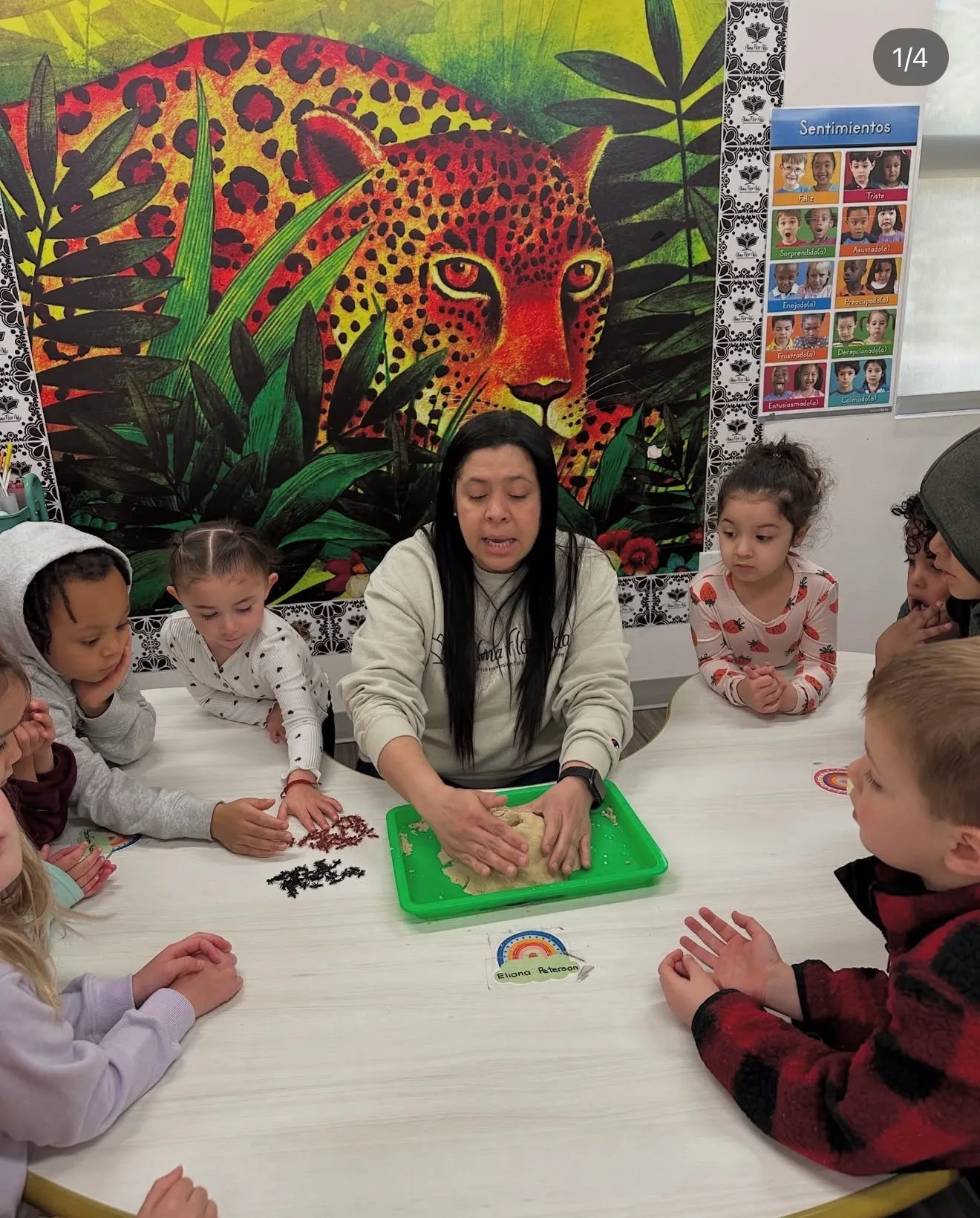
- Hands-on exploration - Building, sorting, experimenting with real materials
- Integration across subjects - STEM concepts woven into daily routines, not isolated lessons
- Culturally responsive - Activities that reflect children’s backgrounds and experiences
Young children are natural scientists and engineers. They wonder why things happen, how machines work, and what they can create with simple materials. This innate curiosity is the foundation for all STEM learning.
Research shows that early math skills are a powerful predictor of overall school achievement. A study of the Problem Solvers curriculum found that three-year-olds in treatment classrooms scored significantly higher in math skills than their peers in control sites. But preschool STEM programs do more than teach numbers, they develop observation skills, encourage perseverance when problems are tricky, and help children work together to solve challenges.
The best preschool STEM programs integrate all five disciplines, Science, Technology, Engineering, Arts, and Math, into what’s called STEAM education. The arts component isn’t just an add-on. It’s essential for fostering creativity, design thinking, and the innovation mindset that children will need throughout their lives.
I’m Lucilla Davila, an educational leader with nearly three decades of experience designing instructional frameworks across diverse learning models, including STEM-focused programs for early learners. Throughout my career as a classroom educator, principal, and district leader, I’ve seen how well-designed preschool STEM programs build both academic skills and a lasting love for inquiry and findy.
The “Why”: Unpacking the Benefits of Early STEM Education
At Alma Flor Ada Spanish Immersion Early Learning Academy, we understand that early exposure to preschool STEM programs offers a cascade of benefits that ripple through a child’s entire developmental journey. These programs aren’t just about teaching science facts or math equations; they are about nurturing a child’s innate curiosity and equipping them with essential skills for life.
Cognitive and Academic Growth
Preschool STEM programs are powerful catalysts for cognitive and academic growth. They engage young minds in ways that traditional rote learning often cannot, fostering skills that are critical for school readiness and future success.
- Problem-solving: From figuring out how to make a tower stand taller to understanding why a boat floats, children in STEM programs are constantly presented with challenges that require them to think critically and devise solutions. This repeated practice builds their problem-solving muscles.
- Memory Development: Hands-on experiments and inquiry-based activities create memorable learning experiences. When children actively participate in finding how things work, they are more likely to retain information and connect it to previous knowledge.
- Early Math and Literacy: While STEM might sound like it’s all about numbers and experiments, it naturally integrates early math and literacy skills. Counting objects, sorting by attributes, measuring ingredients, and discussing observations all strengthen mathematical understanding and language development. Research shows that early math skills are a powerful predictor of overall school achievement. A study evaluating a preschool STEM curriculum found that three-year-old students in treatment groups scored significantly higher in math skills than their peers in control groups. Moreover, teachers who implemented the curriculum with greater fidelity saw higher levels of mathematics understanding in their students. This highlights the importance of well-implemented preschool STEM programs.
- Foundational Science Concepts: Children learn about cause and effect, properties of materials, life cycles, and basic physics through exploration. These foundational concepts prepare them for more complex scientific inquiry in elementary school.
- Increased School Readiness: By developing critical thinking, problem-solving, and communication skills, children from high-quality preschool STEM programs are better prepared for the academic and social demands of kindergarten and beyond. They enter school with a confident “I can figure this out” attitude.
Social and Emotional Development
Beyond academics, preschool STEM programs are invaluable for fostering crucial social and emotional skills. These aren’t isolated lessons but rather integrated aspects of collaborative exploration.
- Teamwork and Collaboration: Many STEM activities are best done in groups, requiring children to work together, share materials, and contribute ideas. This teaches them the value of cooperation and shared goals.
- Communication: As children experiment, they naturally discuss their observations, predictions, and findings with peers and educators. This practice refines their verbal expression and listening skills.
- Perseverance and Resilience: Not every experiment works on the first try! STEM activities often involve trial and error, teaching children to persist through challenges, learn from mistakes, and try again. This builds resilience and a growth mindset.
- Confidence Building: Successfully solving a problem or completing a project, no matter how small, boosts a child’s self-esteem and confidence in their abilities.
- Managing Frustration: When things don’t go as planned, children learn to manage their frustration, seek help, and adapt their approach. These are vital emotional regulation skills.
- Sharing Ideas: Children learn to articulate their ideas respectfully and consider the perspectives of others, fostering an environment of mutual learning and exploration.
We believe that fostering a child’s holistic development is paramount. You can read more about our comprehensive approach to nurturing every aspect of a child’s growth on our About Us page.
What Do High-Quality Preschool STEM Programs Look Like?
The heart of effective preschool STEM programs lies in their approach. They don’t look like traditional classrooms with lectures and worksheets. Instead, they are vibrant, hands-on environments where children are empowered to explore and find. We believe a quality program encourages children to become active participants in their learning journey.
The Core Components: Play and Inquiry
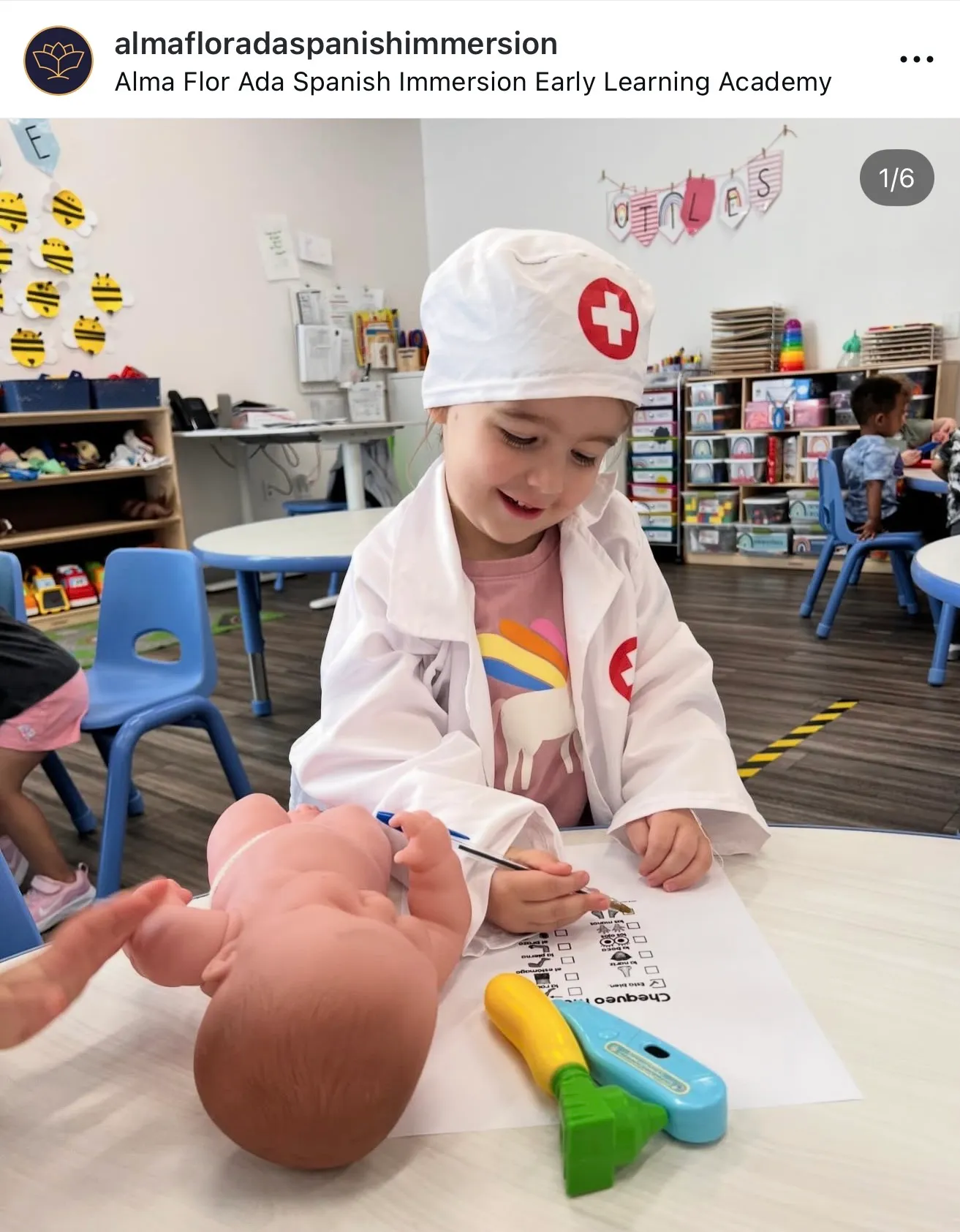
At its best, preschool STEM is indistinguishable from play. This isn’t just about fun; it’s about deep, meaningful learning that aligns with how young children naturally engage with the world.
- Child-led Exploration: We provide materials and ideas, but children often take the lead, pursuing their own questions and interests. This autonomy fuels their engagement and intrinsic motivation.
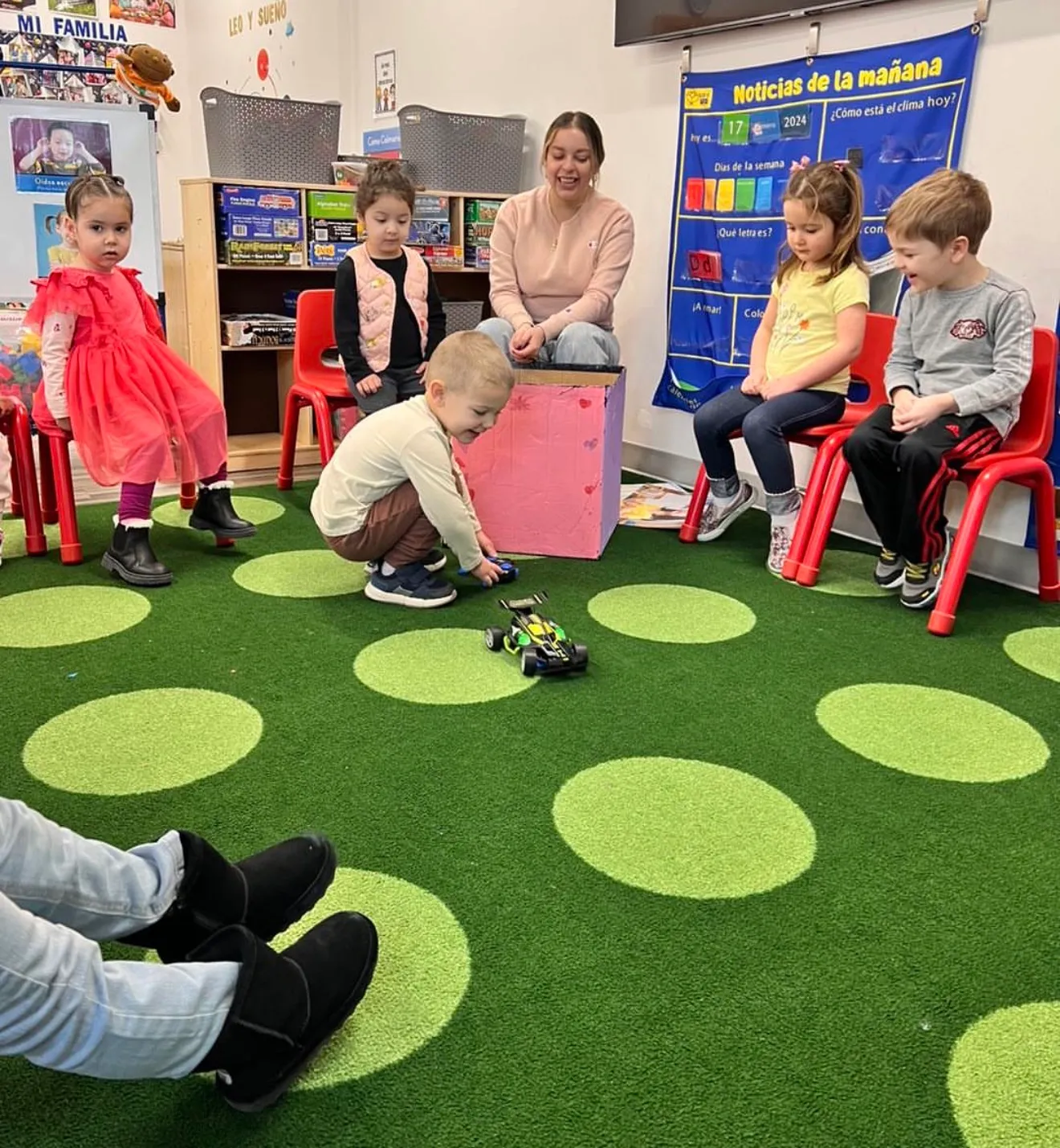
- Learning Through Play: Whether building with blocks, experimenting with water, or creating art, play is the vehicle for learning. It allows children to safely test hypotheses, make connections, and develop understanding without fear of failure.
- Asking Open-ended Questions: Instead of providing answers, our educators ask questions like, “What do you think will happen next?” or “How could we make this stronger?” These questions spark critical thinking and encourage children to articulate their reasoning.
- Experimentation and Observation Skills: Children learn to observe closely, notice details, and record what they see (through drawing or verbal descriptions). They then use these observations to form new ideas or refine their experiments.
- Making Predictions: Before an activity, children are encouraged to predict outcomes. “Do you think this will sink or float?” This practice strengthens their logical reasoning and understanding of cause and effect.
As one resource highlights, “STEM learning starts early in life. The moment children begin to physically interact with their environment, they begin processing how things work, laying the foundation for learning core elementary education concepts.” This underscores that play is not just preparation for learning; it is learning for preschoolers.
Integrating S-T-E-A-M: A Holistic Approach
While STEM stands for Science, Technology, Engineering, and Math, we accept the “A” for Arts, recognizing that creativity and design are integral to innovation. This holistic approach, known as STEAM, allows for a richer and more interconnected learning experience.
- Science (S): Children explore the natural world through observation and experimentation. This could involve observing changes in plants after watering, exploring how shadows are formed by the sun, or finding what objects are attracted to magnets.
- Technology (T): For preschoolers, technology isn’t just about screens. It involves using simple tools to solve problems, like a magnifying glass to observe insects, or even engaging with basic coding concepts through games that teach algorithms and sequencing.
- Engineering (E): This is all about design and building. Children engage in engineering when they build towers with blocks, construct bridges for toy cars, or design a protective container for an egg drop challenge. They learn about structure, balance, and problem-solving.
- Arts (A): The arts infuse creativity into every aspect of STEM. Children might draw blueprints for their engineering projects, use different colors to represent scientific observations, or create sculptures from recycled materials. The arts encourage imaginative thinking and diverse forms of expression.
- Math (M): Math is woven throughout all activities. Children count, sort, measure, identify shapes, and recognize patterns as they play and explore. For example, when building, they might count blocks, compare lengths, or sort shapes.
This integrated approach ensures that learning is meaningful and connected. Our Pre-K curriculum at Alma Flor Ada Spanish Immersion Early Learning Academy is designed with this holistic, inquiry-based approach in mind. You can explore our Pre-K curriculum to see how we bring these concepts to life.
The Importance of Culturally Responsive Preschool STEM Programs
For preschool STEM programs to be truly effective, they must be culturally responsive. This means acknowledging and valuing the diverse backgrounds, languages, and experiences of all children and their families.
- Family Engagement: We actively involve families in the learning process, recognizing that they are a child’s first and most important teachers. This includes sharing activities that can be done at home and inviting families to participate in school events.
- Celebrating Diversity: Culturally responsive programs celebrate the unique identities of each child. This can involve incorporating stories, songs, and materials from different cultures into STEM activities, making learning relevant and engaging for everyone.
- Multi-generational Learning: Creating opportunities for children to learn alongside family members, such as during family STEM days, strengthens bonds and reinforces the idea that learning is a lifelong, shared experience.
- Connecting STEM to Culture: We look for ways to connect STEM concepts to children’s cultural heritage. For example, exploring traditional building techniques, farming practices, or artistic patterns can introduce engineering, science, and math in a culturally meaningful context.
- Using Familiar Stories and Materials: Integrating familiar stories, traditional games, or everyday objects from children’s homes into STEM activities can make abstract concepts more accessible and relatable.
Our Spanish immersion model at Alma Flor Ada naturally lends itself to a culturally responsive approach. By learning in Spanish, children connect with a rich cultural mix while simultaneously developing STEM skills. We believe this dual focus enriches their entire educational experience. You can learn more about our 90/10 immersion model and how it supports this holistic development.
Bringing STEM to Life: Engaging Activities for Little Innovators
The beauty of preschool STEM programs is that they don’t require elaborate equipment or complex setups. Many of the most engaging activities can be done with simple, everyday materials, fostering creativity and a sense of wonder. The goal is to provide opportunities for hands-on exploration and findy.
Comparing STEM Activities for Preschoolers
| Discipline | Activity Example 1 | Activity Example 2 | Materials Needed |
|---|---|---|---|
| Science | Sink or Float? | Nature Scavenger Hunt | Tub of water, various objects, bag, magnifying glass |
| Technology | Beginner Coding Game | Stop-Motion Animation | Printable algorithm cards, tablet/smartphone |
| Engineering | Marshmallow & Toothpick Towers | Recycled Material Creations | Marshmallows, toothpicks, cardboard boxes, tape |
| Arts | Color Mixing | Shadow Puppet Theater | Food coloring, water, flashlight, cardboard |
| Math | Shape Sorting | Measuring with Blocks | Shape blocks, various objects, uniform blocks |
These activities illustrate how seamlessly STEM concepts can be integrated into play. For instance, the “Problem Solvers” curriculum offers a free, comprehensive resource for educators, packed with play-based math, science, and engineering activities for children aged 30 to 48 months. It includes songs, book suggestions, and family resources to extend learning beyond the classroom. You can download the free Problem Solvers preschool STEM curriculum for more ideas.
Empowering the Next Generation: A Guide for Parents and Educators
Both at home and in the classroom, parents and educators play a pivotal role in fostering a love for STEM in young children. It’s about creating an environment where curiosity is celebrated, questions are encouraged, and every “mistake” is viewed as a learning opportunity.
Fostering a Love for STEM at Home and in the Classroom
- Ask “What If” Questions: Instead of just observing, prompt children to think about possibilities. “What if we used a different material?” or “What if it rained every day?” This encourages imaginative problem-solving.
- Provide Simple, Open-Ended Toys: Blocks, LEGOs, playdough, sand, and water are fantastic STEM tools. They allow children to build, create, and experiment without predefined rules, sparking their engineering and design skills.
- Explore the Outdoors: Nature is the ultimate STEM classroom. A nature scavenger hunt encourages observation (science), collecting items for sorting practices math, and building a fort in the woods involves engineering.
- Read STEM-Themed Books: There are many wonderful children’s books that introduce scientific concepts, famous inventors, or mathematical ideas in an engaging way.
- Model Curiosity: Show your own interest in how things work. Ask questions, try new things, and let children see you learning. Your enthusiasm is contagious.
One source wisely notes that “young children are natural scientists and engineers! They are curious about how the world around them works and why things do the things they do.” Our job is to nurture that inherent drive.
Overcoming Common Challenges in Preschool STEM Programs
Implementing high-quality preschool STEM programs can sometimes present challenges, but with creativity and support, these can be overcome.
- Resource Constraints: Many believe STEM requires expensive kits, but this isn’t true. We emphasize using household items and readily available materials. Cardboard boxes, recycled containers, kitchen ingredients, and natural elements are perfect for engaging activities. Free curricula, like the “Problem Solvers” program mentioned earlier, also provide excellent resources without a financial burden.
- Lack of Teacher Confidence: Some educators might feel less confident teaching STEM if it’s outside their comfort zone. This is where professional development and training are crucial. Research from the “Seeds of STEM” curriculum showed that teachers who taught the entire curriculum increased their knowledge, practice, and self-efficacy regarding teaching STEM in preschool classrooms. Similarly, programs like NYSCI’s Pre-K STEM Enrichment offer professional learning and science coaching, leading to teachers reporting a strong increase in confidence and competence.
- Building a Support Network: Connecting with other educators, participating in workshops, and accessing online resources can provide ongoing support and new ideas. Organizations dedicated to early childhood STEM often provide valuable training and communities for sharing best practices.
Frequently Asked Questions
What is the difference between STEM and STEAM?
At what age can my child start STEM activities?
Do we need expensive toys for STEM learning?
About the author
Lucilla Davila, Founder
Lucilla Davila is the founder of Alma Flor Ada Spanish Immersion Early Learning Academy. She built AFA to create the kind of nurturing, joyful, culturally rooted Spanish immersion environment she searched for as a parent and could not find. She leads the academy's vision of raising bilingual, kindhearted, kindergarten-ready children in Woodbury.
Curious about Spanish immersion for your child?
Schedule a tour of our Woodbury academy. We would love to show you around and answer your questions.