Spanish Immersion
Why Native Spanish-Speaking Teachers Make All the Difference
Native Spanish-speaking preschool teachers shape how your child hears, speaks, and feels a language. Here is what that means for families in Woodbury.
Juliana Capdevila
Parent Engagement Manager & Assistant Director
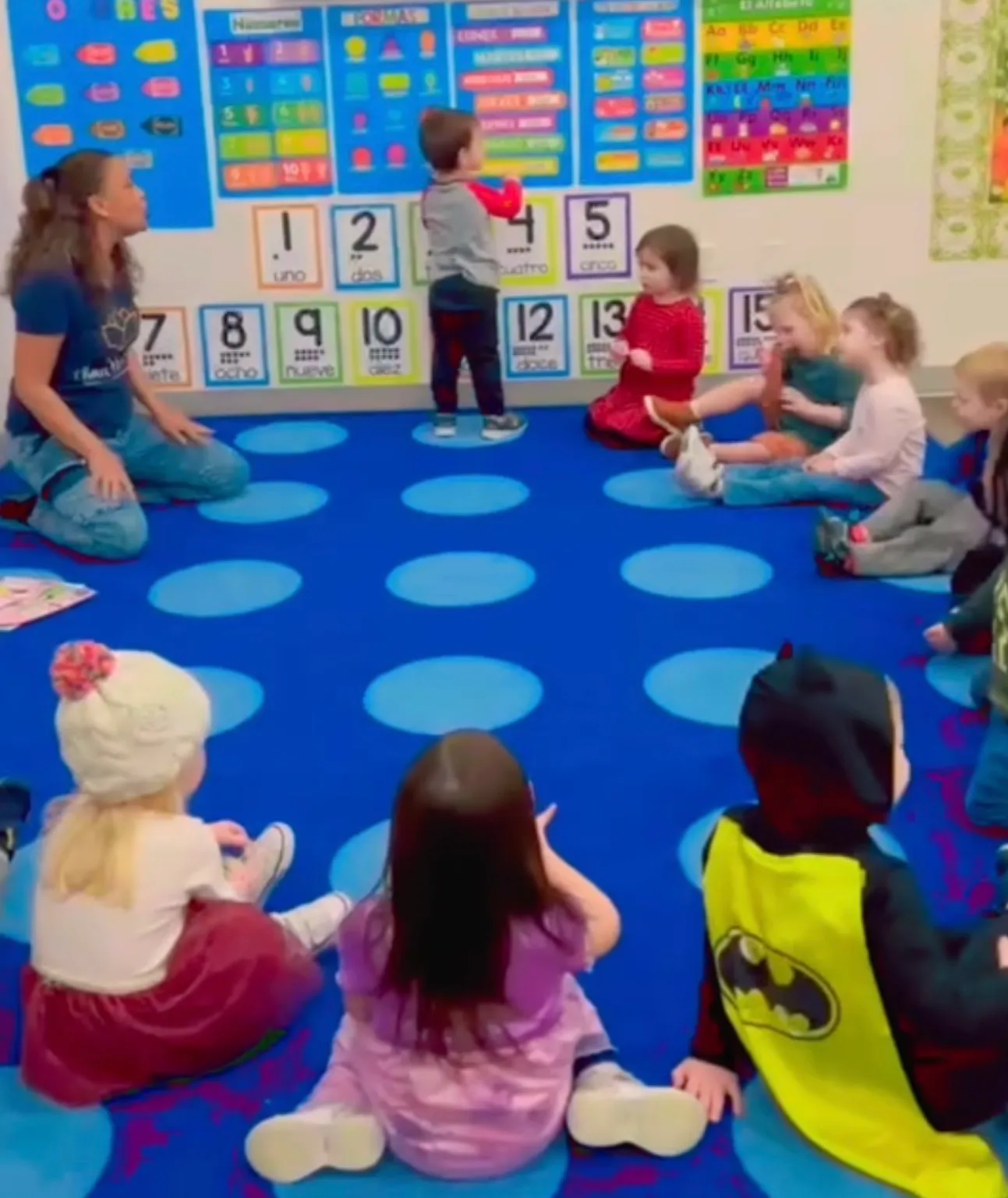
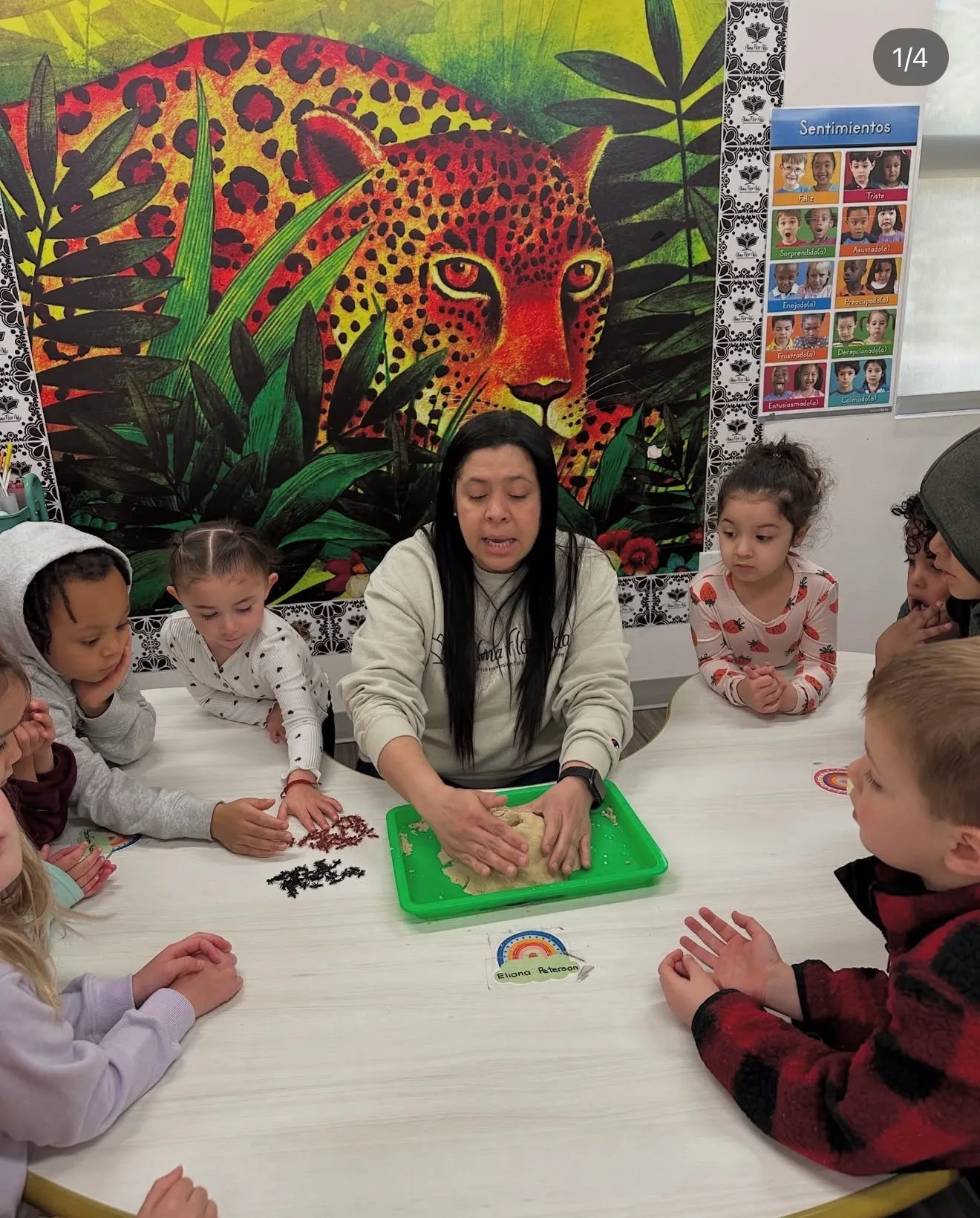
When families tour our academy, one question comes up more than almost any other: does it really matter that the teachers are native Spanish speakers? It is a fair thing to ask. The honest answer is that native Spanish-speaking preschool teachers change what your child actually absorbs, not just what gets taught. In a full immersion classroom, the teacher is not delivering a Spanish lesson. The teacher is the language environment your child lives inside all day.
At Alma Flor Ada Spanish Immersion Early Learning Academy, every teacher is a native Spanish speaker. Below is why that decision sits at the center of how we built the school, and what it means for your child specifically.
What does a native Spanish-speaking teacher actually give your child?
Three things a textbook cannot: authentic sound, unplanned language, and living culture.
Authentic sound means your child hears Spanish as it is truly spoken, with its natural rhythm, speed, and music. Unplanned language means the hundreds of small phrases that never appear in a lesson plan, the comforting words when someone scrapes a knee, the aside during snack, the joke between teachers. Living culture means the songs, sayings, and traditions a person carries because they grew up in them.
Children do not learn a language mainly from instruction. They learn it from immersion in real, meaningful talk. That is the entire premise of our 90/10 immersion model, and it only works if the Spanish surrounding your child is genuinely native.
Why does early exposure to native sound matter so much?
Because the ability to hear the fine distinctions in a new language is strongest in early childhood and narrows over time.
Infants begin life able to distinguish the sound contrasts of every language on earth. Research from the University of Washington’s Institute for Learning and Brain Sciences describes how, over the first year, that broad ability narrows as the brain tunes itself to the sounds it hears most, sharpening perception of the home language while foreign contrasts fade. Patricia Kuhl’s work on early phonetic learning documents this pattern in detail in a foundational paper in PNAS.
The practical takeaway for parents is encouraging. Young children are still remarkably open. When a toddler or preschooler spends the day hearing a native speaker, they are not just memorizing words. They are calibrating their ear to Spanish while that calibration still comes easily.
This is why pronunciation comes free at this age
Adults who learn Spanish later usually work hard at pronunciation and still carry an accent. Children who grow up hearing native speakers daily tend to simply sound right, without effort or drilling. They are copying what they hear, and what they hear is the real thing.
Why a real person matters more than any app
Here is the finding that most surprises parents. Language learning at this age depends on human interaction, not just exposure to sound.
In a well known study published in PNAS, Kuhl and colleagues gave nine-month-old American infants twelve sessions of Mandarin. One group interacted with a live Mandarin speaker. Another group received the exact same language content through video or audio recordings. The infants who interacted with a real person learned the Mandarin sound contrasts. The groups who received identical content through a screen or speaker learned nothing measurable.
Same words. Same amount of exposure. Completely different result.
Language, at this age, travels through relationship. It moves through eye contact, shared attention, a teacher noticing what your child is reaching for and naming it in that exact moment. No recording can do that, and no app can either. A native-speaking teacher who knows and loves your child is the delivery system young language learning actually requires.
What “native speaker” means in our classrooms
Our teachers come from across Latin America, which means your child does not hear one flat version of Spanish. They hear variation, the way Spanish genuinely sounds across the Spanish-speaking world. Different accents, different words for the same everyday object, different songs from different childhoods.
That variety builds something valuable: a flexible ear. A child raised on one narrow accent can struggle to understand anyone else. A child who grows up hearing several understands Spanish more broadly, and takes that flexibility with them.
Our teachers also bring credentials and early childhood experience alongside their language. You can meet the people behind the program on our leadership and faculty page. Native fluency is the starting requirement, not the only one.
Culture comes with the language
Language does not arrive as a neutral set of vocabulary. It arrives with the traditions attached to it. Our teachers bring the holidays they grew up celebrating, the rhymes their own grandparents sang, the foods and stories of home. Your child gets Spanish and the world it belongs to at the same time, which is a far richer inheritance than word lists.
Does this mean we need to speak Spanish at home?
No, and this is worth saying plainly. Most of our families speak only English at home, and their children still become genuinely fluent. That is precisely because the native-speaking environment lives at school, where your child spends the full day. Your job at home is warmth and encouragement, not instruction. We wrote more about that in do you need to speak Spanish at home.
If anything, families who do not speak Spanish benefit most from native teachers. The school is providing the entire language environment, so the quality of that environment matters enormously.
What to listen for when you tour a preschool
On any immersion tour, listen rather than just look. A few things tell you a great deal:
- Are the teachers speaking Spanish to each other, not only to the children? Real environments sound real between adults.
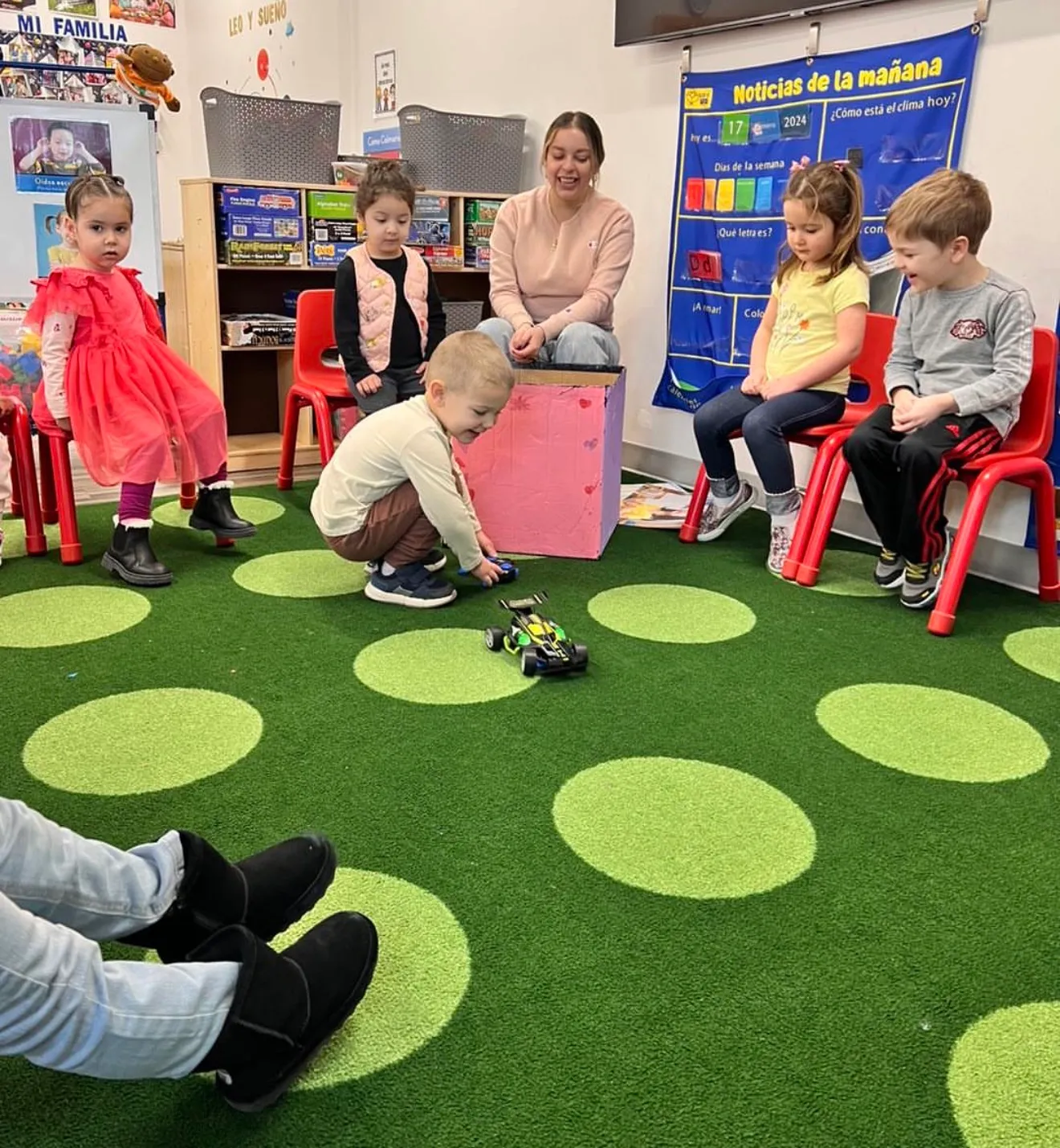
- Does Spanish continue during transitions, snack, and cleanup, or only during structured lessons?
- Do children respond in Spanish naturally, without being prompted to perform?
- Does the language sound warm and conversational rather than instructional?
You will know within a few minutes. An authentic immersion classroom sounds like a home in another country, not like a language class.
Come hear it for yourself
The easiest way to understand why this matters is to stand in a classroom and listen. We would love to show you around, introduce you to the teachers, and answer whatever is on your mind about immersion, readiness, or enrollment for children from 16 months through Kindergarten.
Schedule a tour at our Woodbury academy, or call us at 651-999-3952. We are always glad to talk.
Frequently Asked Questions
Are all of the teachers at Alma Flor Ada native Spanish speakers?
Will my child pick up an accent from one country in particular?
Can a fluent non-native teacher do the same job?
My child is shy and does not speak Spanish yet. Is that a problem?
About the author
Juliana Capdevila, Parent Engagement Manager & Assistant Director
Juliana Capdevila is the Parent Engagement Manager and Assistant Director at Alma Flor Ada Spanish Immersion Early Learning Academy. Originally from Buenos Aires, Argentina, she is a native Spanish speaker and has lived in Woodbury, Minnesota for 19 years with her husband and two daughters. She holds a Bachelor's degree in Marketing and brings experience in nonprofit work, family relocation support, and business management. Juliana works closely with AFA families every day, helping them understand the immersion program and supporting their children's bilingual journey.
Curious about Spanish immersion for your child?
Schedule a tour of our Woodbury academy. We would love to show you around and answer your questions.