Spanish Immersion
Spanish Immersion vs Traditional Preschool: How to Choose
Spanish immersion vs traditional preschool: what actually differs, what stays the same, and how Woodbury families decide which one fits their child best.
Juliana Capdevila
Parent Engagement Manager & Assistant Director
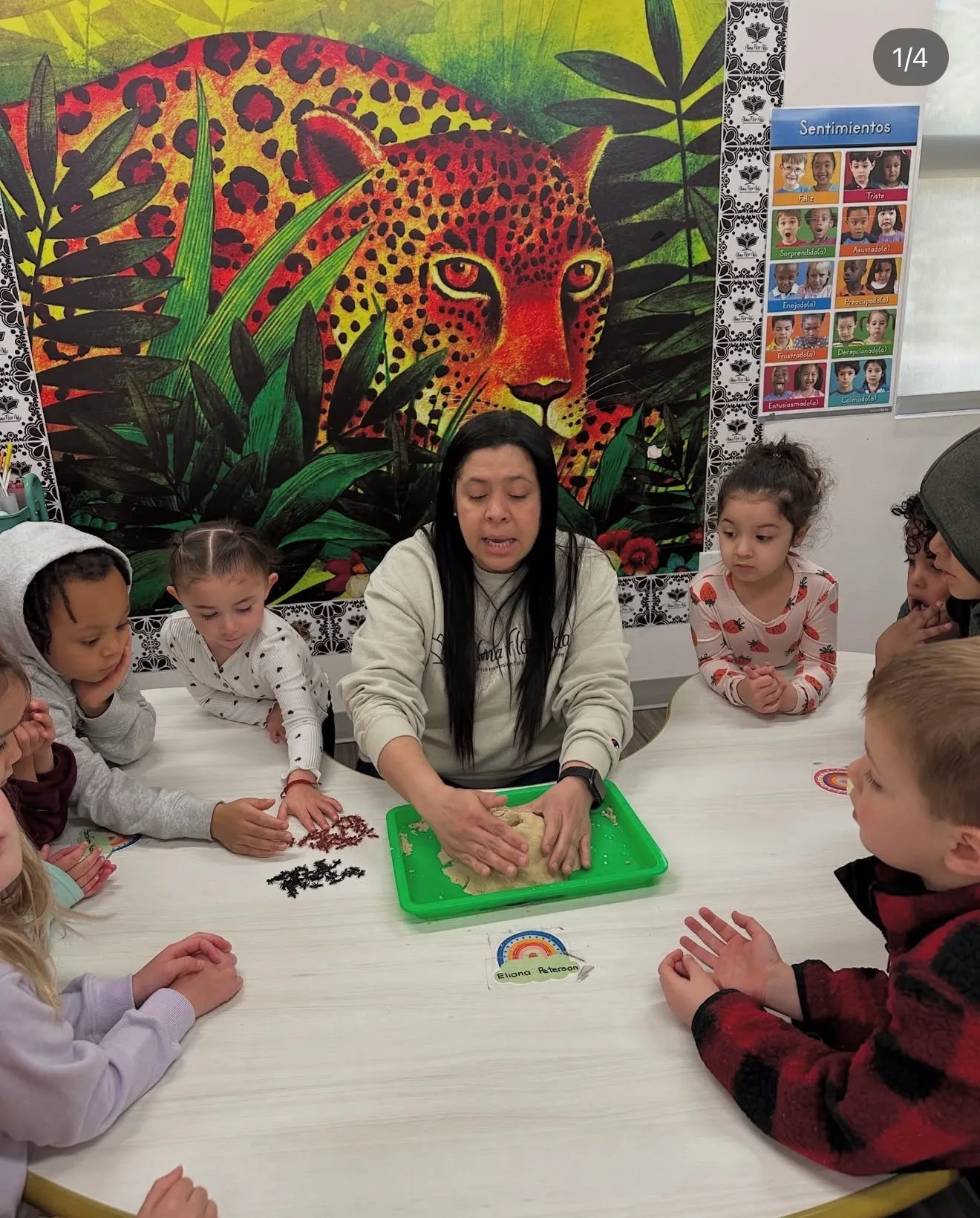
If you are weighing Spanish immersion vs traditional preschool, you are really asking two separate questions at once. The first is about quality: is this a warm, safe, well-run place where my child will thrive? The second is about language: what happens when the whole day is spoken in Spanish? Those questions get tangled together on a tour, and untangling them makes the decision much clearer.
Here is the honest comparison, including the parts families worry about most.
What is the actual difference between immersion and a traditional preschool?
The difference is the language the day is delivered in, not what the day contains.
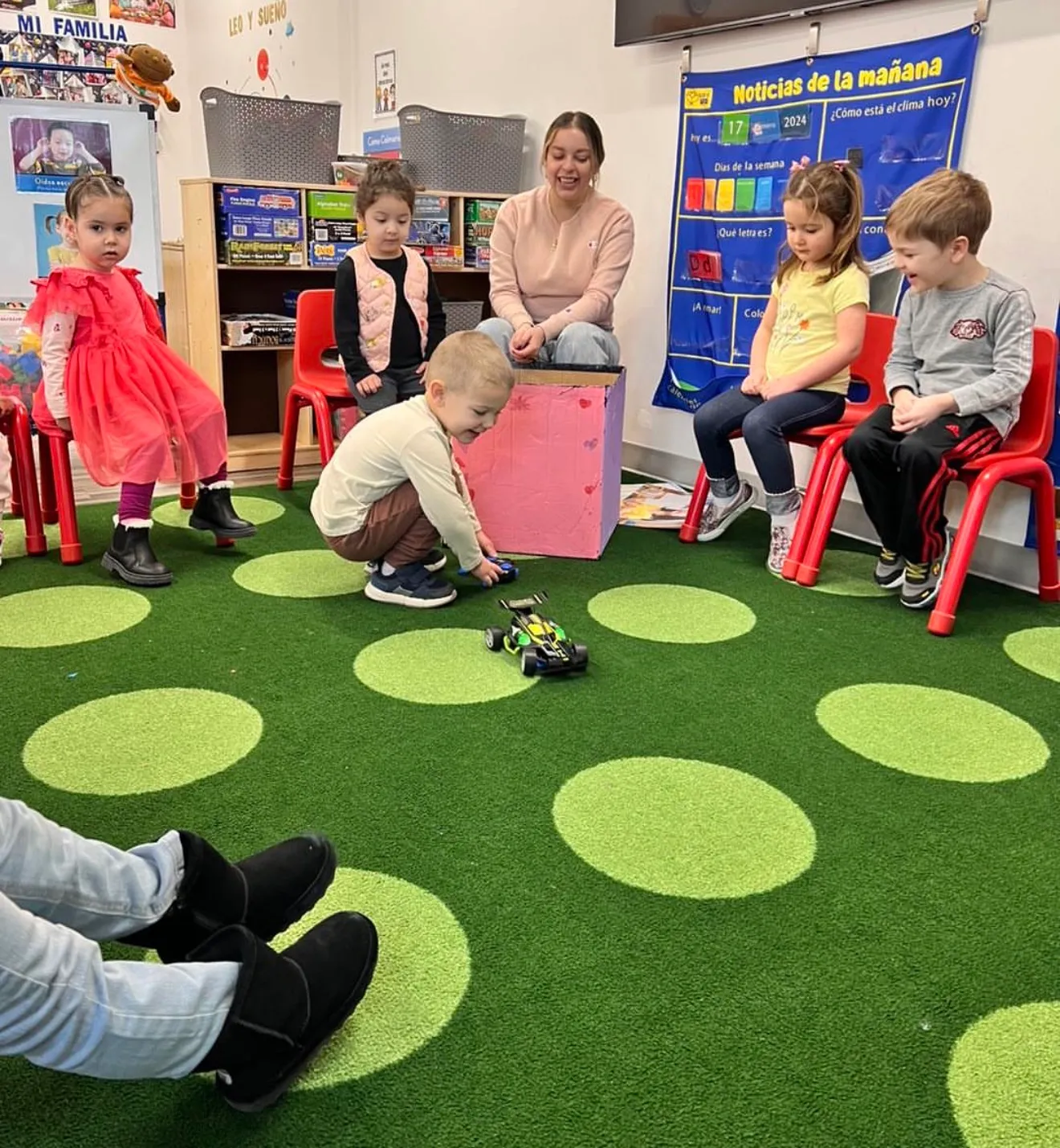
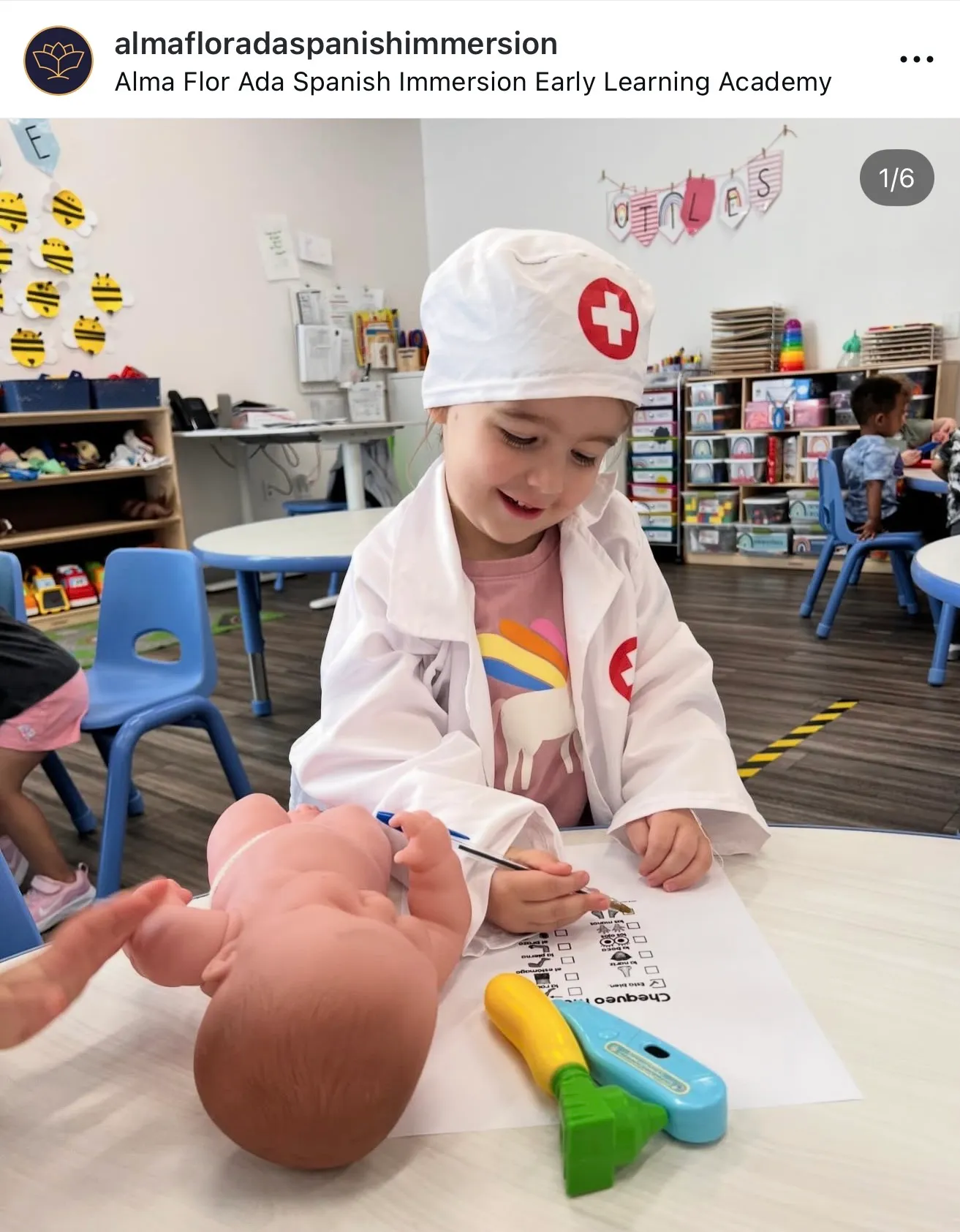
A strong traditional preschool and a strong immersion preschool are teaching the same things: early literacy, number sense, fine motor skills, cooperation, self regulation, curiosity. Circle time, snack, outdoor play, art, and rest all still happen. Children still count, sort, sing, build, and negotiate over who gets the blue cup.
In immersion, all of that arrives in Spanish. At our academy, teachers use our 90/10 immersion model, meaning roughly ninety percent of the day is in Spanish, with English introduced deliberately and gradually as children move up through the levels. Your child is not taking a Spanish class. Your child is living an ordinary preschool day that happens to unfold in another language.
That single shift changes how the language is learned. Instead of studying Spanish, children acquire it the same way they acquired English, by needing it to get through the day.
What stays exactly the same
Parents are sometimes surprised by how much overlaps. In any high quality early childhood program, immersion or not, you should expect:
- Play as the primary vehicle for learning. The National Association for the Education of Young Children frames developmentally appropriate practice as a strengths based, play based approach to joyful learning. Immersion does not replace that. It runs on it.
- Developmentally appropriate expectations. A three year old is treated like a three year old.
- Warm, responsive teachers who know your child’s temperament and comfort routines.
- Social and emotional growth treated as core curriculum, not an extra.
If a program tells you that immersion requires drilling, flashcards, or sitting still longer, that is a red flag about the program, not a feature of immersion.
What changes when the day is in Spanish
Three things genuinely differ, and they are worth understanding before you enroll.
1. There is a quiet period, and it is normal
Most children go through a stretch where they understand far more Spanish than they produce. It can last weeks or a few months. Parents sometimes read that silence as struggle. It is not. It is the same receptive stage every baby moves through before first words, compressed and repeated with a second language. Speech follows comprehension, reliably.
2. Context carries the meaning
Immersion teachers almost never translate. They gesture, point, demonstrate, repeat, sing, and use predictable routines so that meaning is obvious from the situation. Your child learns “vamos a lavarnos las manos” by washing hands, not by being told what it means.
3. The cognitive workout is real, and modest
Research on early immersion is genuinely promising but often oversold, so it is worth being precise. In one study of first graders after a single year of second language immersion, the immersed children responded faster than monolingual peers on a selective auditory attention task, though other cognitive measures showed no significant difference that early. The picture across the literature is that benefits to attention and flexible thinking build with sustained exposure rather than appearing overnight.
In other words, immersion is not a shortcut to a smarter child. It is a long, rich exposure to a second language during the years when children absorb sound most easily, and the cognitive upside accrues over time.
Does immersion delay English or academics?
No, and this is the question we hear most on tours.
Children in immersion learn the same early academic content as their peers, in Spanish, and transfer it readily. English continues developing everywhere else in their world, at home, with grandparents, at the library, on the playground. Families who worried about English in September are usually the ones telling us in May that their child now narrates the grocery store in two languages.
What immersion does ask for is a little patience in the early months, when progress is invisible before it is obvious.
Which children do well in immersion?
Nearly all of them, which is not a marketing line so much as a reflection of how young brains work. That said, a few honest considerations:
- Children under three often adapt fastest, because they are already building their first language and simply add a second stream. Our program starts at 16 months for exactly that reason.
- Shy children frequently flourish, since participation does not require speaking early on.
- Children with a diagnosed speech or language delay can still do well in immersion, but that is a conversation to have with us and with your provider together, not a decision to make from a blog post.
- Families who want a quick, measurable payoff may be frustrated. Immersion rewards consistency across years.
If you are still working through whether this fits your family specifically, our post on whether Spanish immersion preschool is right for your child walks through it from the parent side.
How to compare two real programs
When you tour both a traditional preschool and an immersion one, ask the same questions of each:
- Who are the teachers, and what is their background with young children?
- What does an ordinary Tuesday actually look like, hour by hour?
- How do you handle a child who is upset, tired, or not ready to join?
- How will I know how my child is doing?
Then add one question for the immersion program: what happens in the first six weeks, before my child speaks any Spanish? A good answer will be specific and calm.
You can see how our five levels are structured, from 16 months through Kindergarten, on our programs page.
Come see the difference for yourself
Reading about immersion only takes you so far. Ten minutes in a classroom, watching children who do not speak Spanish at home follow along happily in Spanish, tends to answer the question better than any comparison chart.
We would love to show you around. Schedule a tour at our Woodbury academy, and bring every question you have, including the skeptical ones. If you are ready to move forward, you can also start an application or call us at 651-999-3952.
Frequently Asked Questions
Is Spanish immersion harder for children than a traditional preschool?
Will my child fall behind in English or academics?
Do we need to speak Spanish at home for immersion to work?
What if my child is shy or slow to warm up?
About the author
Juliana Capdevila, Parent Engagement Manager & Assistant Director
Juliana Capdevila is the Parent Engagement Manager and Assistant Director at Alma Flor Ada Spanish Immersion Early Learning Academy. Originally from Buenos Aires, Argentina, she is a native Spanish speaker and has lived in Woodbury, Minnesota for 19 years with her husband and two daughters. She holds a Bachelor's degree in Marketing and brings experience in nonprofit work, family relocation support, and business management. Juliana works closely with AFA families every day, helping them understand the immersion program and supporting their children's bilingual journey.
Curious about Spanish immersion for your child?
Schedule a tour of our Woodbury academy. We would love to show you around and answer your questions.