Choosing a Preschool
Spanish Immersion Kindergarten vs Public School Kindergarten
Comparing Spanish immersion vs public school kindergarten in Woodbury? See how curriculum, class size, cost, and long-term reading outcomes really differ.
Melissa Thaemert
School Director
Choosing between Spanish immersion vs public school kindergarten is one of the bigger decisions a family makes in the year before their child turns five. Both paths teach reading, writing, math, and the social skills that make kindergarten such an important year. The real question is not which one is “better” in the abstract. It is which environment fits your child and what you want them to carry forward. Here is an honest comparison to help you decide, from a team that runs a full immersion kindergarten every day.
What is the same, and what is different
Start with the reassuring part. A quality immersion kindergarten and a strong public school kindergarten share the same academic finish line. Both aim for children who can recognize letters and sounds, count and compare numbers, listen and follow directions, take turns, and feel confident in a classroom. Kindergarten standards in Minnesota do not change based on the language of instruction.
The difference is how children get there.
- In a typical public school kindergarten, instruction is in English, class sizes often run larger, and your child is one of many in a busy room.
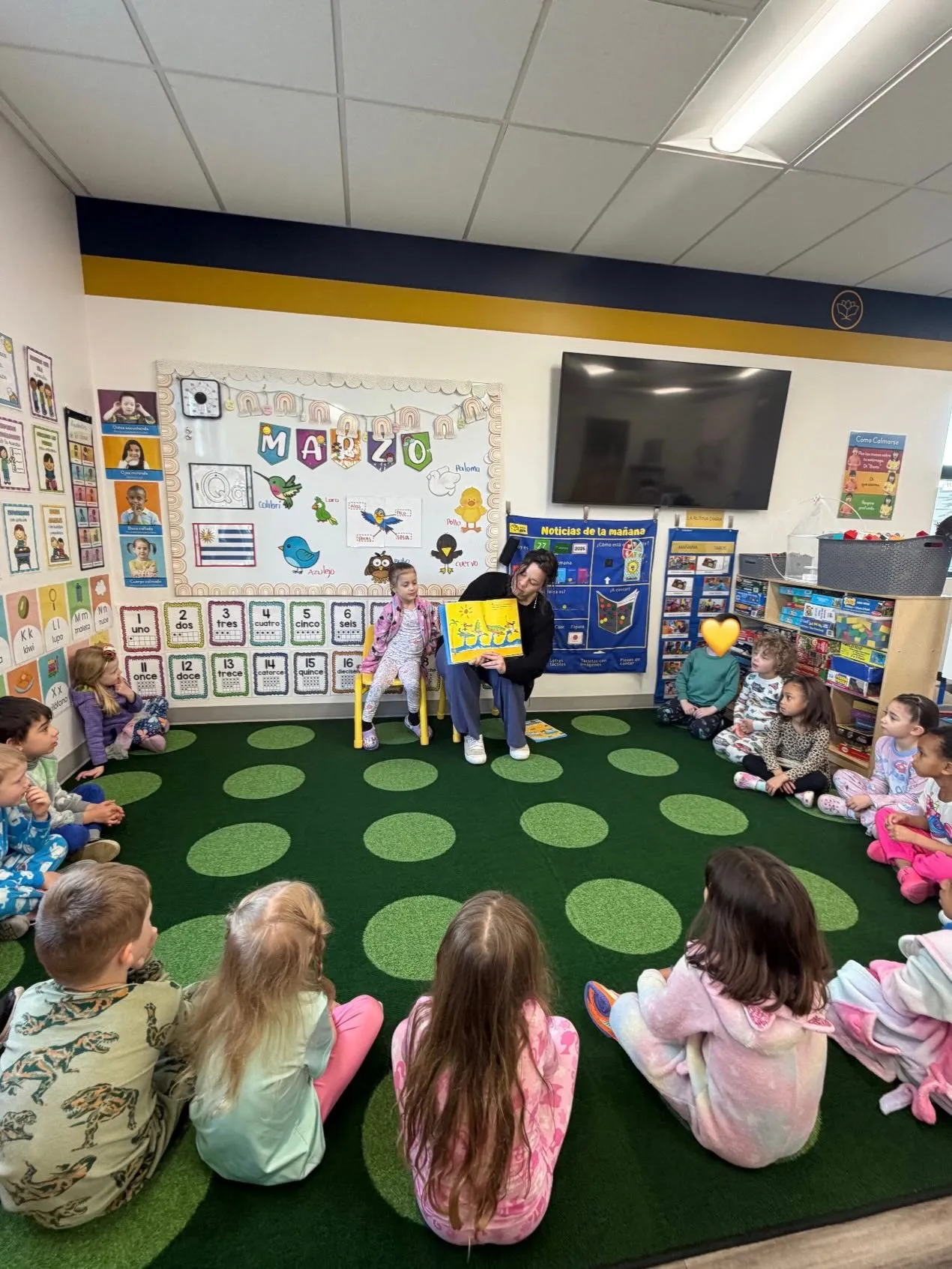
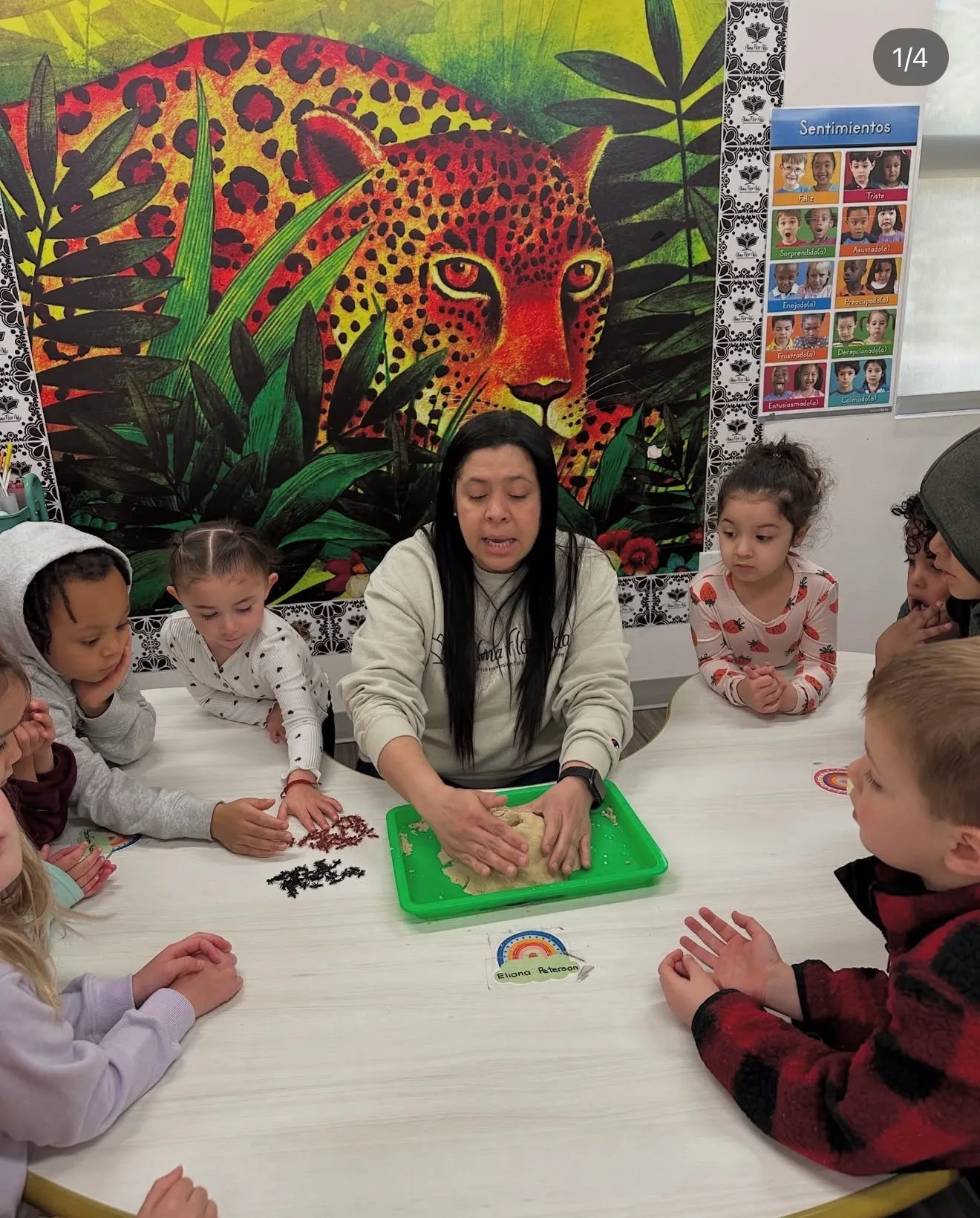
- In a Spanish immersion kindergarten, children learn most of that same content in Spanish, guided by a native Spanish-speaking teacher, usually in smaller groups. Your child reaches the same milestones and picks up a second language along the way.
Immersion does not add Spanish as a separate subject for twenty minutes a day. Spanish is the language the day happens in, which is why children absorb it naturally rather than memorizing vocabulary lists.
Will immersion hurt my child’s English or academics?
This is the first worry almost every parent raises, so let us answer it directly. The research does not support it.
The most rigorous study on this question followed about 1,600 students in Portland Public Schools who were assigned to immersion or to a control group entirely by lottery, which makes the comparison unusually fair. Students in dual-language immersion read about seven months ahead of their peers by fifth grade and about nine months ahead by eighth grade. Native English speakers and English learners both benefited, and immersion students were far less likely to need extra English support later on. You can read a summary of the findings in Education Week’s coverage of the study.
Why does learning in Spanish end up strengthening English? Reading skills transfer between languages. Once a child understands how sounds map to letters and how to pull meaning from text, those abilities apply no matter which language they practiced in first. Your child is surrounded by English at home, on signs, in books, and in the community, so English keeps developing while Spanish is added on top.
Beyond reading scores, bilingual children tend to show gains in attention, working memory, and mental flexibility, the everyday skills that help a five-year-old focus, switch tasks, and solve problems. To go deeper on that, see our post on the benefits of bilingualism for young children.
Spanish immersion vs public school kindergarten at a glance
Every family weighs these factors differently. This table lays out the practical trade-offs so you can see them side by side.
| Factor | Public School Kindergarten | Spanish Immersion Kindergarten |
|---|---|---|
| Language of instruction | English only | Mostly Spanish, with English literacy support |
| Second language gained | Usually none | Functional, real Spanish |
| Class size | Often larger | Typically smaller groups |
| Teacher | Licensed teacher | Native Spanish-speaking teacher |
| Reading and math goals | Grade-level standards | Same grade-level standards |
| Cost | Free | Private tuition |
| Long-term reading trend | On track | Ahead by later grades in major studies |
The honest headline: public school kindergarten is free and familiar, and it works. Immersion asks for tuition and a bit of trust in a different approach, and in return your child leaves kindergarten with a second language during the exact years the brain acquires one most easily.
Which child does immersion suit best?
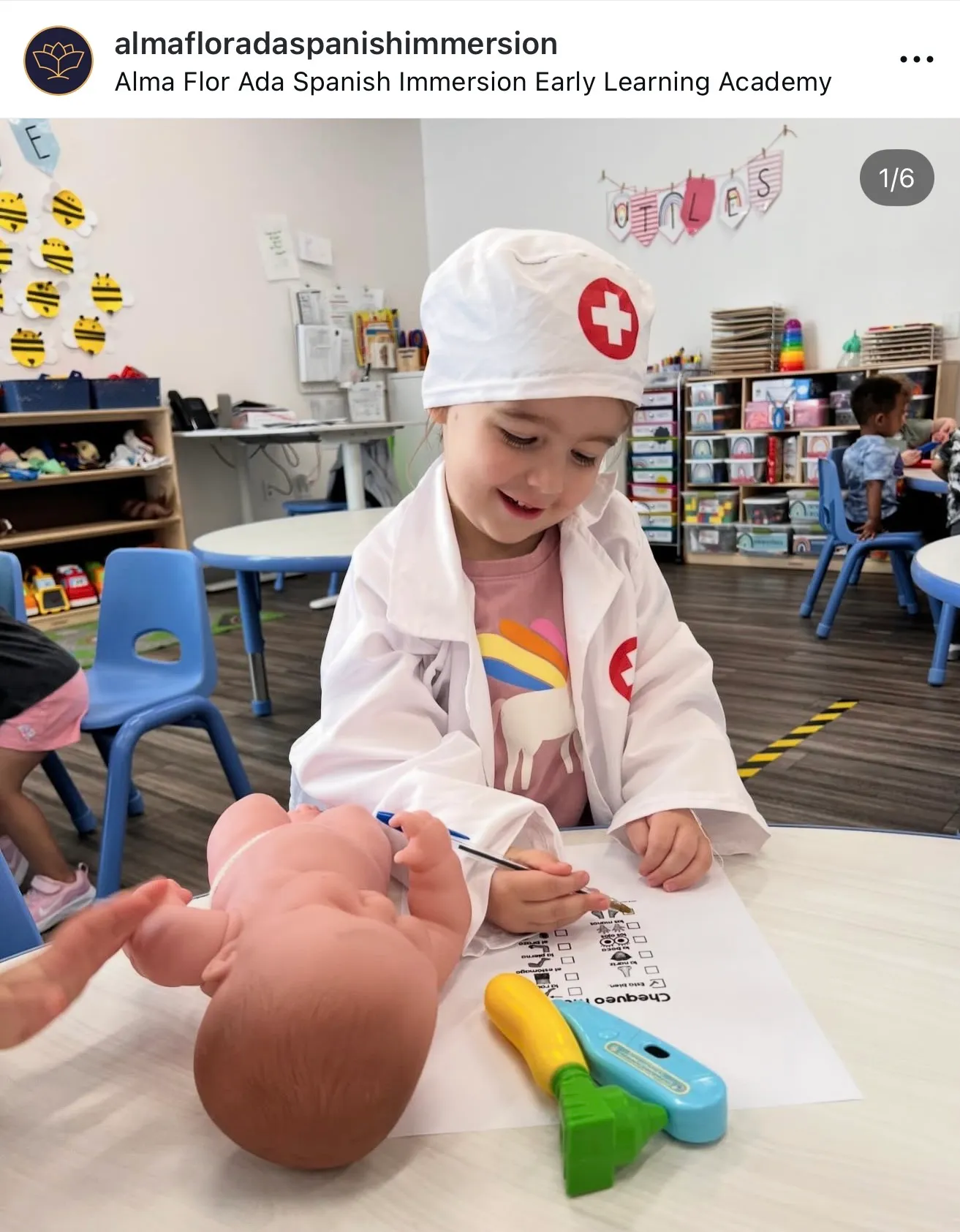
People assume immersion is only for children who already speak Spanish or who are “advanced.” Neither is true. At Alma Flor Ada, most families speak only English at home, and children join with zero Spanish. The approach is designed for beginners, using routine, gestures, songs, hands-on activities, and plenty of repetition so meaning is always clear from context.
Immersion tends to be a wonderful fit for children who:
- Are curious and enjoy songs, stories, and play, which is how the language is delivered
- Are moving up from a preschool or pre-K program and are ready for a next step
- Have parents who value a second language and a smaller, warmer classroom
It is worth knowing that our kindergartners are not starting cold. Many have grown through our 90/10 immersion model since as early as 16 months and five levels of preschool, so kindergarten is a natural continuation rather than a leap. Children who join us new to immersion still thrive, especially with a supportive routine at home.
Making the decision for your family
There is no wrong answer here, only the right fit for your child. A few questions can bring the choice into focus:
- Do you want your child to gain a second language during early childhood? If yes, immersion offers something a standard kindergarten simply does not.
- Does your child do well with warmth, routine, and smaller groups? Immersion classrooms are built around exactly that.
- Are you comfortable not speaking the classroom language yourself? You do not need any Spanish to support your child. Everyday encouragement, reading together in English, and curiosity about their day are more than enough.
If you are leaning toward immersion but want to picture the day-to-day, our companion piece on Spanish immersion kindergarten in Woodbury walks through what parents can expect.
The bottom line: a good public school kindergarten will serve your child well, and immersion can serve them well while also opening a second language and, over time, a measurable reading advantage. The best way to know which feels right is to stand in the room and watch children learning in it.
The warmest next step is simply to visit. Come see our kindergarten, meet the teachers, and ask every question on your mind. You can schedule a tour whenever it works for your family. We would love to help you decide with confidence.
Frequently Asked Questions
Will Spanish immersion kindergarten slow down my child's English?
Does my child need to speak Spanish to start immersion kindergarten?
How is immersion kindergarten different from a public school class?
Is private immersion kindergarten worth the cost?
About the author
Melissa Thaemert, School Director
Melissa Thaemert is the School Director at Alma Flor Ada Spanish Immersion Early Learning Academy in Woodbury, Minnesota. She is a Minnesota educator with 24 years of experience as an elementary teacher, instructional coach, and administrator, and has served as an elementary administrator for the past nine years. She holds advanced degrees in educational leadership, professional studies, adult learning, and elementary education.
Curious about Spanish immersion for your child?
Schedule a tour of our Woodbury academy. We would love to show you around and answer your questions.