Choosing a Preschool
Half-Day vs Full-Day Preschool: How to Choose
Compare half-day vs full-day preschool by schedule, child readiness, and family fit to choose a high-quality program in Woodbury, Minnesota for your child.

Lucilla Davila
Founder
Quick answer: Half-day and full-day preschool can both work well. Choose the option that combines high-quality teaching, predictable routines, enough rest and play, and a schedule your child and family can sustain.
Choosing half-day vs full-day preschool is less about finding one schedule that is best for every child and more about finding the day your child can thrive in. A longer day may provide more time for relationships, play, projects, and language exposure. A shorter day may fit a child’s current stamina or a family’s home routine better.
The hours still tell only part of the story. The more useful question is what happens during those hours, how teachers respond to individual children, and whether the schedule works for your household without leaving everyone depleted.
What is the difference between half-day and full-day preschool?
Half-day preschool usually concentrates the group learning experience into a morning or afternoon session. Full-day preschool extends the schedule to include more routines such as meals, outdoor play, quiet time, rest, and afternoon activities. Exact hours and services vary by school, so compare the actual schedule rather than relying on the label.
Use this fit-first framework to organize your questions:
| Decision factor | Half-day may fit when | Full-day may fit when |
|---|---|---|
| Child stamina | Your child currently does best with a shorter group experience. | Your child can participate in a balanced day with rest and quiet time. |
| Family schedule | Reliable care is available before or after the session. | One consistent school schedule reduces daily handoffs. |
| Learning rhythm | A focused session leaves enough time for play and relationships. | The added hours include play, movement, projects, and conversation. |
| Transitions | A shorter day simplifies the child's current routine. | Staying in one setting avoids a second care transition. |
| Rest needs | Rest happens more comfortably at home. | The program protects quiet time and responds to individual needs. |
This is a decision aid, not a scorecard. A thoughtful tour and a clear daily schedule should carry more weight than the number of hours alone.
If you are also comparing care models, start with the practical differences between preschool and daycare before deciding which daily schedule fits.
Is full-day preschool better for learning?
Full-day preschool can create more opportunities to learn, but more time does not guarantee a better experience. In a What Works Clearinghouse review of one randomized study, full-day prekindergarten produced a positive vocabulary result while a broader cognition measure was indeterminate. The review also cautions that one study does not represent the full body of evidence. That is a useful reason to consider the research without turning it into a universal promise. Read the federal study review.
Quality remains central. The National Association for the Education of Young Children explains that strong preschool programs use caring relationships, active play, exploration, thoughtful teacher guidance, and goals matched to each child’s development. Those ingredients can exist in either schedule. See NAEYC’s guide to high-quality preschool.
How can you tell if your child is ready for a full day?
Start with patterns you already see instead of expecting a certain personality type. A quiet child may love a full day with familiar teachers, while a highly social child may still need substantial rest.
Consider these questions:
- How does your child recover after a busy morning with other children?
- Can the school describe its rest or quiet-time options clearly?
- How are difficult arrivals, transitions, and tired afternoons handled?
- Will your child have outdoor movement and unhurried play?
- How does the teacher adapt when a child needs closeness, space, or a different pace?
You do not need perfect readiness before enrollment. You need a program willing to learn your child’s cues and partner with you through the adjustment.
What should a high-quality preschool schedule include?
A good schedule is predictable but flexible. Children should know what comes next, while teachers still have room to respond to hunger, fatigue, curiosity, weather, and the needs of the group. Head Start notes that consistent routines can help children feel secure and understand what is happening next. Review the Head Start guidance on schedules and routines.
Look for a balance of:
- Child-led play and teacher-guided learning
- Indoor and outdoor movement
- Small-group and whole-group experiences
- Meals, snacks, and calm transitions
- Rest or quiet choices
- Time for conversation, stories, creativity, and problem-solving
If a full day is described mainly as more academic seatwork, ask for specifics. Young children need a varied day that respects their bodies as well as their minds.
How does full-day immersion change the comparison?
In Spanish immersion, a longer day can add meaningful language exposure because Spanish is part of ordinary life, not just a lesson. Children can hear and use it while greeting teachers, building with friends, eating lunch, singing, playing outdoors, resting, and solving small daily problems.
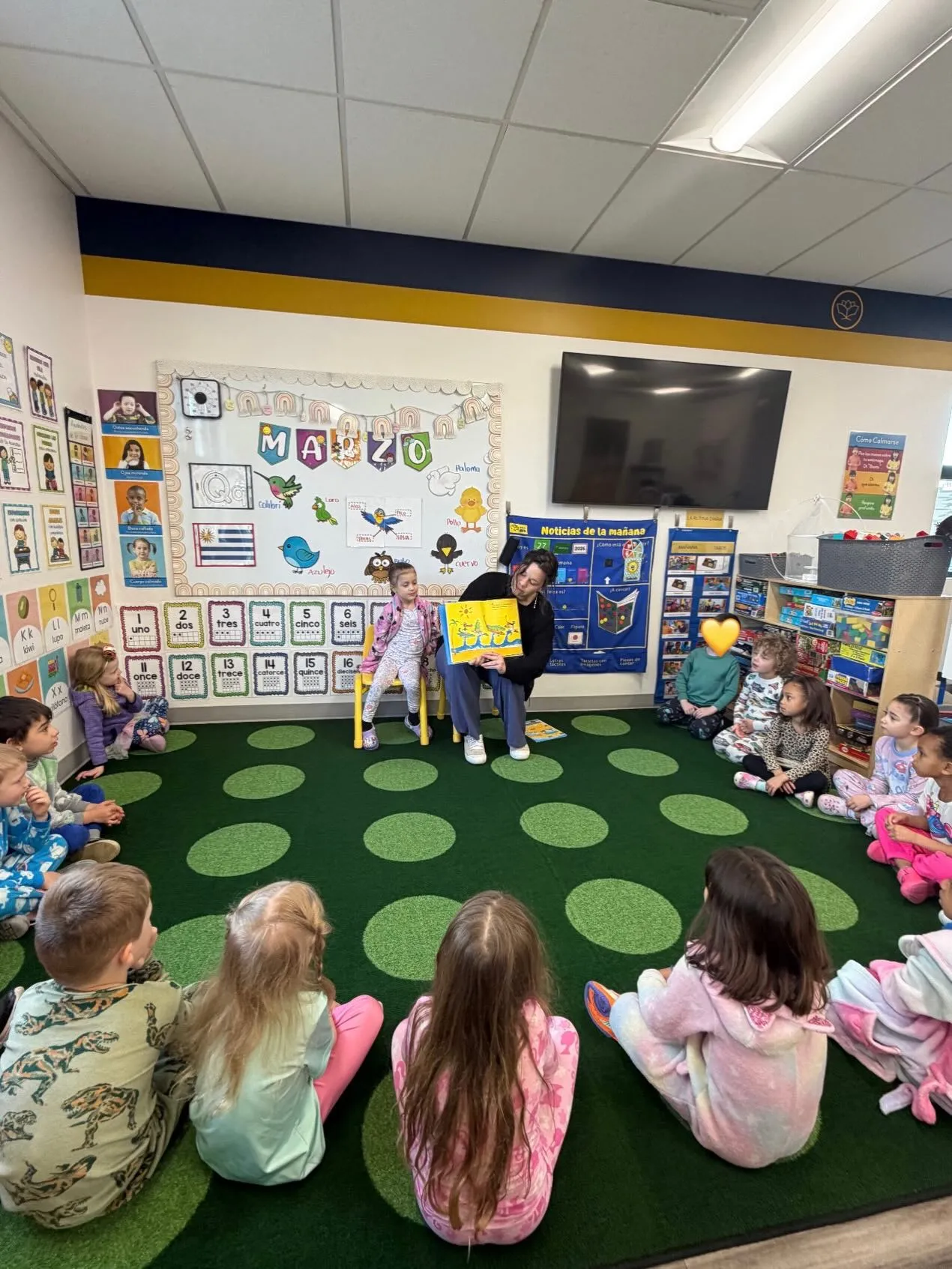
At Alma Flor Ada, Spanish is woven throughout a full day that includes learning blocks, outdoor play, meals, rest, stories, STEM, and movement. You can review a typical day at AFA to see how those experiences fit together. The value comes from responsive interaction across the day, not from keeping children busy for more hours.
What should you ask during a preschool tour?
Bring questions that reveal how the day actually feels:
- What does the morning schedule look like, and what changes after lunch?
- How much uninterrupted play do children receive?
- What happens if my child does not nap, or needs more rest?
- How do teachers communicate about adjustment, energy, meals, and sleep?
- Which parts of the schedule are flexible for individual needs?
- Are meals, before care, or after care included in preschool tuition?
Listen for concrete answers. A clear explanation of routines, staffing, rest, and family communication is more useful than a claim that one schedule is always superior.
Extended recap: choose the day your child can thrive in
Half-day preschool may be right when a child benefits from a shorter group experience and the family has a stable plan for the rest of the day. Full-day preschool may be right when the program uses the additional time for varied, developmentally appropriate experiences and when one consistent setting makes family life more manageable.
Compare quality first, then schedule. Look for warm relationships, play, movement, rest, responsive teaching, and communication with families. For immersion, also ask how the language is used during ordinary routines, since those natural interactions are part of the learning.
If you are comparing options in Woodbury, schedule a tour of AFA and bring your questions about your child’s energy, routine, and language experience. The goal is a day that feels safe, engaging, and sustainable for your family.
Frequently Asked Questions
Is full-day preschool better than half-day preschool?
How do I know if my child is ready for full-day preschool?
What should a full preschool day include?
Does a longer preschool day mean more academic instruction?
How does full-day Spanish immersion support language learning?
About the author
Lucilla Davila, Founder
Lucilla Davila is the founder of Alma Flor Ada Spanish Immersion Early Learning Academy. She built AFA to create the kind of nurturing, joyful, culturally rooted Spanish immersion environment she searched for as a parent and could not find. She leads the academy's vision of raising bilingual, kindhearted, kindergarten-ready children in Woodbury.
Curious about Spanish immersion for your child?
Schedule a tour of our Woodbury academy. We would love to show you around and answer your questions.