Spanish Immersion
A Spanish Curriculum for Kindergarten: A Parent's Guide
What a strong Spanish curriculum for kindergarten includes, the methods that work, and how Woodbury parents can support bilingual learning at home.
Lucilla Davila
Founder
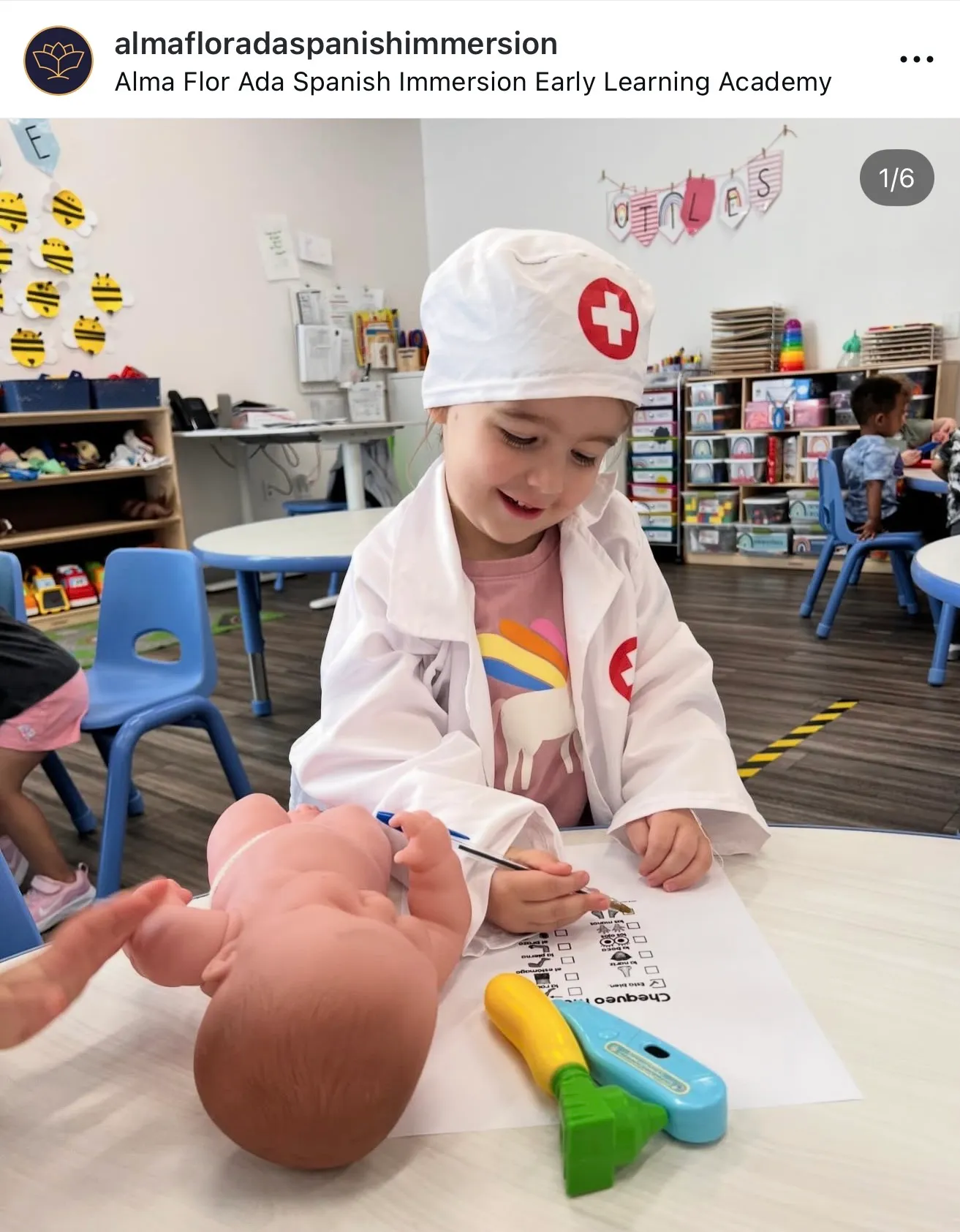
Why a Spanish Curriculum for Kindergarten Opens Doors for Your Child
A spanish curriculum for kindergarten gives young learners foundational language skills through play, thematic lessons, and immersion. At this age, children focus on:
- Listening and speaking basic vocabulary (greetings, colors, numbers, animals, family)
- Engaging activities like songs, games, and storytelling
- Cultural exploration through authentic materials
- Daily routines that integrate Spanish naturally
- Play-based learning that makes language acquisition joyful
Research shows that learning a new language before age 10 is ideal for fluency. A young child’s mind is like a sponge, primed for language input. Starting Spanish in kindergarten provides cognitive advantages, better problem-solving skills, and a head start toward lifelong bilingualism.
The benefits extend beyond language, improving creativity, cultural awareness, empathy, and academic performance. Whether you’re fluent in Spanish or not, you can support your child’s language journey with the right curriculum.
This guide covers the core components of an effective kindergarten Spanish curriculum, proven teaching methods, and how to support your child’s learning at home. You’ll find what makes a curriculum engaging and how to choose the right resources.
I’m Lucilla Dávila, an educational leader with nearly three decades of experience in bilingual education, dual immersion, and Spanish curriculum development for K-12. I’ve designed instructional frameworks that honor students’ cultural identities while building strong language foundations from the earliest years.
Why Start Spanish in Kindergarten? The Science of Early Learning
Young children’s minds are like sponges, uniquely wired to absorb new languages with ease. This natural aptitude makes kindergarten the perfect time to introduce a spanish curriculum for kindergarten.
Research, including a significant 2018 study from MIT, shows that learning a new language before age 10 is ideal for achieving fluency. This critical period allows children to develop native-like pronunciation and grasp grammar intuitively. It’s a gift that fosters a love for languages and opens up a world of opportunities.
The benefits of early language learning go beyond speaking another tongue. A robust spanish curriculum for kindergarten significantly impacts cognitive development. Studies show that bilingual children often have better problem-solving skills, as their brains constantly work between two linguistic systems. This mental agility improves flexible thinking.
Beyond cognitive boosts, early Spanish exposure cultivates creativity and expands imaginative horizons. It also fosters deeper cultural awareness and empathy. By engaging with another language, children connect with different cultures and perspectives, developing a more global outlook. This early exposure to “real culture,” as we believe in at Alma Flor Ada, is invaluable.
Academically, starting Spanish in kindergarten provides a distinct advantage. Foundational literacy skills developed through a structured curriculum, such as phonological awareness, can transfer to English reading and writing. Strategic instruction focused on phonological awareness gives students the tools to succeed in literacy by helping them understand the sounds and structures of language itself, benefiting all their learning.
A kindergarten Spanish program is about nurturing a child’s holistic development. It builds a foundation for lifelong learning, cultural appreciation, and improved cognitive abilities. At Alma Flor Ada, we see our kindergarteners thrive, becoming confident communicators and curious explorers.
Core Components of a Kindergarten Spanish Curriculum
An effective spanish curriculum for kindergarten is designed for the unique developmental stage of young learners. It builds foundational language skills through engaging, age-appropriate activities, making learning an exciting adventure. At Alma Flor Ada, our comprehensive approach nurtures every aspect of a child’s growth.
Our curriculum is built around familiar themes and essential language skills, delivered with methods that prioritize fun. We want our kindergarteners to fall in love with Spanish.
Foundational Vocabulary and Themes
For kindergarteners, the journey into Spanish begins with relevant, concrete vocabulary that describes their immediate world. This makes the language instantly meaningful. Our curriculum integrates these foundational elements into daily lessons:
- Greetings and introductions: Simple phrases like Hola, Adiós, ¿Cómo estás?, and Me llamo… for social interaction.
- Colors and shapes: Identifying rojo, azul, círculo, and cuadrado through games and art.
- Numbers and counting: Learning uno to diez and beyond by counting objects, fingers, and friends.
- Family members: Learning mamá, papá, hermano, and hermana to talk about loved ones.
- Body parts: Identifying cabeza, manos, and pies through songs and movement.
- Animals: Naming perro, gato, and elefante while exploring stories.
- Food: Simple words like manzana, leche, and agua related to meals.
- Weather and seasons: Describing sol, lluvia, invierno, and verano.
- Classroom objects: Identifying items like libro, lápiz, and mesa.
- Social-emotional vocabulary: Understanding and expressing feelings like contento or triste, and basic needs like Tengo hambre (I’m hungry) or baño (bathroom).
These themes provide a natural context for language acquisition, making new words easier to remember.
Essential Language Skills for Young Learners
At the kindergarten level, we focus on developing a strong foundation in four key language skills:
- Listening comprehension: This is paramount. Children hear Spanish spoken naturally and frequently to internalize its sounds and rhythms. We provide a rich auditory environment with native Spanish-speaking instructors.
- Speaking and pronunciation: We encourage children to use simple Spanish words and phrases. We prioritize clear pronunciation through modeling and repetition in a joyful, low-pressure experience.
- Pre-reading skills: We introduce the Spanish alphabet, letter recognition, and basic phonological awareness. A strong emphasis on phonological, syllable, and phonemic awareness is crucial for Spanish literacy, including blending, segmenting, and manipulating sounds.
- Pre-writing skills: Children develop fine motor skills by tracing, drawing, and eventually forming simple Spanish letters and words, often integrated into thematic activities.
Our goal is for students to gain a basic understanding of Spanish in listening, speaking, reading, and writing. You can find more details about how we integrate these skills by visiting our Kindergarten page.
Making it Fun: Activities and Methods
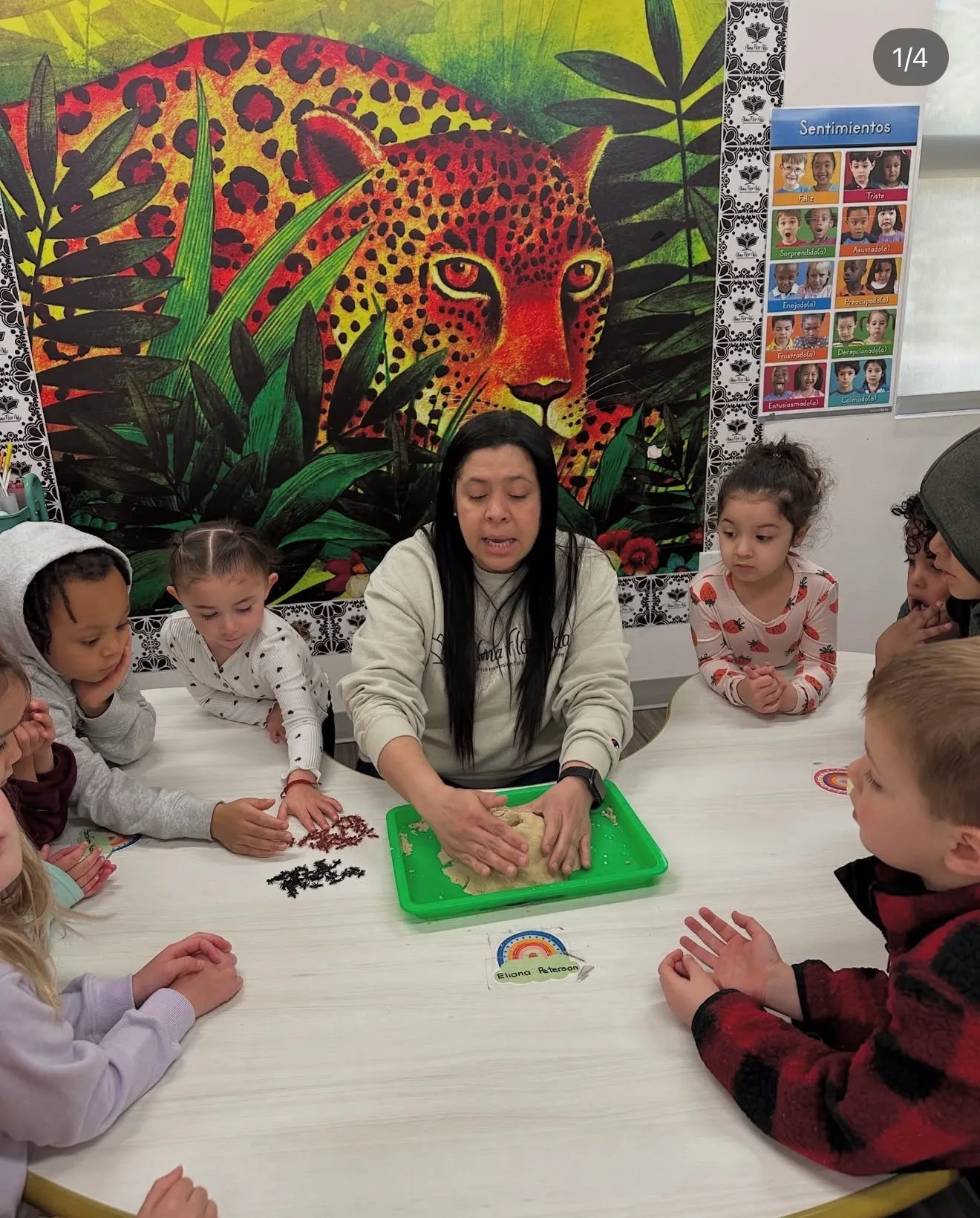
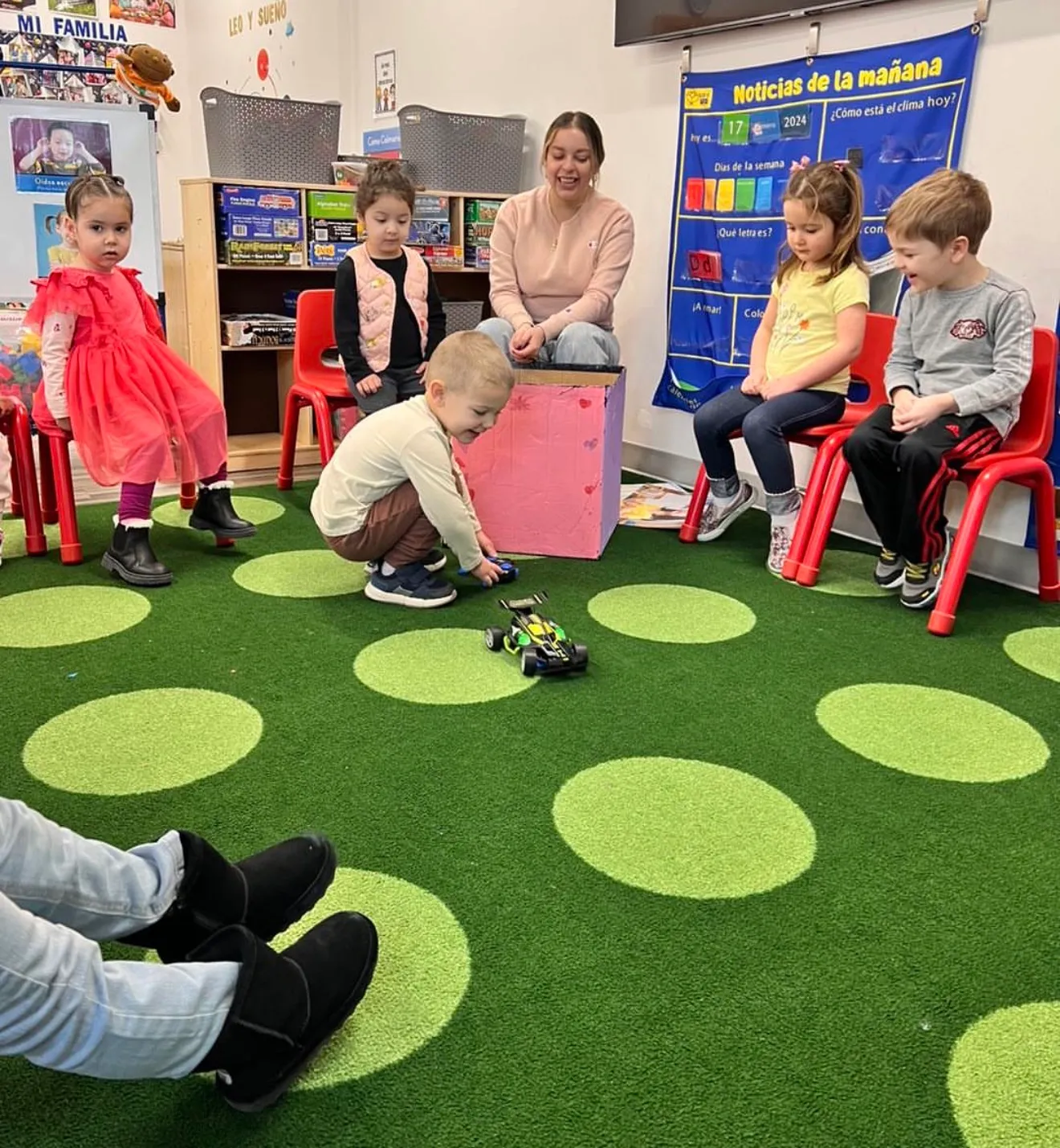
Joy is at the heart of early language learning. Our spanish curriculum for kindergarten is packed with dynamic and interactive activities:
- Songs and music: Spanish songs are fantastic for learning vocabulary and pronunciation. We use traditional and modern songs, encouraging children to sing along and do finger plays.
- Games and movement: Activities like Simón Dice (Simon Says) and Veo Veo (I Spy) make learning exciting. Total Physical Response (TPR) activities, where children respond to commands with actions, are highly effective.
- Storytelling: Reading simple Spanish picture books helps children understand vocabulary in context and sparks their imagination.
- Arts and crafts: Integrating Spanish into art projects, like labeling colors on a drawing, reinforces learning through creativity.
We start every day with enthusiasm, often with a greeting song. Here’s a fun one you might enjoy: A fun Spanish greeting song to start your day. This routine helps children feel comfortable and excited to learn.
The Alma Flor Ada Approach to Spanish Curriculum for Kindergarten
At Alma Flor Ada Spanish Immersion Early Learning Academy in Woodbury, MN, our spanish curriculum for kindergarten is a philosophy. We nurture children’s natural curiosity for language within a supportive, culturally rich environment. Our approach is rooted in best practices for early childhood education, customized for multi-lingual learning.
Our curriculum philosophy is built on play-based and thematic learning. We know kindergarteners learn best through exploration, findy, and hands-on experiences. Our lessons extend into every corner of the classroom, fostering natural language use. We also adopt a true immersion approach, where Spanish is the language of daily life and learning, not just a subject.
How We Teach Spanish at Alma Flor Ada
Our teaching methodology is designed to be engaging and effective for young learners:
- Engaging, age-appropriate activities: Every activity, from dramatic play to outdoor exploration, is an opportunity to practice Spanish. Tasks are challenging enough to stimulate growth but always accessible.
- Native speaker instruction: A cornerstone of our program is instruction by native Spanish speakers. This ensures authentic pronunciation, intonation, and cultural nuances. Our staff are cultural guides, offering an experience textbooks cannot provide.
- Authentic cultural experiences: We integrate “real culture” by celebrating Hispanic traditions, exploring diverse customs, and introducing children to Spanish-speaking countries through stories, music, and art.
- Integration with STEM and the arts: Our curriculum seamlessly integrates Spanish with Science, Technology, Engineering, and Mathematics (STEM), and the arts. This interdisciplinary approach improves learning across all subjects.
Curriculum Resources at Alma Flor Ada
We use a variety of high-quality resources to support our approach:
- Comprehensive curriculum materials: Our internally developed curriculum includes lesson plans, activity guides, and thematic units designed for our kindergarten program.
- Interactive classroom resources: Our classrooms are equipped with visual aids, educational games, and digital resources that make learning dynamic.
- Family engagement tools: We provide resources and guidance to families, empowering them to support their child’s Spanish learning at home.
- Children’s books and audio by native speakers: Our library is filled with Spanish children’s literature, and we use audio resources to improve listening comprehension.
What Sets Our Spanish Curriculum Apart
What distinguishes the spanish curriculum for kindergarten at Alma Flor Ada in Woodbury, MN, is our commitment to an immersive and enriching experience:
- Native speaker audio: Our materials feature authentic audio from native Spanish speakers.
- Authentic cultural elements: We offer “real culture” experiences that go to the heart of Spanish-speaking traditions.
- Age-appropriate content: Our curriculum is crafted to match the developmental stage of kindergarteners, making learning joyful and accessible.
- Engaging visuals: Our materials are vibrant and colorful to bring the Spanish language to life.
- Clear structure: Our play-based approach is underpinned by a clear, progressive structure, ensuring systematic skill-building.
How to Support Your Kindergartener’s Spanish Learning (Even if You’re Not Fluent)
Not every parent is fluent in Spanish, and that’s okay! You don’t need to be a native speaker to support your kindergartener’s language journey. The most important thing is to create an environment that encourages language learning. At Alma Flor Ada, we partner with families in Woodbury, MN, to ensure this support extends beyond our classroom walls.
Effective Teaching Methodologies We Use
In our classrooms, we use highly effective methodologies that you can adapt at home:
- Total Physical Response (TPR): This method connects language to physical actions. When we say “¡Levanta las manos!” (Raise your hands!), children respond by raising their hands, making vocabulary concrete and memorable. Use it for simple instructions like “¡Siéntate!” (Sit down!).
- Comprehensible Input (CI): Children acquire language when they understand messages. We make Spanish understandable through visuals, gestures, and context. For example, we show an apple while saying “la manzana.” Young learners are great at picking up context clues.
- Storytelling: Children love stories. We use simple Spanish stories with repetitive phrases and strong visuals to introduce new vocabulary in an engaging way.
- Gamified learning: Games turn learning into fun. A Spanish version of Simon Says or a simple vocabulary matching game can reduce anxiety and increase motivation.
Integrating Spanish into Everyday Life
Early language acquisition happens when it becomes a natural part of daily life.
- Connecting to STEM: At Alma Flor Ada, we integrate Spanish into our superb STEM curriculum. At home, you can count in Spanish while building with blocks or describe shapes during an art project.
- Spanish in math and science: Try saying numbers and simple operations in Spanish. When observing nature, name plants or animals in Spanish. This helps children see Spanish as a functional tool.
- Thematic integration across daily routines: Use Spanish during meal times (¿Quieres más agua?), getting dressed (Ponte el zapato azul), or playtime. Even short, consistent bursts of language exposure are powerful; just 15 minutes a day can provide a solid foundation.
Tips for a Successful Spanish Learning Experience
- Establish a routine: Consistency is key. A short Spanish song before bed or labeling objects around the house helps children absorb the language.
- Learn alongside your child: Learning with them shows that it’s a fun, continuous process. Your child will love being the “expert.”
- Focus on fun, not perfection: The goal is exposure and enjoyment, not flawless grammar. Celebrate every attempt and every new word.
- Use daily life as a lesson: The world is full of learning opportunities. Point out colors, count objects, and name animals in Spanish as you go about your day.
Assessing Progress and Celebrating Milestones
In a spanish curriculum for kindergarten, assessment is not about traditional tests. Our goal is to foster a love for language and build skills without stress. We use low-pressure methods integrated into the learning process to track progress and celebrate every milestone.
For young children, assessment is about observing their engagement, participation, and growing comprehension. It’s about recognizing the small wins that build confidence.
How We Track Learning at Alma Flor Ada
Our approach to tracking learning is holistic and child-centered:
- Observation checklists: Our educators use checklists during daily activities to note when a child understands a command, responds in Spanish, or uses a new word. This provides a rich picture of their development.
- Portfolios of work: We collect children’s drawings, crafts labeled in Spanish, and early writing attempts in portfolios. These show tangible evidence of their progress.
- Simple conversations: We engage children in informal Spanish conversations to gauge their listening comprehension and speaking ability in a natural setting.
- “Can-do” statements: We use age-appropriate “can-do” statements to describe accomplishments, such as “Can identify 5 colors in Spanish.” These positive statements highlight achievements.
This aligns with principles where evaluation is comprehensive and continuous, primarily using direct observation. We encourage parents to participate in and support this process.
Keeping Motivation High
Celebrating progress is key to motivation. For kindergarteners, this means positive reinforcement and recognition:
- Celebrating small wins: Every new word or attempt to speak Spanish is a cause for celebration. We use praise and high-fives to acknowledge their efforts.
- Positive reinforcement: An encouraging environment makes children feel safe to experiment with a new language. We focus on what they can do to build confidence.
- Sharing progress with family: We regularly communicate achievements with families. This motivates parents to continue supporting language learning at home.
Frequently Asked Questions
How much time should my kindergartener spend learning Spanish each day?
Will learning Spanish confuse my child or delay their English?
What is the difference between bilingual and immersion programs?
About the author
Lucilla Davila, Founder
Lucilla Davila is the founder of Alma Flor Ada Spanish Immersion Early Learning Academy. She built AFA to create the kind of nurturing, joyful, culturally rooted Spanish immersion environment she searched for as a parent and could not find. She leads the academy's vision of raising bilingual, kindhearted, kindergarten-ready children in Woodbury.
Curious about Spanish immersion for your child?
Schedule a tour of our Woodbury academy. We would love to show you around and answer your questions.