Spanish Immersion
The Complete Guide to a Spanish Immersion Curriculum
What a true Spanish immersion curriculum looks like, how the 90/10 model works, and how children become bilingual readers, thinkers, and communicators.
Lucilla Davila
Founder
Why a Spanish Immersion Curriculum Gives Children a Lasting Advantage
A spanish immersion curriculum is one of the most powerful educational investments you can make for a young child. Here’s a quick look at what it involves and why it matters:
- What it is: A structured program where children learn academic content through Spanish, not just about Spanish
- Who it’s for: Students from early childhood through high school, including homeschool environments
- Core benefits: Stronger working memory, better problem-solving, improved attention control, and delayed cognitive decline later in life
- Key components: Reading, writing, listening, and speaking, all developed together in Spanish
- Program types: Dual language, two-way immersion, exploratory, heritage, and sequential models
Research is clear: bilingualism doesn’t just teach a second language. It reshapes how children think. Studies show bilingual students develop stronger abstract reasoning, better attention control, and greater ability to access complex, grade-level content. These are skills that last a lifetime, and they start early.
For parents in the Woodbury, MN area, the question isn’t whether Spanish immersion matters. It’s how to find a program that’s structured, age-appropriate, and truly effective.
That’s exactly what this guide is here to help you understand.
I’m Lucilla Dávila, a bilingual educator originally from San Juan, Puerto Rico, with nearly three decades of experience designing and leading spanish immersion curriculum programs across K-12, magnet, and dual language schools. My graduate work in Second Languages and Cultures at the University of Minnesota, combined with hands-on experience leading dual immersion and ESL programs, gives me a grounded, research-backed perspective on what actually works in immersion education.
Key Benefits of a Spanish Immersion Curriculum
When we talk about a spanish immersion curriculum, we aren’t just talking about learning how to order a taco or say “hola.” We are talking about a total rewiring of the brain that offers cognitive, academic, and social-emotional advantages.
Cognitive Growth and Brain Power
The most exciting research on bilingualism highlights the “bilingual advantage.” Because the brain has to constantly navigate between two language systems, it becomes incredibly efficient at executive functions.
- Working Memory: Bilingual children often show a superior ability to hold and manipulate information in their minds.
- Abstract Reasoning: Learning that one object (like a “puzzle”) can have two names (rompecabezas) helps children understand that symbols and ideas are flexible.
- Attention Control: Immersion students become experts at filtering out distractions. They have to focus intently on context clues to understand the second language, which translates to better focus in all subjects.
- Problem-Solving: Research indicates that the metalinguistic awareness gained through immersion leads to better problem-solving skills.
Academic Achievement and Content Access
There is a common myth that spending time learning Spanish will cause a child to “fall behind” in English. In reality, the opposite is true. According to Minnesota educational research, bilingualism provides students with better access to complex, grade-level content.
By using a spanish immersion curriculum, students don’t just learn the language; they learn math, science, and history in that language. This dual-tasking actually reinforces their understanding of the core subjects. Furthermore, the skills they learn in Spanish, like decoding words or understanding narrative structure, transfer directly back to English.
Long-Term Health and Confidence
The benefits don’t stop at graduation. Studies have shown that bilingualism can actually delay the onset of age-related cognitive decline and dementia. On a more immediate level, we see a massive boost in student confidence. When a child realizes they can navigate a whole day in a second language, they feel like they can take on the world. It’s no wonder that over 15,000+ kids have already joined the ranks of confident Spanish speakers through dynamic, immersive lessons.
Essential Components of Effective Spanish Immersion
For a spanish immersion curriculum to be truly effective, it can’t be a collection of random worksheets. It must be a systematic, results-driven framework. We believe in four main pillars that ensure a child doesn’t just “hear” Spanish, but actually acquires it.
The Four Pillars of Language Mastery
- Listening: This is the foundation. In the early stages, students are like sponges, absorbing the sounds, rhythms, and intonations of native speakers.
- Speaking: We move from “Early Production” (one-word answers) to “Speech Emergence” where children begin to form their own sentences and express original thoughts.
- Reading: This involves understanding letter patterns and phonics. For example, learning that “ll” and “rr” have specific sounds is crucial.
- Writing: As children grow, they learn to encode their thoughts into written Spanish, moving from simple labels to complex narratives.
High-Frequency Verbs and Functional Language
Instead of memorizing obscure vocabulary lists that they’ll never use, an effective curriculum focuses on functional language. We prioritize high-frequency verbs, the “power words” of the language, that allow students to communicate their needs and ideas immediately. This creates a “low-stress” environment where the focus is on communication rather than perfect grammar.
Systematic Progression and Assessment
A strong curriculum is age-appropriate and aligned with grade-level learning objectives. It should follow a logical path:
- Levels 1 & 2 (Early Years): Focus on concrete vocabulary like colors, numbers, family, and home routines.
- Levels 3 & 4 (Mid-Elementary): Move into city life, professions, and more complex conversational structures.
- Level 5 & Beyond: Explore global topics, weather patterns, monetary systems, and advanced tenses.
Integrated assessments are vital. They shouldn’t be scary tests, but rather benchmarks to track how well a student is progressing toward functional biliteracy.
Integrating Culture into the Spanish Immersion Curriculum
You cannot truly learn a language without learning the soul of the people who speak it. A spanish immersion curriculum must be a “cultural immersion” as well. This isn’t just about celebrating Cinco de Mayo; it’s about a deep dive into the diverse traditions of the 21 Spanish-speaking countries.
- Global Competence: We want our children to be “citizens of the world.” By exploring different perspectives, they develop empathy and an understanding that their way of life is just one of many beautiful ways to live.
- Authentic Literature: We use books like Jirafa africana or La telaraña de Carlota (Charlotte’s Web) to bring stories to life. Stories are narrative forms that help children build their own identities while exploring the thoughts and feelings of others.
- Community Connection: Whether it’s learning about la Quinceañera or the significance of el Santo, we integrate real-world cultural practices into daily lessons. We even look at the ethics of cultural appropriation to ensure students learn to respect and honor Hispanic traditions deeply.
Adapting Spanish Immersion Curriculum for Different Ages
The way we teach a 16-month-old is (thankfully) very different from how we teach a middle schooler. A high-quality spanish immersion curriculum must be flexible enough to meet students where they are developmentally.
Early Learning (16 months - Kindergarten)
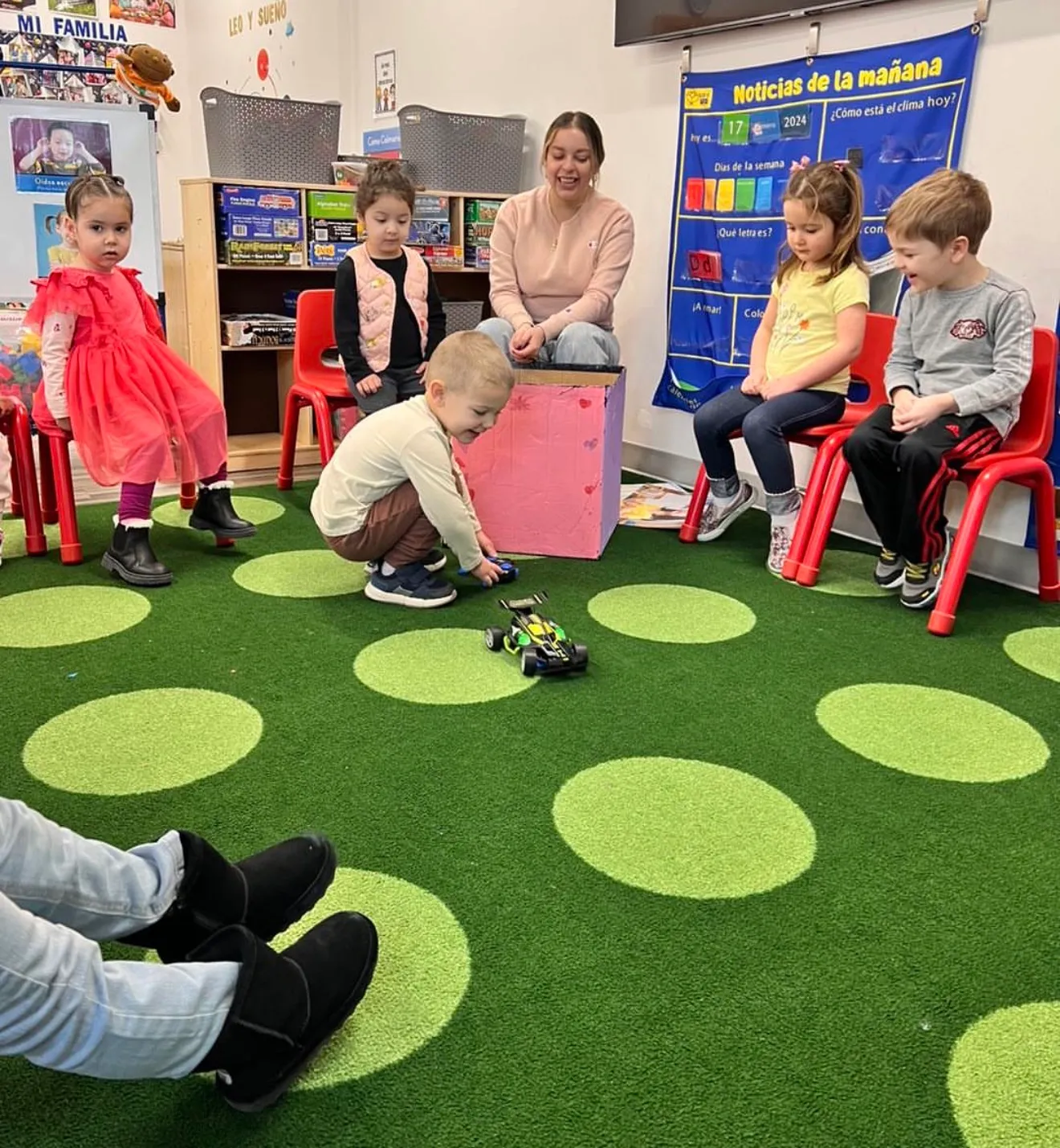
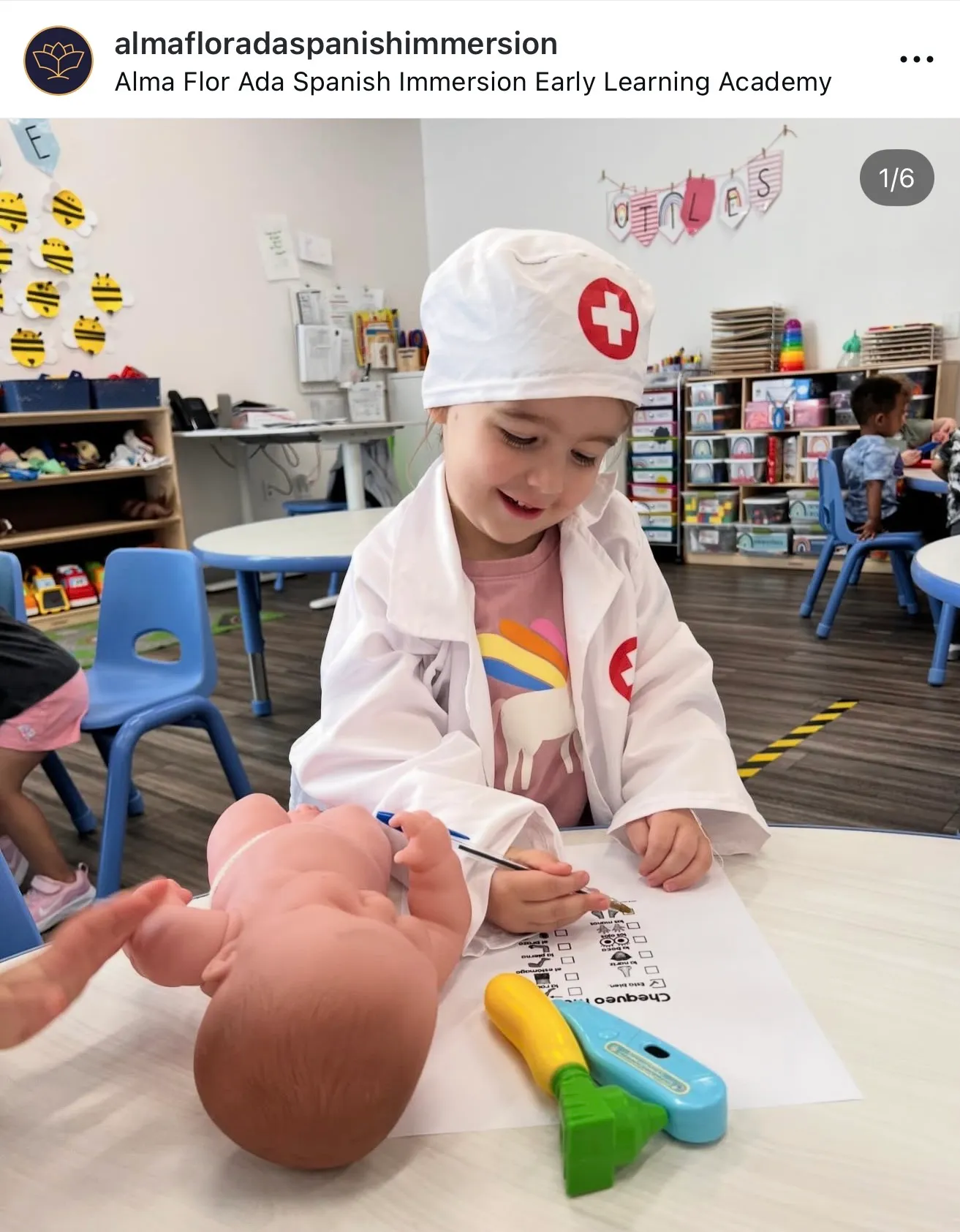
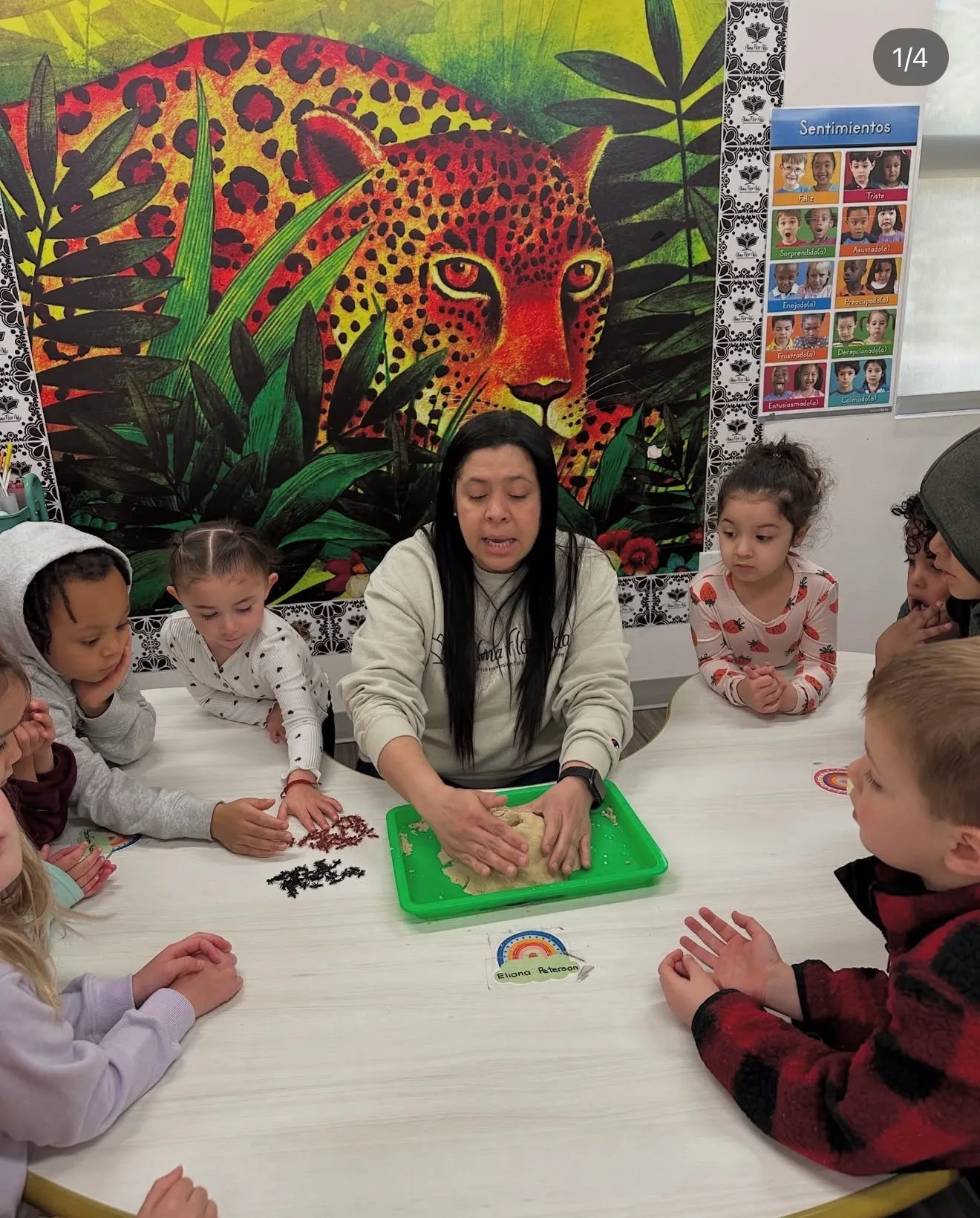
At this age, children are developmentally predisposed to language acquisition. At Alma Flor Ada, we focus on full immersion combined with a superb STEM curriculum. It’s all about play, music, and sensory experiences. If you’re a parent in Woodbury, MN, you know that the “Number 1” request on school surveys is often Spanish language education, and starting during these “magic years” is the best way to ensure native-like pronunciation.
Elementary and Middle School
As students move into elementary and middle school, the curriculum becomes more academic. Middle school is an ideal time to deepen learning because students are developing their own identities. We use “Comprehensible Input” methods, like reading novels or using “MovieTalk”, to keep them engaged without the boredom of traditional textbooks.
Homeschool Environments
For families choosing to learn at home, a spanish immersion curriculum often involves a “Morning Basket” approach. This might include:
- Spanish Phonics: Using tools like Mi método de lectura to teach basic decoding.
- Bilingual Math: Practicing days of the week, months, and counting in both languages using resources like RightStart Math.
- Nature Study: Incorporating Spanish vocabulary into science through programs like Exploring Nature With Children.
Models and Structures of Immersion Programs
Not all immersion programs are built the same way. Depending on the goals of the school and the needs of the students, different structures might be used.
| Model | Description | Primary Goal |
|---|---|---|
| Full Immersion | 100% of instruction is in Spanish. | Native-like fluency and biliteracy. |
| Dual Language (Two-Way) | Classes include both native Spanish and native English speakers. | Biliteracy and cross-cultural understanding. |
| Exploratory Spanish | Short rotations (e.g., 9 weeks) to introduce basics. | Exposure and interest-building. |
| Heritage Language | Designed for students who speak Spanish at home. | Literacy and academic language in the home language. |
| Sequential Learning | Building year-over-year from elementary to high school. | Long-term proficiency and AP success. |
In Woodbury, MN, many parents look for models that provide a strong foundation in early childhood, allowing for a “sequential” path as the child enters the local school system.
Strategies for Success in the Immersion Classroom
Teaching in an immersion environment requires a special set of “tricks of the trade” to keep students from feeling overwhelmed.
Primary Language Support and Cross-Language Transfer
We don’t ignore a child’s first language; we use it as a bridge. Cross-language transfer is the idea that if a child understands the concept of “gravity” in English, they don’t need to re-learn the concept in Spanish, they just need the new labels.
- Cognates: We use “friend words” like elefante (elephant) or computadora (computer) to give students immediate “wins.”
- Scaffolding: Using gestures, facial expressions, and visual aids helps students understand the “gist” of a conversation even if they don’t know every word.
Engaging Reluctant Learners
Middle schoolers, in particular, can sometimes be reluctant. We overcome this by using interactive activities that get them moving, like “Find Someone Who” games or AR verb worksheets that turn grammar into a social event. Clear routines and themed “bell ringers” also help create a safe, predictable environment where students feel courageous enough to speak.
Resources for Implementing a Spanish Immersion Curriculum
For schools and homeschoolers alike, having the right “stuff” matters. You don’t want to spend your entire weekend planning lessons.
- Scripted Lesson Plans: These are a lifesaver for teachers, providing a clear roadmap for every 30-minute block of time.
- Digital Tools: Interactive slide decks and vocabulary games keep kids engaged in a way that paper and pencil can’t.
- Authentic Books: We highly recommend building a library with titles like Donde viven los monstruos (Where the Wild Things Are) and Se venden gorras (Caps for Sale) to make reading time a highlight of the day.
Frequently Asked Questions
How does primary language support help students?
What is the difference between dual language and full immersion?
Can non-native speakers teach an immersion curriculum?
About the author
Lucilla Davila, Founder
Lucilla Davila is the founder of Alma Flor Ada Spanish Immersion Early Learning Academy. She built AFA to create the kind of nurturing, joyful, culturally rooted Spanish immersion environment she searched for as a parent and could not find. She leads the academy's vision of raising bilingual, kindhearted, kindergarten-ready children in Woodbury.
Curious about Spanish immersion for your child?
Schedule a tour of our Woodbury academy. We would love to show you around and answer your questions.