Choosing a Preschool
7 Signs Your Child Is Ready for Preschool
Looking for signs your child is ready for preschool? Here are seven real ones Woodbury parents can watch for, and the things readiness does not require.

Melissa Thaemert
School Director
If you have been quietly watching your toddler and wondering whether it is time, you are looking for the same thing every parent looks for. The signs your child is ready for preschool are rarely dramatic. There is no single morning where a toddler wakes up ready. It shows up in smaller things, like the way your child watches other children at the park a beat longer than they used to, or how they push your hand away to zip their own coat.
Here is what we watch for after years of welcoming children into their first classroom in Woodbury, and just as importantly, what readiness does not require.
What does preschool readiness actually mean?
Preschool readiness is not a test your child passes. It is a rough match between where your child is developmentally and what a particular program is built to handle. A room designed for four year olds asks a lot of a 20 month old. A room designed for toddlers asks almost nothing that a toddler cannot do.
That reframe matters, because most parents are grading their child when they should be evaluating programs. Readiness is a two way fit. Keep that in mind as you read the list below.
The 7 signs
1. Your child notices other children
Not plays with them. Notices them. Toddlers move through parallel play long before cooperative play, so the early sign is attention, not teamwork. If your child stares at the kids on the next slide, drifts toward a group at the library, or copies what another child is doing, that is social interest showing up. Preschool feeds it.
2. Short separations end well
The question is not whether your child cries when you leave. Almost all of them do at some point. The question is recovery. If your child can be handed to a grandparent, a sitter, or a familiar friend and settle within a few minutes, that is the skill a first drop off leans on.
ZERO TO THREE’s guidance for families preparing a toddler for preschool recommends a quick, upbeat goodbye with a small ritual, like a kiss on the palm or a goodbye song, and resisting the urge to run back in when you hear crying. Short and warm beats long and drawn out, every time.
3. They are communicating, with or without many words
Communication is not the same as vocabulary. A child who points, leads you by the hand, brings you a cup, shakes their head, or uses a handful of words is communicating clearly. Teachers can work with that.
This is the sign parents worry about most, and usually the least warranted. It is also the reason a language rich classroom is such a good place for a toddler to be.
4. They can follow a simple direction
Something like “get your shoes” or “put the cup on the table.” Not every time, and not without reminders. Following a one or two step request occasionally means your child understands that words from an adult can direct what happens next, which is the foundation of every classroom routine.
5. They have stretches of independent play
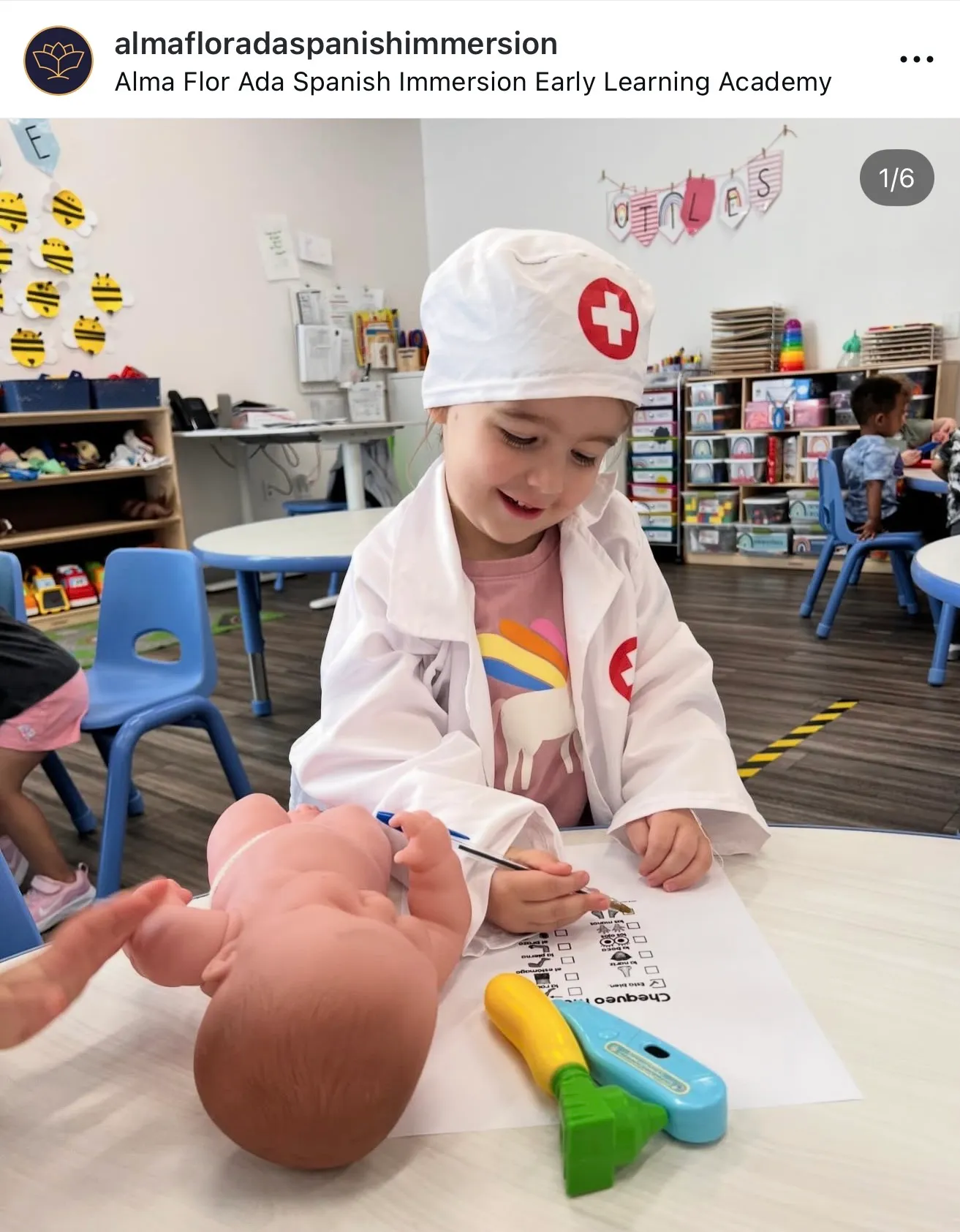
Five or ten minutes with a puzzle, a stack of blocks, or a pile of books, without needing you in the frame the whole time. Independent play predicts how a child will handle center time and free choice, when a teacher is present but not devoting attention to one child.
6. Basic self help habits are starting
Reaching for the spoon. Trying the coat zipper. Carrying their own small backpack. The attempt counts far more than the success rate. ZERO TO THREE suggests practicing exactly these skills at home before a first day: unzipping a coat and hanging it up, unpacking a lunch box, sitting for a short circle time.
If you want a concrete way to prepare, pick two of these and make them your child’s job for a few weeks.
7. Your family has room for a routine
This one is about you, and it is a real factor. Preschool works best when mornings are reasonably consistent and pick up is predictable. If your household is in the middle of a move, a new baby, or a schedule that changes weekly, it is worth deciding whether to start now or after things settle. Either answer is fine. Just make it on purpose.
What readiness does not require
Several things get treated as prerequisites that are not.
- Potty training. Programs that serve toddlers, including ours, are built for diapering and for children who are mid training. Ask, but do not delay a tour over it.
- A big vocabulary. See sign three.
- A tear free first week. Adjustment takes time. Some regression, like accidents or wanting more help at home, is normal and temporary.
- Speaking Spanish. Most of our families do not speak Spanish at home.
Does my child need to speak Spanish to start immersion?
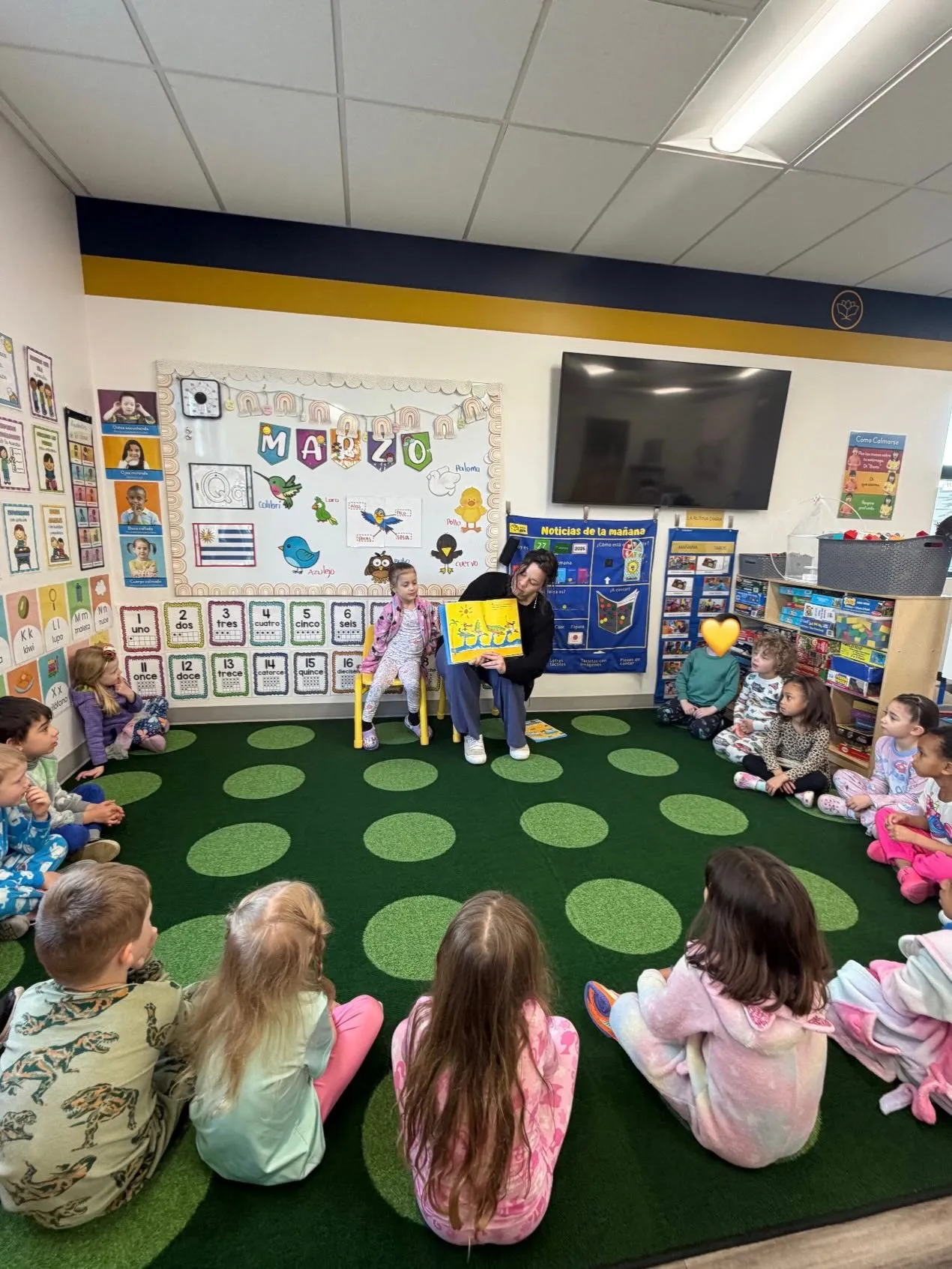
No. Children arrive in our toddler program with no Spanish at all, which is exactly what a 90/10 immersion model expects. Native Spanish speaking teachers use gestures, routines, objects, songs, and repetition so that meaning is always visible, and children absorb the language the same way they absorbed their first one.
If you want a closer look at how that unfolds day to day, we walked through it in starting Spanish immersion at 16 months.
What if my child is not showing these signs yet?
Then wait a season and look again. Development is uneven, and a child who seems glued to you in March can be a different kid by September. The CDC’s Learn the Signs milestone checklists are a useful reference point if you want a broader developmental picture, and your pediatrician is the right person for any specific concern.
What we would gently push back on is waiting purely out of caution. Children build these skills by practicing them, and a toddler classroom is a low stakes place to practice. Quiet, cautious, slow to warm children often make the biggest leaps once they are in a group, because the environment does the coaxing that a living room cannot.
Come see what it looks like
Reading a list only gets you so far. The clearest way to answer this question is to stand in a classroom and watch children the same age as yours, then picture your child in it.
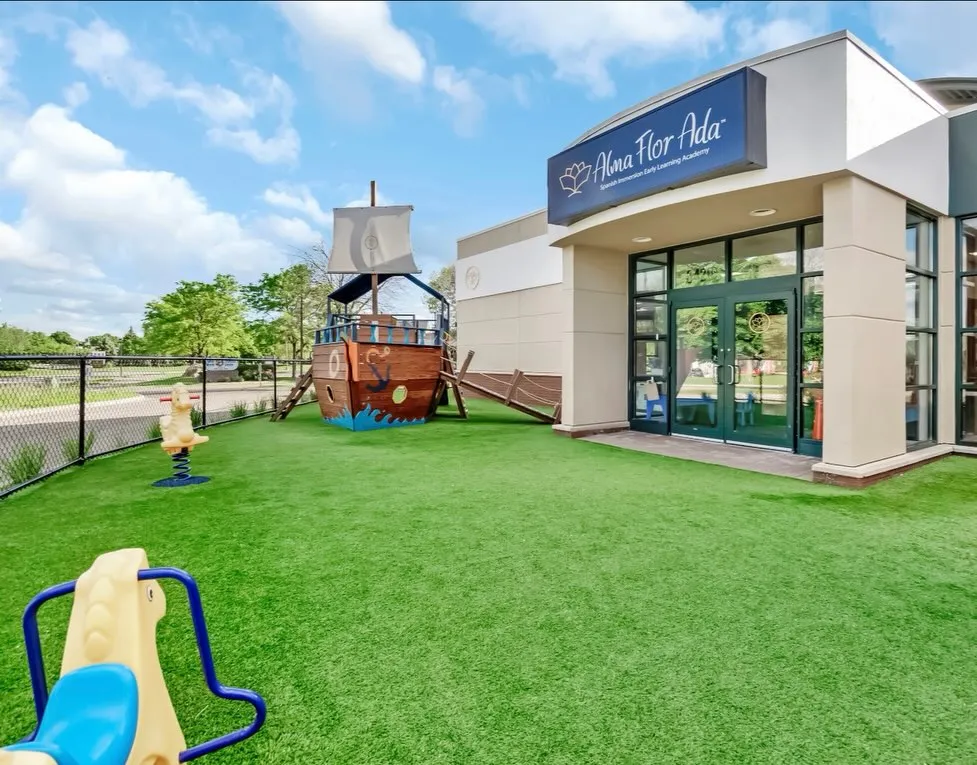
We would love to show you around. You can schedule a tour at our academy on City Centre Drive in Woodbury, or call us at 651-999-3952 and we will talk through where your child is and whether now is the right moment. There is no pressure attached to a visit. Sometimes parents leave a tour and decide to wait six months, and that is a good outcome too.
Frequently Asked Questions
At what age do most children show these signs?
My child cried at a playgroup drop off. Is that a red flag?
Should I wait until my child talks more before starting preschool?
How do I know if a specific program is a good fit for my child?
About the author
Melissa Thaemert, School Director
Melissa Thaemert is the School Director at Alma Flor Ada Spanish Immersion Early Learning Academy in Woodbury, Minnesota. She is a Minnesota educator with 24 years of experience as an elementary teacher, instructional coach, and administrator, and has served as an elementary administrator for the past nine years. She holds advanced degrees in educational leadership, professional studies, adult learning, and elementary education.
Curious about Spanish immersion for your child?
Schedule a tour of our Woodbury academy. We would love to show you around and answer your questions.