Choosing a Preschool
Is a Spanish Immersion Preschool Right for Your Child?
Wondering is Spanish immersion right for my child? An honest, founder's guide to who thrives, common worries, and how to decide, from Alma Flor Ada in Woodbury.
Lucilla Davila
Founder
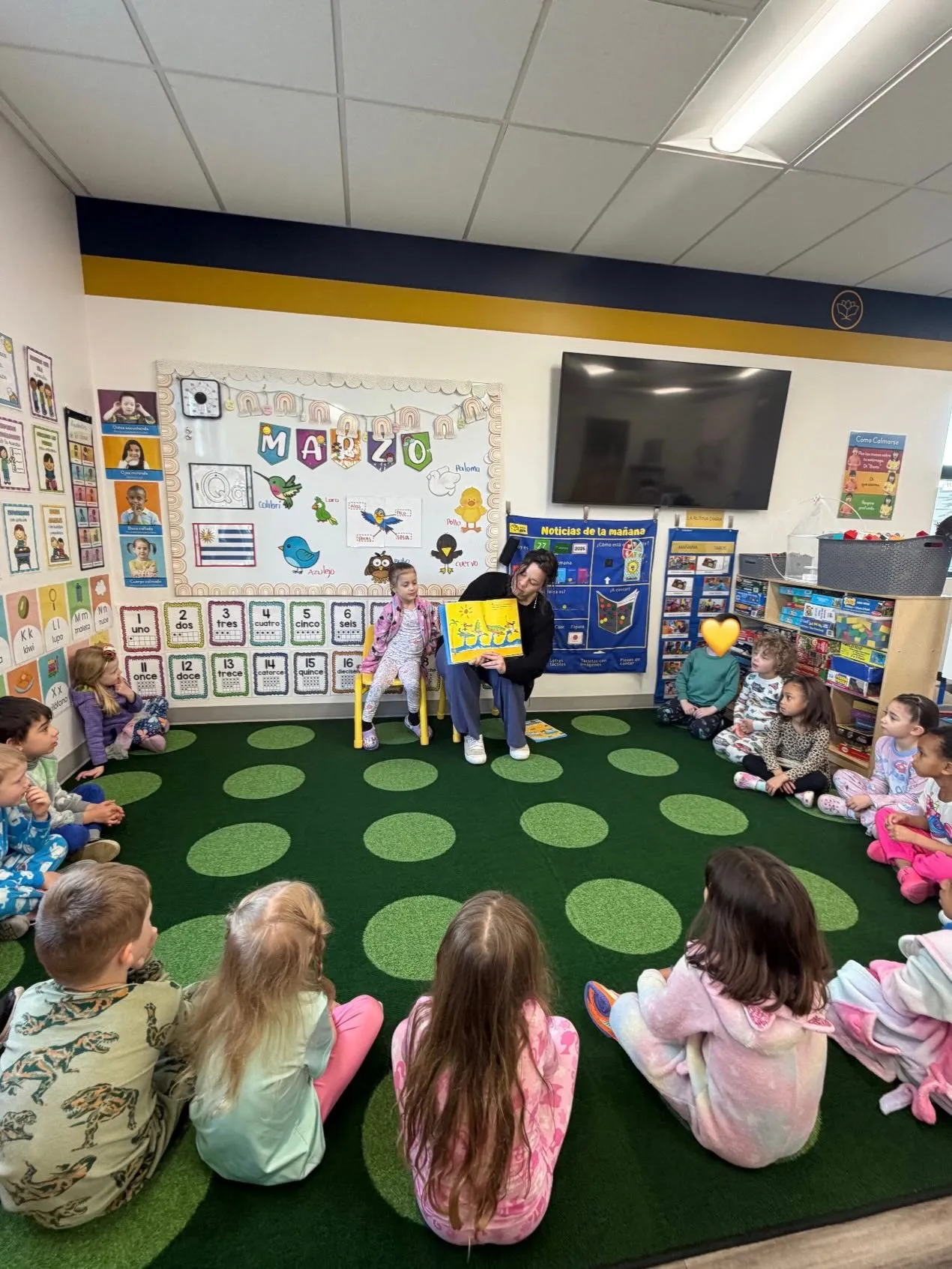
Wondering, is Spanish immersion right for my child? Here is my honest answer as a founder and a parent: for the large majority of children, yes. Immersion works beautifully for shy children, energetic children, and children from homes where no one speaks a word of Spanish. The worries that keep parents up at night are almost always smaller than they seem, and the rewards last a lifetime.
When I built Alma Flor Ada Spanish Immersion Early Learning Academy, I was not starting from theory. I was a parent searching for exactly this kind of nurturing, joyful, culturally rooted immersion for my own family, and I could not find it. So I built it. Everything below comes from that place, and from watching hundreds of children flourish in our Woodbury classrooms.
Who actually thrives in Spanish immersion?
The short answer is most children. Immersion is not a program reserved for a certain kind of “language kid.” It is built around how all young children naturally learn, through play, relationships, and daily routine.
I have watched the quietest children blossom and the most energetic children find their rhythm. What our students share is not a personality type. It is the early-childhood years, when the brain is wired to absorb language with remarkable ease. If your child is between 16 months and Kindergarten and ready for a warm group setting, you are very likely looking at a wonderful fit. You can read more about our story and why we exist if you want to understand the heart behind the school.
What about a shy or quiet child?
Shy children often surprise their parents most. Because our days are filled with song, play, and gentle routine rather than spotlight moments, a quiet child can soak everything in without ever feeling put on the spot.
In immersion, no child is forced to perform. A reserved child might spend weeks listening and watching, and that is not falling behind, that is learning. When they are ready, the words come, often all at once, and the confidence that follows is something to behold. Our native Spanish-speaking teachers are patient by nature and trained to follow each child’s pace.
What about an energetic child who cannot sit still?
Energetic children belong here too. Our day is designed for movement, not stillness, with outdoor play, dancing, hands-on centers, and music woven throughout.
Young children are not meant to sit quietly for long stretches, and immersion does not ask them to. The language is attached to doing, building, running, singing, painting, so an active child is often learning the most when they look like they are just having fun. Energy is an asset in our classrooms, not a problem to manage.
We only speak English at home. Will my child fall behind?
No, and this is the worry I hear more than any other. Most of our families speak only English at home, and their children become some of our most fluent Spanish speakers.
Children do not need a parent translating at the dinner table to succeed. They acquire Spanish through immersion and relationships at school, which is exactly how they learned their first language. Your role at home is simple and joyful: support and celebrate, do not teach. If this is your situation, I wrote more about it in do you need to speak Spanish at home for immersion to work. The honest answer is a confident no.
Will immersion confuse my child or slow their English?
This is a fear rooted in old myths, not in how children’s brains actually work. Growing up bilingual does not confuse children or hold back their English. Young minds are built to hold more than one language at once.
In fact, the cognitive benefits run the other way. Bilingual children often show stronger focus, flexibility, and problem-solving, and their English develops right alongside their Spanish. I gathered the research and the real-world payoff in our guide to the benefits of bilingualism for young children. What you are giving your child is not a complication. It is an advantage they carry for life.
What kind of family thrives at AFA?
Just as most children fit, most families do too. The families who flourish with us are the ones looking for more than childcare, families who want their child to grow up kind, curious, confident, and connected to a wider world.
You do not need to be bilingual. You do not need a Spanish-speaking grandparent or a heritage connection, though many of our families have one. You simply need to be open to the journey and willing to trust the process. We treat your family like our own, and we mean it when we say tu familia es nuestra familia. If you want the full picture of how immersion works locally, our parent’s guide to Spanish immersion preschool in Woodbury walks through everything.
How do I make the final decision?
Here is the truth no article can replace: the best way to know is to come and see. Watching your own child in a Spanish-only morning, happy and engaged, will tell you more than any pros-and-cons list.
When I founded this academy, I wanted parents to feel certain, not pressured. So come walk the halls, meet our teachers, and watch the children. Schedule a tour of our Woodbury academy or call me and my team at 651-999-3952. I think you will feel what I felt when I first imagined this place.
Frequently Asked Questions
Is immersion right for a shy or quiet child?
What if my child has a speech delay?
What if no one in our family speaks Spanish?
How do I know if my child is ready?
About the author
Lucilla Davila, Founder
Lucilla Davila is the founder of Alma Flor Ada Spanish Immersion Early Learning Academy. She built AFA to create the kind of nurturing, joyful, culturally rooted Spanish immersion environment she searched for as a parent and could not find. She leads the academy's vision of raising bilingual, kindhearted, kindergarten-ready children in Woodbury.
Curious about Spanish immersion for your child?
Schedule a tour of our Woodbury academy. We would love to show you around and answer your questions.