Bilingual Parenting
How to Keep Your Child's Spanish Alive Over Summer Break
Worried about the summer slide? Here are simple, joyful ways Woodbury families can keep a child's Spanish alive over summer break, no fluency required.

Juliana Capdevila
Parent Engagement Manager & Assistant Director
Summer in Minnesota is short and precious, and the last thing any parent wants is to spend it on flashcards. The good news is that you do not have to. To keep your child’s Spanish alive over summer break, you do not need lessons, worksheets, or fluency of your own. You need small, steady moments woven into the days you are already enjoying together.
Here is how to protect everything your child gained this year, without turning summer into school.
Does Spanish really fade over the summer?
It can, and language is especially vulnerable. Researchers have long studied the “summer slide,” the dip in skills that can happen over a long break. The evidence is mixed and often overstated, but studies have found that students can lose a meaningful share of their school year reading gains over a single summer. Language skills are particularly susceptible, because they depend on regular practice and repetition to stick.
The encouraging part is that the fix is simple. Young children hold on to a language remarkably well when it stays a living part of their world. The difference between a child who keeps their Spanish and one who loses ground is rarely talent. It is exposure.
How much practice does it actually take?
Less than you think. Consistency beats intensity every time. Ten to fifteen minutes of Spanish a day, woven into normal routines, does more for retention than a single long session on the weekend. Short and frequent wins.
That reframes the whole summer. You are not adding a subject to your child’s day. You are sprinkling a little Spanish into the things you already do.
Make Spanish part of everyday routines
The easiest exposure is the kind that hides inside daily life. Pick a few moments that happen every day and make them Spanish moments.
- Count steps, snacks, or toys in Spanish on the way out the door.
- Name colors, animals, and foods during grocery trips and walks.
- Sing the same Spanish song at bath time or in the car until it becomes a habit.
- Label a few things around the house, such as la puerta, la mesa, and el agua.
None of this requires you to be fluent. It only requires repetition, and children love repetition.
Lean on books, music, and screens, the good kind
Stories and songs are some of the most powerful tools you have. Borrow bilingual and Spanish picture books from your local library, including the Washington County libraries right here in the East Metro. Build a short Spanish playlist for car rides. When screen time happens, and in summer it will, switch a favorite show into Spanish or turn on Spanish subtitles. Pairing spoken words with familiar pictures and songs is exactly how young brains absorb language, and it feels like fun rather than work.
Turn play into practice
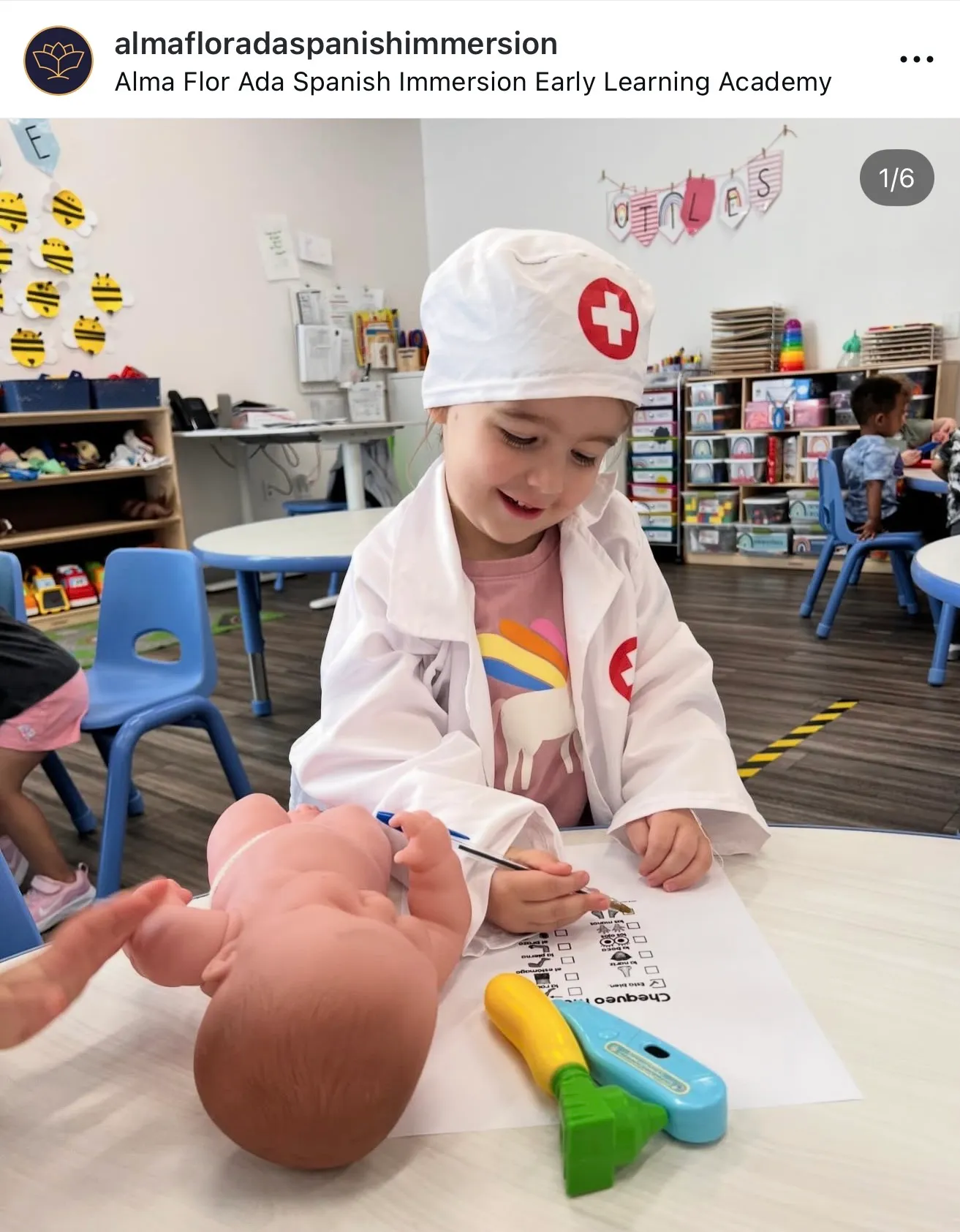
Children learn language best through play, which is why it carries over so naturally to summer. Imaginative play, pretend cooking, doctor visits, building, and dress up all become language practice when a few Spanish words come along for the ride. Invite your child to “teach” a stuffed animal a Spanish word, or play simple games like Simón dice, the Spanish version of Simon Says. The more playful it feels, the more it sticks.
Find real Spanish around the Twin Cities
Summer is full of chances to use Spanish in the real world, which is the most motivating practice of all. Visit a Latin American grocery or restaurant and let your child order or count out change. Look for cultural festivals and library story times across Woodbury and the East Metro. Real settings show children that Spanish is not a school subject. It is a living language that connects them to people and places.
Consider a summer immersion camp
If you want the surest way to prevent any slide, structured immersion does the heavy lifting for you. Our Spanish immersion summer camps in Woodbury keep language active through art, music, outdoor play, and weekly themes, all in an immersive bilingual setting. Camp gives children consistent exposure during the exact months when skills tend to slip, and it keeps them connected to the friends and routines they love. Families new to AFA are welcome too, which makes summer a great time to try immersion.
You do not need to speak Spanish to help
This is the part that reassures most parents, because the majority of our families do not speak Spanish at home. Your job is not to teach the language. It is to keep the door open. Press play, check out the books, show up at the festival, and cheer your child on. We go deeper on this in our guide on whether you need to speak Spanish at home, and the short answer is no. Your encouragement is what your child needs most.
Keep it small, keep it steady, and keep it joyful. A summer of little Spanish moments adds up to a child who walks into fall confident and ready.
Curious what immersion could look like for your family this summer or this fall? Schedule a tour of our Woodbury academy. We would love to show you around and answer your questions.
Frequently Asked Questions
Will my child forget their Spanish over the summer?
How much Spanish practice does my child need over the break?
What if I do not speak Spanish myself?
Do summer camps really help with language retention?
About the author
Juliana Capdevila, Parent Engagement Manager & Assistant Director
Juliana Capdevila is the Parent Engagement Manager and Assistant Director at Alma Flor Ada Spanish Immersion Early Learning Academy. Originally from Buenos Aires, Argentina, she is a native Spanish speaker and has lived in Woodbury, Minnesota for 19 years with her husband and two daughters. She holds a Bachelor's degree in Marketing and brings experience in nonprofit work, family relocation support, and business management. Juliana works closely with AFA families every day, helping them understand the immersion program and supporting their children's bilingual journey.
Curious about Spanish immersion for your child?
Schedule a tour of our Woodbury academy. We would love to show you around and answer your questions.