Bilingual Parenting
The Benefits of a Spanish Immersion Kindergarten
How a Spanish immersion kindergarten builds bilingual skills, sharper thinking, and cultural confidence, and why age five is the ideal time to start.
Lucilla Davila
Founder
Why Kindergarten Spanish Immersion Matters More Than Ever
Kindergarten Spanish immersion is an educational approach where young children learn all or most of their core academic subjects, like math, reading, and science, entirely in Spanish. Instead of studying Spanish as a separate subject, students are immersed in the language throughout their school day, allowing them to acquire Spanish naturally while mastering grade-level content.
Key facts about kindergarten Spanish immersion:
- What it is: Students learn traditional curriculum (reading, math, science) taught primarily or entirely in Spanish
- How it works: Teachers use Spanish for instruction, classroom activities, and social interactions throughout the day
- When to start: Programs typically begin in kindergarten and continue through elementary school
- Who it’s for: Designed for both Spanish-speaking and non-Spanish-speaking families
- Expected outcomes: Students become bilingual, biliterate (can read and write in both languages), and bicultural by upper elementary grades
The demand for bilingual education in the United States is surging. The number of dual-language programs in U.S. public schools increased by 360 percent from 2010 to 2021, with about 80 percent focusing on Spanish. This growth reflects what parents increasingly understand: in our globalized world, bilingualism opens doors.
More than half the world’s population is already bilingual or multilingual. Research consistently shows that bilingual children often outperform their monolingual peers in critical thinking and on standardized tests, developing cognitive advantages that extend far beyond the classroom.
For parents in the Woodbury area, understanding how kindergarten Spanish immersion works is the first step toward giving your child these lifelong advantages. The early childhood years represent a unique window for language acquisition, when young brains absorb new languages with remarkable ease.
I’m Lucilla Dávila, and I’ve spent nearly three decades leading bilingual education programs, dual immersion models, and culturally responsive learning frameworks across K-12 schools. My work has focused on designing effective kindergarten Spanish immersion programs that honor students’ cultural identities while building strong academic foundations.
What is a Spanish Immersion Program?
At its heart, a Spanish immersion program is an educational model where students learn their entire curriculum in Spanish. Imagine learning to count, identify shapes, or understand a butterfly’s life cycle, all while hearing and speaking Spanish. It’s not just a language class; it’s a complete educational experience delivered in Spanish. The goal is to cultivate Spanish proficiency while fostering social and cognitive development.
This approach is fundamentally different from traditional language learning, where Spanish might be taught as a separate subject for an hour a day. In immersion, the classroom itself becomes the environment for language acquisition. Children learn Spanish naturally, much like they learned their first language, by using it in meaningful contexts. They interact with teachers and peers, engage with core subject content, and participate in daily activities, all in Spanish. This continuous exposure helps them build fluency and confidence organically.
The ultimate aim of a quality kindergarten Spanish immersion program is to achieve biliteracy. This means students don’t just speak Spanish; they can also read and write proficiently in it, alongside their native language. Biliteracy is an increasingly vital skill for global citizens.
Here’s a quick comparison to highlight the differences:
| Feature | Spanish Immersion Program | Traditional Language Class |
|---|---|---|
| Method | Content-based instruction; all subjects taught in Spanish | Spanish taught as a separate subject; focus on grammar/vocab |
| Exposure | Constant, throughout the school day | Limited, typically 30-60 minutes daily/weekly |
| Goal | Bilingualism, biliteracy, biculturalism | Basic conversational skills, reading/writing in Spanish |
| Learning Style | Natural acquisition, experiential | Explicit instruction, memorization |
| Outcomes | High proficiency in Spanish, cognitive benefits | Functional understanding of Spanish |
How Spanish Immersion Works at Alma Flor Ada
At Alma Flor Ada Spanish Immersion Early Learning Academy, we champion a program structure designed for deep and meaningful language acquisition. We believe in multi-lingual learning with native Spanish speakers, ensuring that children are exposed to authentic language and real culture from day one.
Our approach often involves variations of immersion models:
- Full Immersion: The majority, if not all, of the instructional day is conducted in Spanish, especially in the early years like kindergarten Spanish immersion. This allows for maximum exposure and rapid acquisition.
- Content-based instruction: Instead of isolated language lessons, children learn all their core subjects, like math, science, and social studies, through Spanish. This makes the language a tool for learning, not just an object of study.
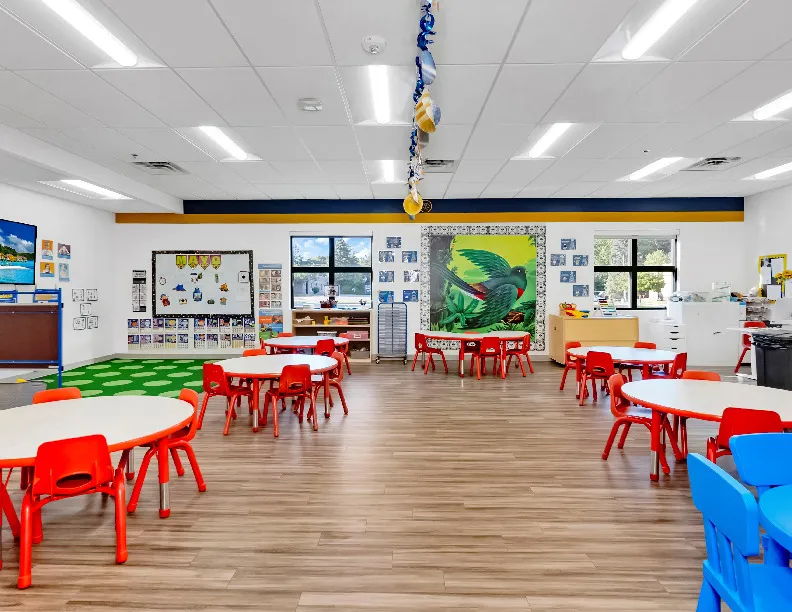
- Focus on interactive learning: Our classrooms are vibrant, engaging spaces where children learn by doing. Through play, projects, and collaborative activities, they naturally use Spanish to communicate, problem-solve, and explore.
We believe that learning a language should be an exciting journey, filled with fun and cultural richness. Our programs are designed to foster this passion for language and learning.
The Goal: Bilingualism and Biliteracy
The ultimate aspiration of a kindergarten Spanish immersion program is to nurture children who are not only fluent in Spanish but also biliterate. Fluency means they can understand and speak Spanish confidently, engaging in conversations and expressing themselves effectively. Biliteracy takes it a step further: it means they can read and write in Spanish with the same comprehension and skill they possess in English.
But it’s more than just language skills. Our programs also cultivate cultural competency. By immersing children in Spanish, they naturally absorb Hispanic cultural traditions, perspectives, and values. This exposure broadens their worldview, fostering empathy and understanding for diverse cultures, a critical skill in our interconnected world.
The Lifelong Benefits of Starting Early
Enrolling your child in kindergarten Spanish immersion is an investment in their future that yields a lifetime of returns. The early years are a critical period for brain development, and introducing a second language during this time taps into a child’s natural capacity for language acquisition. The benefits extend far beyond simply speaking another language; they encompass cognitive, academic, social-emotional, and cultural growth.
Bilingual children often outperform their monolingual peers in reading, math, and critical thinking. Research shows that proficiency in two languages correlates with higher scores on standardized tests. This early advantage sets them up for success throughout their educational journey and beyond.
Improved Cognitive Skills
One of the most compelling reasons to consider kindergarten Spanish immersion is the profound impact it has on a child’s developing brain. Learning two languages simultaneously acts like a mental workout, strengthening neural pathways and enhancing various cognitive functions. Bilingual children consistently show advantages in:
- Problem-solving: Bilingual children are more adept at analyzing problems and finding creative solutions.
- Critical thinking: Navigating two language systems hones their ability to evaluate information and make reasoned judgments.
- Increased memory: Managing two vocabularies and grammars boosts working memory and attention.
- Mental flexibility: Bilingual brains are more agile, adapting to new situations and switching between tasks more easily. This can lead to quicker learning of other subjects and additional languages.
- Brain development: Early language exposure stimulates brain development, improving executive functions like planning, focus, and multitasking.
These cognitive advantages translate directly into academic success. For instance, a cohort of Spanish Immersion students who took the California Standardized Test for the first time showed remarkable results: 95% scored in the “Advanced” range in English Language Arts and 88% scored in the “Advanced” range in Math. Overall, 98% of these students scored “Proficient” or above across both subject areas. These statistics underscore how immersion education can lead to superior academic performance, not just in the target language but across the curriculum.
Academic and Career Advantages
Beyond the cognitive boost, the academic and career advantages of early Spanish immersion are undeniable. Children who learn Spanish in kindergarten are not just learning a language; they’re building a foundation for lifelong success.
- Higher standardized test scores: As mentioned, research consistently shows that bilingual children tend to score higher on standardized tests, demonstrating a deeper understanding of concepts and improved critical thinking abilities.
- Easier to learn additional languages: Having already mastered the process of acquiring a second language, bilingual children often find it much easier to pick up a third, fourth, or even fifth language. Their brains are wired for linguistic exploration!
- College readiness: Universities increasingly value multilingual candidates. The critical thinking, problem-solving, and cultural awareness developed in immersion programs make students stand out in college applications.
- Future job opportunities: In an increasingly globalized economy, bilingual employees are in high demand across virtually every industry. From international business and diplomacy to healthcare and technology, the ability to communicate in Spanish opens countless doors.
- Increased earning potential: Studies have shown that bilingual individuals often command higher salaries and have more diverse career paths available to them.
At Alma Flor Ada, we believe in nurturing the whole child, preparing them not just for the next grade level but for a future where they can thrive globally. Our kindergarten Spanish immersion program is designed to be a springboard for academic excellence and boundless opportunities.
A Closer Look at the Kindergarten Spanish Immersion Curriculum
So, how does a kindergarten Spanish immersion curriculum actually work in practice? It is much more than just translating lessons from English into Spanish. It is about creating an environment where learning and language acquisition are seamlessly intertwined, making every moment an opportunity for growth.
Our curriculum is deeply rooted in play-based learning and an experiential approach. Young children learn best by doing, exploring, and interacting with their world. In our programs, Spanish becomes the natural language for these explorations. Whether building a block tower, painting a picture, or solving a puzzle, children are constantly hearing, speaking, and thinking in Spanish.
We integrate a superb STEM curriculum (Science, Technology, Engineering, and Math), ensuring that these critical subjects are taught through hands-on activities and experiments, all in Spanish. Imagine a child learning about plant growth by planting seeds and labeling parts of the plant in Spanish, or exploring basic physics by building structures and discussing them in Spanish.
The arts and music are also integral, not just as subjects but as vehicles for language. Singing Spanish songs, creating art projects while discussing colors and shapes in Spanish, and engaging in dramatic play all deepen language comprehension and cultural understanding. Crucially, social interactions with teachers and peers in Spanish build confidence and conversational fluency in a supportive, natural setting.
How a Typical Day in Kindergarten Spanish Immersion Works
A day in our kindergarten Spanish immersion program is a vibrant mix of learning and fun, all woven with the thread of the Spanish language. While the specifics might vary, here is a glimpse into how a typical day unfolds:
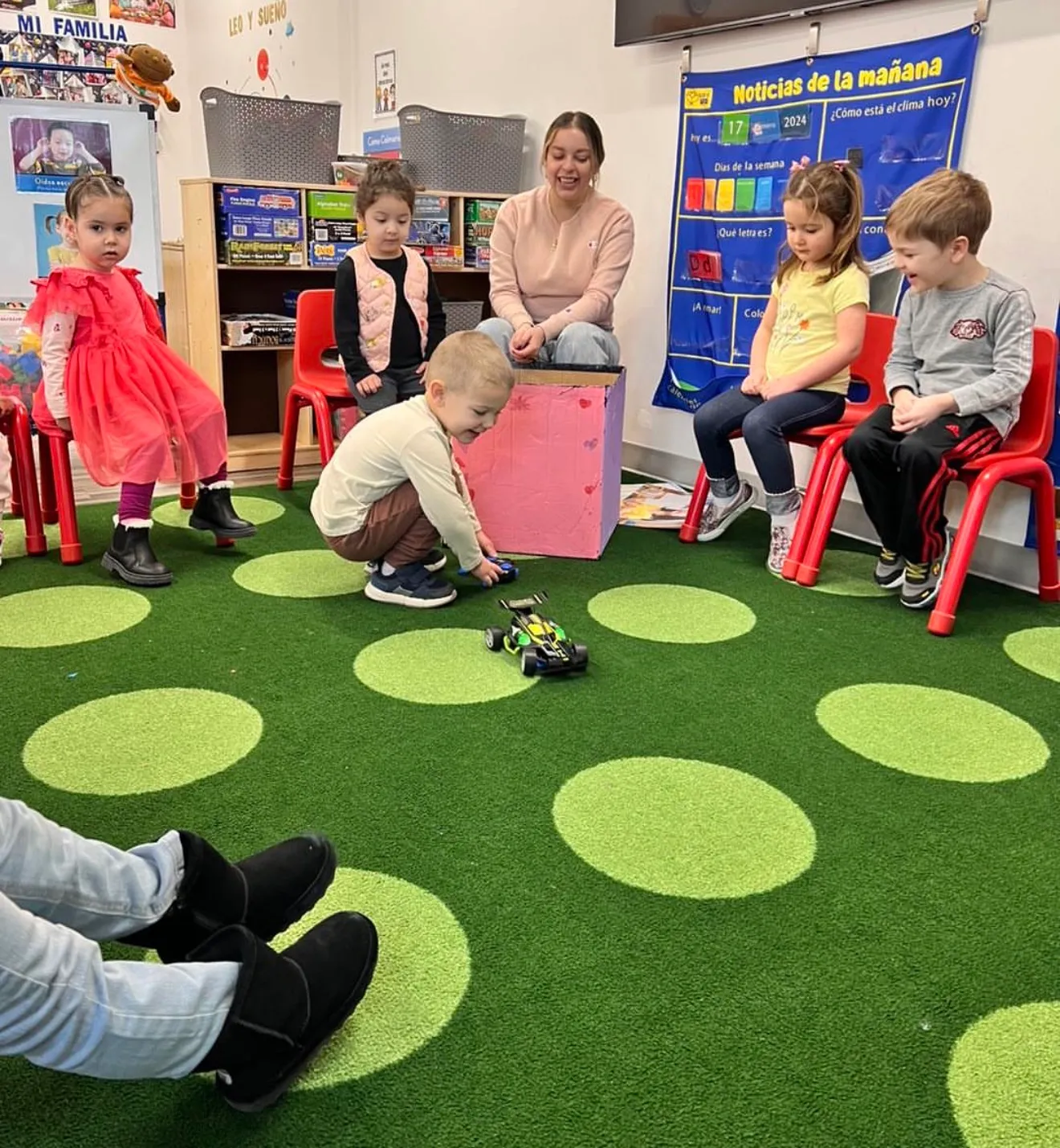
- Morning circle time: The day begins with a warm “¡Buenos días!” Children greet each other, sing songs, and discuss the calendar and daily plans, all in Spanish. This routine builds foundational vocabulary and community.
- Math concepts in Spanish: Concepts like counting, sorting, and basic addition are introduced through engaging games. Children use manipulatives and explain their thinking in Spanish.
- Story time: Teachers read captivating Spanish picture books, fostering a love for reading while expanding vocabulary.
- Outdoor play: Recess is another opportunity for natural language use as children interact, negotiate games, and share, all in Spanish.
- Hands-on centers: Children rotate through learning centers for art, sensory play, and building, all designed to encourage Spanish communication and reinforce academic concepts.
This constant, immersive experience ensures that children are not just learning about Spanish, but truly learning in Spanish.
More info about our Kindergarten curriculum
Teacher Qualifications and Classroom Environment
The heart of any successful kindergarten Spanish immersion program lies with its teachers. At Alma Flor Ada, we are committed to providing multi-lingual learning with native Spanish speakers who are not only fluent in the language but also highly skilled educators.
Our teachers are passionate about early childhood education and language acquisition. While specific certifications like the BCLAD (Bilingual Cross-cultural, Language, and Academic Development) are specific to certain states, we ensure our educators possess equivalent expertise and training in bilingual education methodologies. This includes a deep understanding of how young children acquire language, how to teach core subjects effectively in a second language, and how to create a supportive and engaging classroom environment.
A key aspect of an effective immersion program is a research-based curriculum design. We partner with experts in immersion education, like those at add.a.lingua, to help design our curriculum and facilitate teacher training. This ensures our program is built on best practices and proven strategies for success.
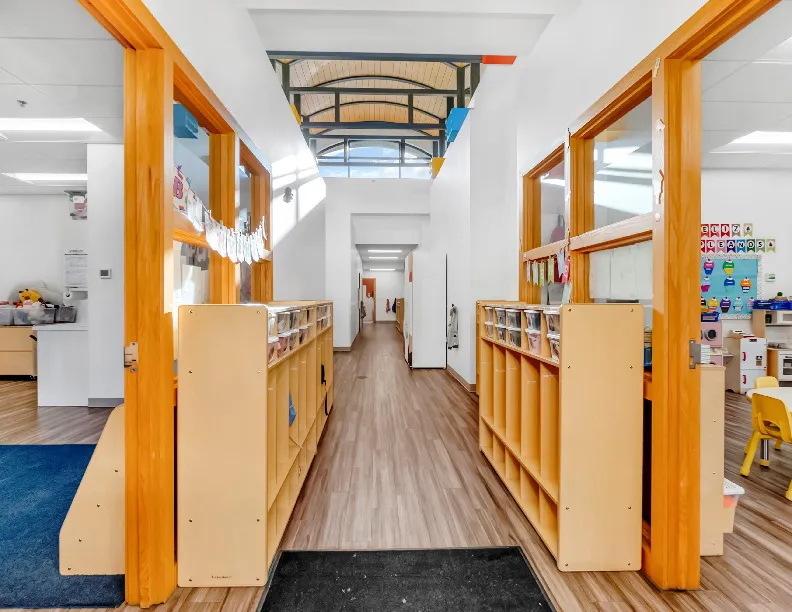
Our classrooms are designed to be warm, nurturing spaces where children feel safe to take risks with language. We maintain a low student-teacher ratio, allowing for personalized attention and ample opportunities for individual and small-group interactions in Spanish. We believe that a supportive environment, coupled with highly qualified native-speaking teachers, is crucial for fostering confidence and academic achievement in both Spanish and English.
Is Immersion Right for Your Family?
Deciding on a kindergarten Spanish immersion program is a significant choice, and it’s natural to consider if it’s the right fit for your child and family. It represents a long-term commitment, typically spanning several years to achieve full bilingualism and biliteracy.
When considering immersion, it’s helpful to think about:
- Parental commitment: While you don’t need to speak Spanish at home, your enthusiasm and support for your child’s language journey are invaluable.
- Child’s temperament: Children who are naturally curious, adaptable, and enjoy social interaction often thrive in immersion settings.
- Learning styles: Immersion benefits from children who are engaged by hands-on, experiential learning.
We encourage you to explore our school’s philosophy to see if our values align with your family’s educational goals.
More info about our school’s philosophy
The Best Age for Kindergarten Spanish Immersion and Potential Challenges
When it comes to language acquisition, the general consensus is clear: the earlier, the better. The early childhood years, particularly from infancy through kindergarten, represent a critical window for language learning. Young brains are incredibly flexible and adept at absorbing new sounds, grammar, and vocabulary without the self-consciousness that can hinder older learners. This is why starting with kindergarten Spanish immersion or even earlier is so beneficial. Early childhood education improves social and emotional development from as early as six weeks old, and these benefits are amplified by early education in a foreign language.
Starting a child in a kindergarten Spanish immersion program means they begin their educational journey by learning core subjects entirely in Spanish. This allows them to acquire the language naturally, much like they learned their first language.
While the benefits are immense, it’s also important to acknowledge potential challenges:
- Temporary English lag: A common concern for parents is that their child’s English vocabulary might temporarily lag behind that of their monolingual peers in the initial years. This is a normal part of the process as the brain is busy building two language systems. However, research consistently shows this gap closes by upper elementary grades, and often, bilingual children surpass their monolingual peers in overall academic performance. This can be mitigated by ensuring children have full exposure to normal English usage at home.
- Initial adjustment period: Some children might experience a brief period of adjustment as they adapt to a new language environment. Our supportive teachers are experts at making this transition smooth and comfortable, using visual aids, gestures, and a nurturing approach to ensure every child feels understood and confident.
We believe that the long-term gains of bilingualism far outweigh these initial, temporary problems. For families considering an even earlier start, we offer fantastic options.
Explore our Early Pre-K options
The Parent’s Role in Supporting Your Child’s Journey
As parents, your role in supporting your child’s kindergarten Spanish immersion education is incredibly important, even if you don’t speak Spanish yourselves. Your enthusiasm and engagement can make a huge difference in your child’s success and love for learning.
Here are some ways parents can actively support their child’s immersion experience:
- Reading at home: Continue to read with your child in English daily. This reinforces their native language literacy and helps transfer skills between languages. Even 20 minutes of interactive reading time can be incredibly beneficial.
- Using supporting materials: Our teachers will often send home materials or suggest activities that can reinforce Spanish learning in a fun, low-pressure way. Accept these opportunities!
- Communicating with teachers: Maintain open lines of communication with your child’s teacher. They are your best resource for understanding your child’s progress and addressing any concerns. Our schools ensure that communication, such as report cards and notices, is provided in English for non-Spanish speaking families.
- Volunteering: Many schools welcome parent volunteers. Even if you don’t speak Spanish, you can help with classroom tasks, school events, or take-home projects. This shows your child that you value their school experience.
- Showing enthusiasm: Your positive attitude towards language learning and other cultures will be contagious. Celebrate your child’s progress, no matter how small, and show genuine interest in what they are learning.
- Creating a positive attitude: Remind your child that learning two languages is a superpower! Encourage them to share their new words and songs with you. Homework can even be a wonderful opportunity for quality time between parents and children, offering a window into their school day.
Your belief in their abilities and your active involvement are powerful motivators for your child’s success in kindergarten Spanish immersion.
Frequently Asked Questions
Will my child fall behind in English if they are in a kindergarten Spanish immersion program?
What if our family doesn't speak Spanish at home?
How do immersion programs prepare students for a global future?
About the author
Lucilla Davila, Founder
Lucilla Davila is the founder of Alma Flor Ada Spanish Immersion Early Learning Academy. She built AFA to create the kind of nurturing, joyful, culturally rooted Spanish immersion environment she searched for as a parent and could not find. She leads the academy's vision of raising bilingual, kindhearted, kindergarten-ready children in Woodbury.
Curious about Spanish immersion for your child?
Schedule a tour of our Woodbury academy. We would love to show you around and answer your questions.