Spanish Immersion
How the 90/10 Spanish Immersion Model Works
A clear, parent-friendly explanation of the 90/10 Spanish immersion model: what it means, when teachers use English, why it works, and what you'll notice at home.
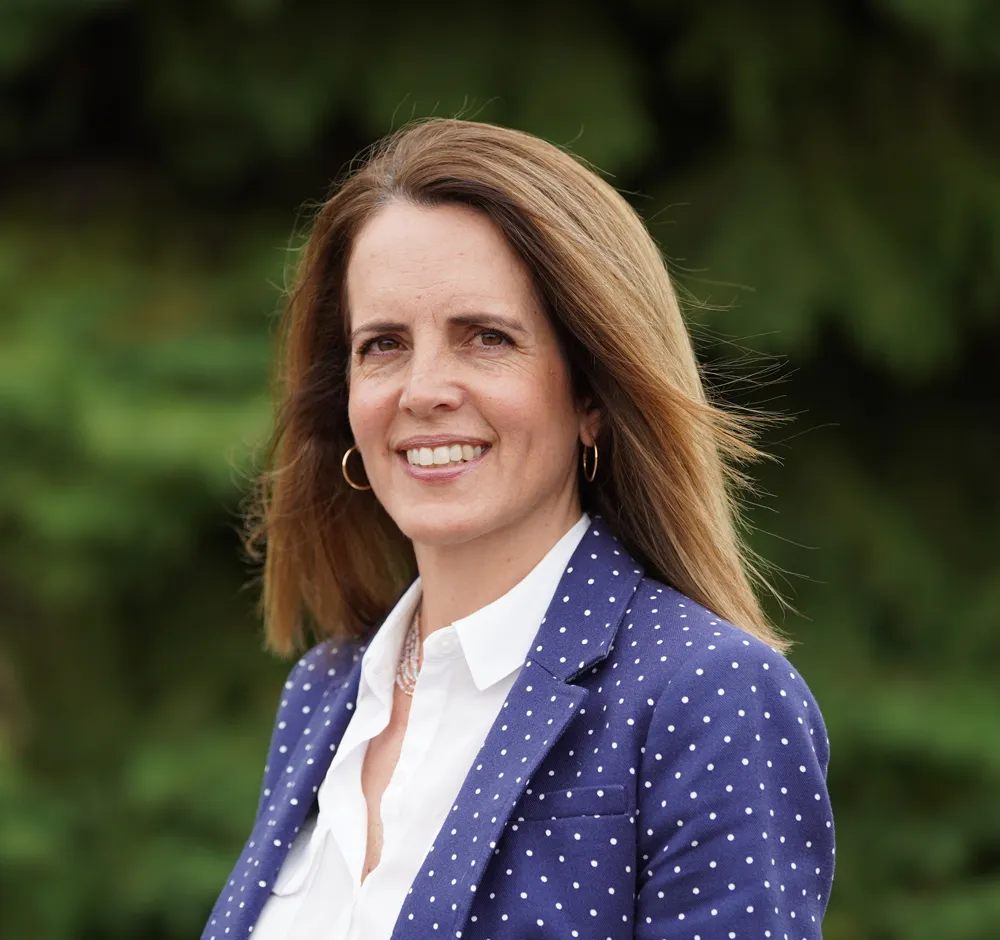
Juliana Capdevila
Parent Engagement Manager & Assistant Director

The 90/10 Spanish immersion model means children spend about 90 percent of their school day in Spanish and about 10 percent in English. The Spanish is the language of everything from snack time to story time, while the small slice of English is reserved for moments when a child needs a quick explanation or a little comfort. The goal is simple: surround children with so much Spanish that they acquire it naturally, the same way they learned their first language, without ever feeling lost.
At Alma Flor Ada Spanish Immersion Early Learning Academy in Woodbury, this is the model we use every day. Below is the same explanation we give parents when they tour our school and ask, very reasonably, how a child who has never heard Spanish can possibly thrive in a Spanish classroom.
What does the 90/10 immersion model actually mean?
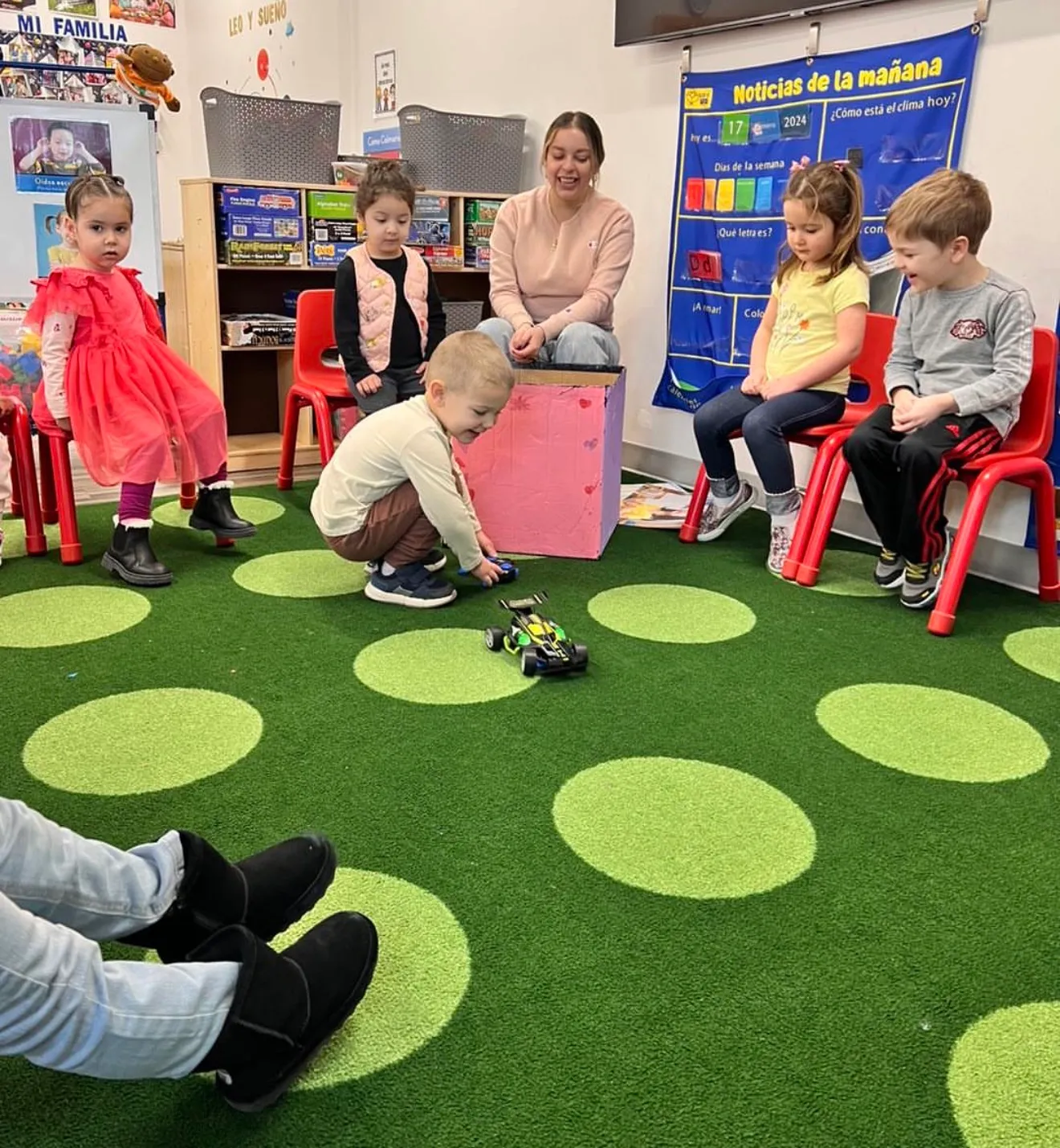
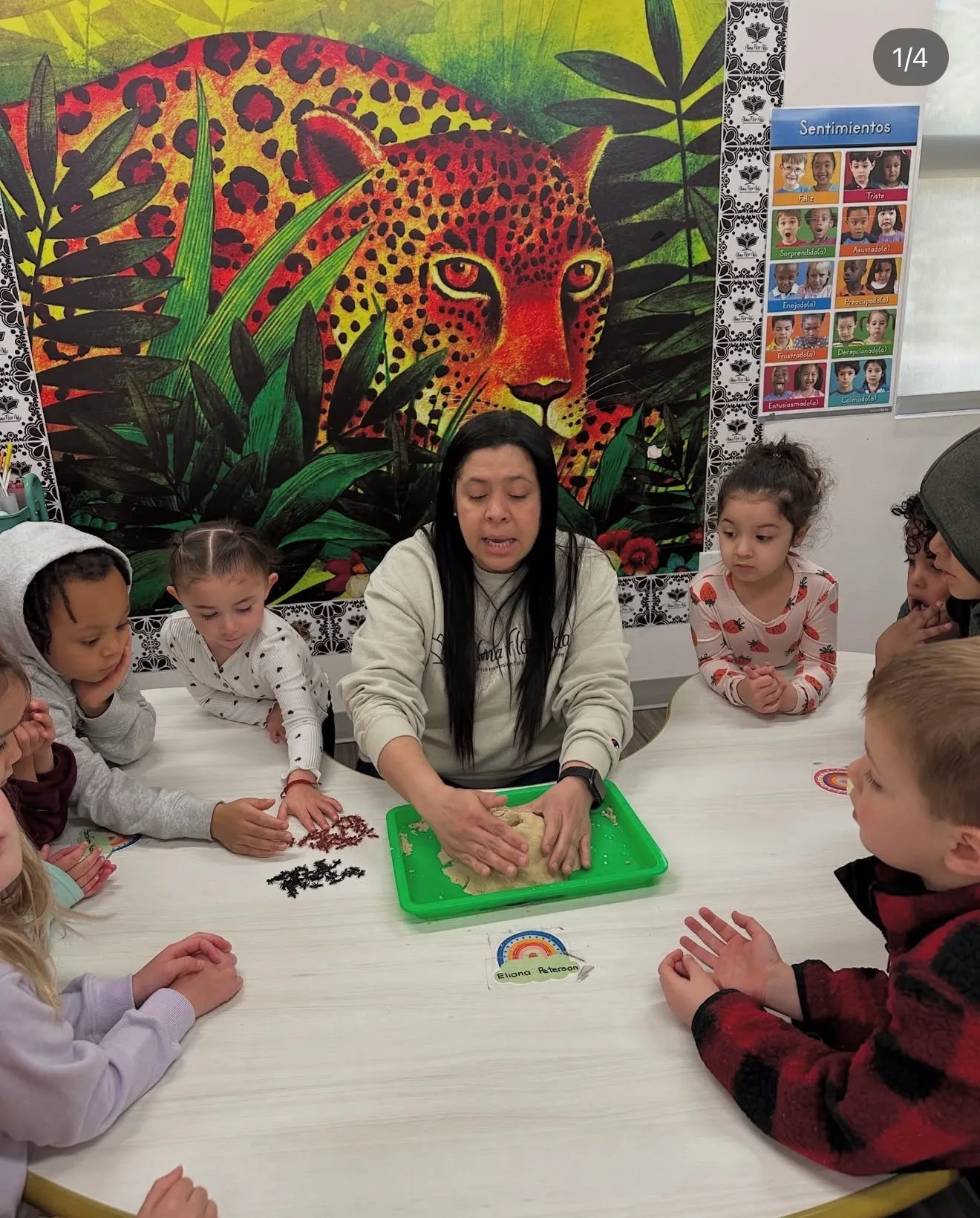
In practice, 90/10 means almost the entire day happens in Spanish. Teachers greet children in Spanish, sing in Spanish, read in Spanish, and narrate the daily routine in Spanish. English appears only in small, deliberate doses.
That 10 percent of English is not a separate lesson block. It shows up in the moments that matter, such as reassuring a child who is having a hard morning or making sure everyone understands an important instruction. The ratio is a guide, not a rigid schedule. What stays constant is that Spanish is the default language of the classroom, all day, every day.
When exactly do teachers use the 10 percent English?
Teachers reach for English in two situations: clarity and comfort. If a child looks genuinely confused about something that matters, a teacher may offer a brief English bridge and then return to Spanish. If a child is upset, missing a parent, or needs emotional reassurance, a teacher will meet them with warmth in whatever language soothes them fastest.
This is the part that puts parents at ease. No child is ever left feeling stranded in a language they do not yet understand. A new student might hear more English-supported moments in the first few weeks, and steadily fewer as their Spanish comprehension grows. The English is a safety net, not a crutch.
Why does natural immersion work so well for young children?
Young children are wired to acquire language through exposure and relationships, not through translation or memorization. A toddler who hears “vamos a lavarnos las manos” before every snack does not learn a vocabulary list. They learn what the words mean by living them, over and over.
Language experts broadly agree that early childhood is a uniquely receptive window for picking up new languages. During these years the brain absorbs sounds, patterns, and meaning with remarkable ease. Immersion takes full advantage of that window by attaching language to play, food, songs, and friendships, the things children already care about. That is why immersion children do not feel like they are studying Spanish. They feel like they are simply living their day, which happens to be in Spanish.
What is the role of native Spanish-speaking teachers?
Our teachers are native Spanish speakers, and that matters more than it might seem. Children absorb authentic pronunciation, rhythm, and cultural context, not textbook Spanish. They hear the language as it is genuinely spoken across the Spanish-speaking world.
Native-speaking teachers also bring culture into the room naturally, through songs, stories, holidays, and everyday expressions. A few things this gives your child:
- Accurate accent and intonation absorbed from real speakers
- Cultural connection woven into ordinary moments, not taught as a separate topic
- Confidence that comes from learning a living language from people who love it
Why 90/10 instead of a 50/50 dual-language split?
A 90/10 model gives children enough Spanish for their brains to treat it as a true language rather than an occasional subject. A 50/50 model divides the day evenly, which feels balanced on paper but slows the deep acquisition that full immersion produces.
For preschool-age children especially, the heavier Spanish exposure of 90/10 is what builds real, usable fluency. The English in their lives is already abundant, at home, with family, and everywhere around them in Minnesota. The classroom is the one place where Spanish can take the lead, so that is exactly what it does. You can read more about our approach on our immersion philosophy page.
What is the “silent period,” and is it normal?
Yes, the silent period is completely normal, and it is one of the most reassuring things to understand as a parent. Many children go through a receptive phase where they understand far more Spanish than they speak. They are listening, absorbing, and building comprehension before they start producing words on their own.
Think of it as the same path every baby takes with a first language. Babies understand “no” and “bottle” long before they say them. Immersion children follow the same arc: they comprehend first, then they speak. During this period your child may come home seeming quiet about Spanish, then suddenly surprise you by counting in Spanish or singing a song they never mentioned. That leap is the silent period paying off.
What will I notice at home over weeks and months?
In the first few weeks, you may notice very little outwardly, and that is okay. The early work is internal as your child builds comprehension. By a few weeks in, many parents hear scattered words, a counting sequence, or a song.
Over the following months, the changes become unmistakable:
- Spanish words slipping into everyday speech, often for colors, numbers, and food
- Songs and phrases your child sings without prompting
- A growing ability to follow simple Spanish instructions at home
Mixing the two languages in a single sentence is also normal and healthy. It is a sign your child has two languages available and is sorting out which words belong where, not a sign of confusion.
Will my child’s English suffer?
No, and this is worth saying plainly. Adding Spanish does not subtract English. Your child continues developing English at home, with family, and through the entire English-speaking world around them.
Language experts widely agree that strong development in one language supports the other, because core skills like vocabulary depth, listening, and reasoning transfer across both. Children in quality immersion programs reliably catch up to and often match their peers in English while gaining a second language for life. We explain how this carries into elementary school in Will my child be ready for Kindergarten after Spanish immersion?, and you do not need to speak Spanish at home for any of it to work, as we cover in Do you need to speak Spanish at home?
The best way to understand the 90/10 model is to watch it in action, with happy children moving through a Spanish-only morning. Schedule a tour of our Woodbury academy, or explore our five-level program to see how immersion grows with your child.
Frequently Asked Questions
What does 90/10 mean exactly?
Why 90/10 instead of 50/50?
When do teachers use English?
Will my child's English fall behind?
About the author
Juliana Capdevila, Parent Engagement Manager & Assistant Director
Juliana Capdevila is the Parent Engagement Manager and Assistant Director at Alma Flor Ada Spanish Immersion Early Learning Academy. Originally from Buenos Aires, Argentina, she is a native Spanish speaker and has lived in Woodbury, Minnesota for 19 years with her husband and two daughters. She holds a Bachelor's degree in Marketing and brings experience in nonprofit work, family relocation support, and business management. Juliana works closely with AFA families every day, helping them understand the immersion program and supporting their children's bilingual journey.
Curious about Spanish immersion for your child?
Schedule a tour of our Woodbury academy. We would love to show you around and answer your questions.