Parent Tips
Helping Your Child Adjust to the First Days of Preschool
Wondering how to help your child adjust to preschool? Here is what the first two weeks really look like, and the small routines Woodbury parents rely on.
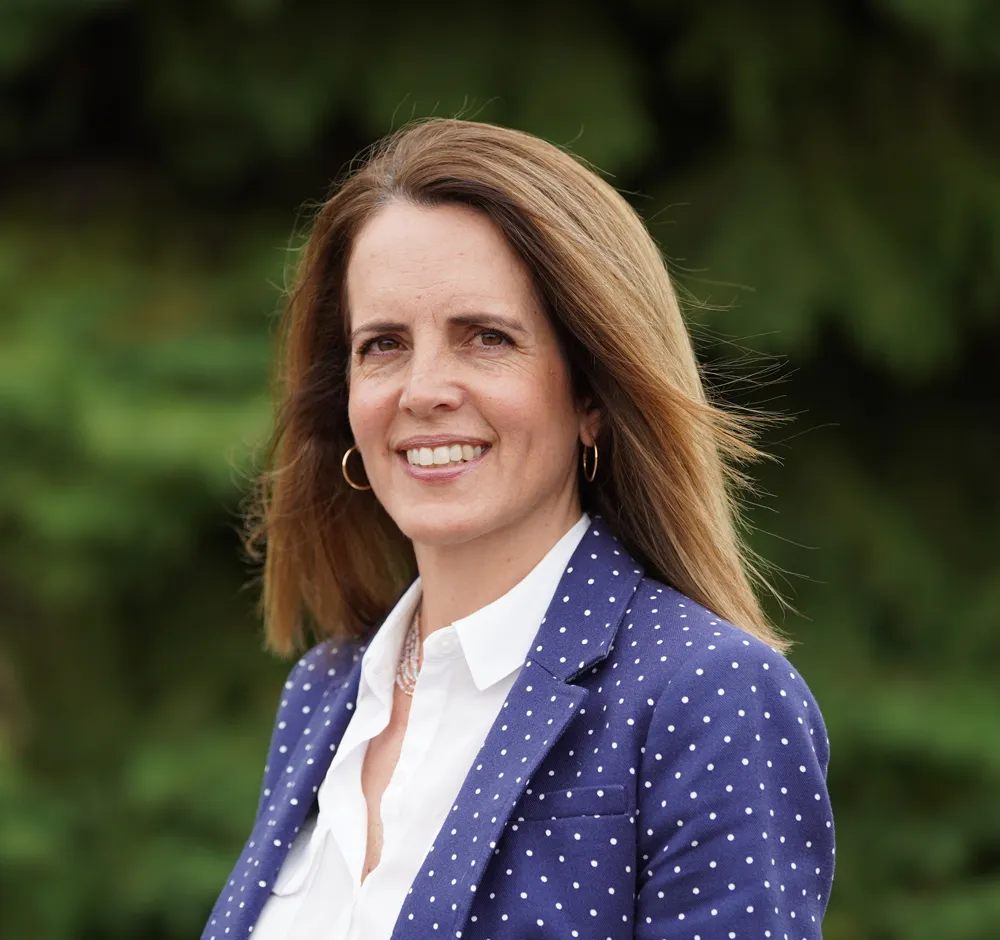
Juliana Capdevila
Parent Engagement Manager & Assistant Director
The first days of preschool are a big change for a very small person, and for you. If you have been searching for how to help your child adjust to preschool, you are probably picturing one specific moment: the goodbye at the classroom door. Almost every parent does. The reassuring part is that this transition is far more predictable than it feels while you are standing in it, and the things that make it easier are small, repeatable, and completely within your reach.
Is it normal for a child to cry at drop off?
Yes. It is one of the most common things preschool teachers see, and it is not a sign that something has gone wrong. Crying at separation is evidence of a strong attachment, not evidence that your child is unready or that you chose the wrong school.
The American Academy of Pediatrics describes separation anxiety as an entirely normal part of development and notes that it rarely persists on a daily basis past the preschool years. It also points out something worth remembering on a rough morning: separations are much harder when a child is hungry, tired, or coming down with something. If Tuesday is suddenly far worse than Monday, check sleep and breakfast before you draw any conclusions about the school.
Start the adjustment before the first day
Most of the work that makes week one easier happens in the weeks before it.
- Shift the schedule early. Move bedtime and wake time to the school rhythm one to two weeks ahead, so the first morning is not also the first early morning.
- Visit ahead of time. Seeing the room, the cubbies, and the playground before day one turns an unknown place into a familiar one. If you have not toured yet, come see the classrooms while your child is with you.
- Talk about it in specifics. Not “school will be fun,” which is abstract, but “you will hang your coat here, and then you will have snack, and then you will play outside.”
- Practice short separations. Twenty minutes with a grandparent or a neighbor teaches the same lesson the first day will: you leave, and you come back.
- Let something familiar come along. A small comfort item or a family photo in the cubby gives your child something to reach for on their own.
Why the goodbye matters more than the rest of the day
A short, warm, predictable goodbye works better than a long, drawn out one. The AAP puts it plainly: if you linger, the transition lingers too, and so does the anxiety.
That advice can feel cold when your child is holding onto your leg. It is not. A long goodbye keeps your child suspended in the hardest moment instead of moving them into the part of the day they will genuinely enjoy. Teachers are trained for exactly this handoff, and most children settle within a few minutes of the door closing.
Build a goodbye ritual and keep it
ZERO TO THREE recommends creating a goodbye ritual, the same small thing every single morning. Two hugs and a wave from the window. A kiss pressed into each palm to hold all day. The specific ritual matters far less than doing it identically each time, because the repetition is what makes the morning predictable.
Two rules go with it:
Never sneak out. It is tempting when your child is finally distracted and happy. ZERO TO THREE is direct about why it backfires: a child who discovers a parent can vanish without warning starts monitoring you instead of playing, and separation anxiety gets worse, not better.
Tell the truth about when you will return, in their terms. Young children do not know what three o’clock means. “I will be back after nap and snack” is a promise they can actually track, and keeping it is what builds trust in the whole arrangement.
What the first two weeks usually look like
Knowing the arc ahead of time keeps a hard morning from feeling like a verdict.
Week one is often smoother than parents expect. Everything is new and interesting, and novelty carries a lot of children through the first few days.
Week two is frequently harder. The newness wears off, your child realizes this is the arrangement now, and the protest can show up later than you anticipated. This is normal and it is not a regression.
Weeks three and four are usually where you see the turn. Your child starts naming a friend, humming a song from circle time, or walking into the room ahead of you.
Expect some spillover at home too. A child working hard to hold it together all day may be more tearful, clingy, or tired than usual in the evening. Protect sleep, keep the after school schedule light, and give it time.
What if my child does not speak Spanish yet?
This is the question we hear most from families new to immersion, and it deserves a direct answer: most of our families do not speak Spanish at home, and their children still settle in just fine.
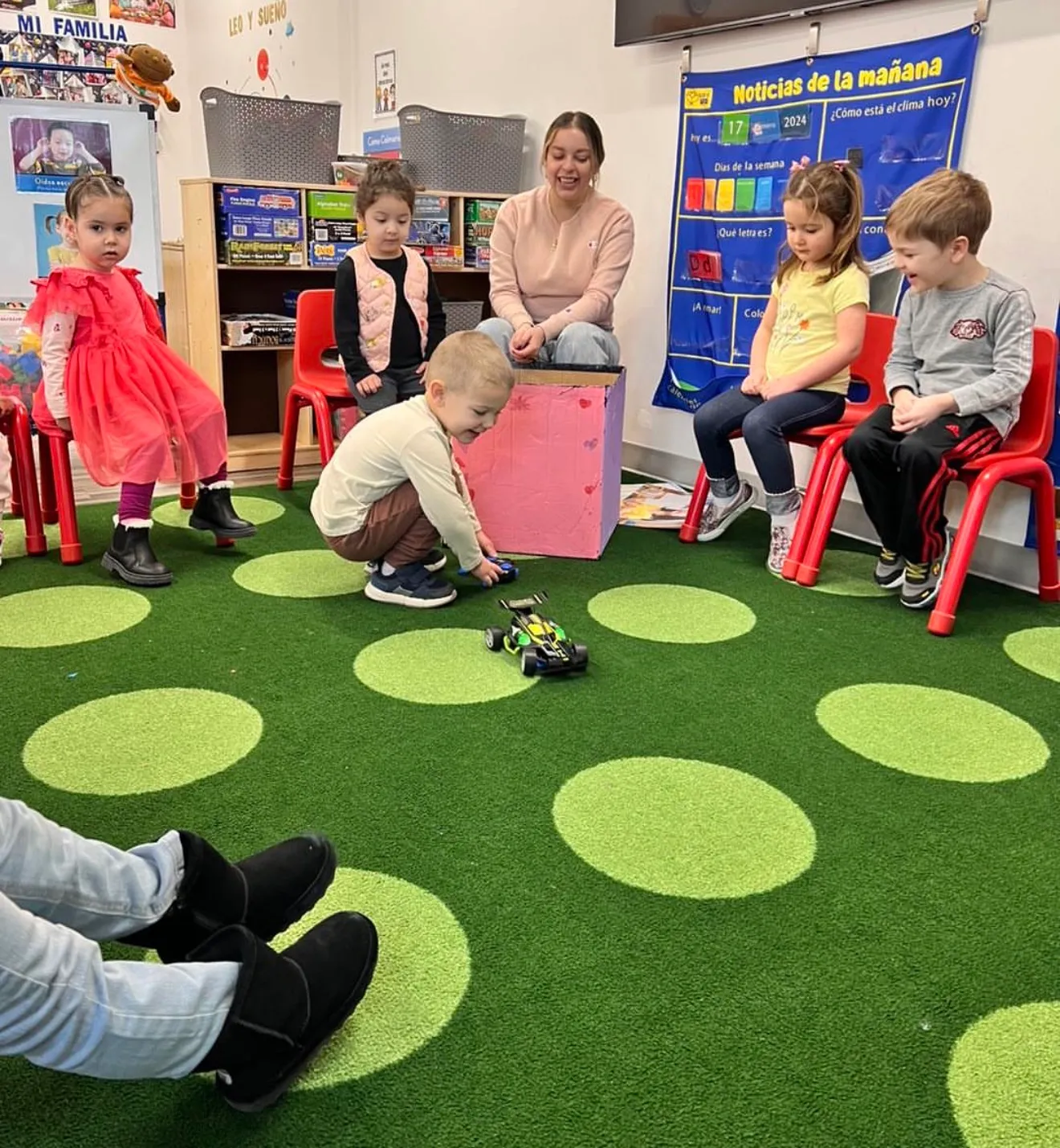
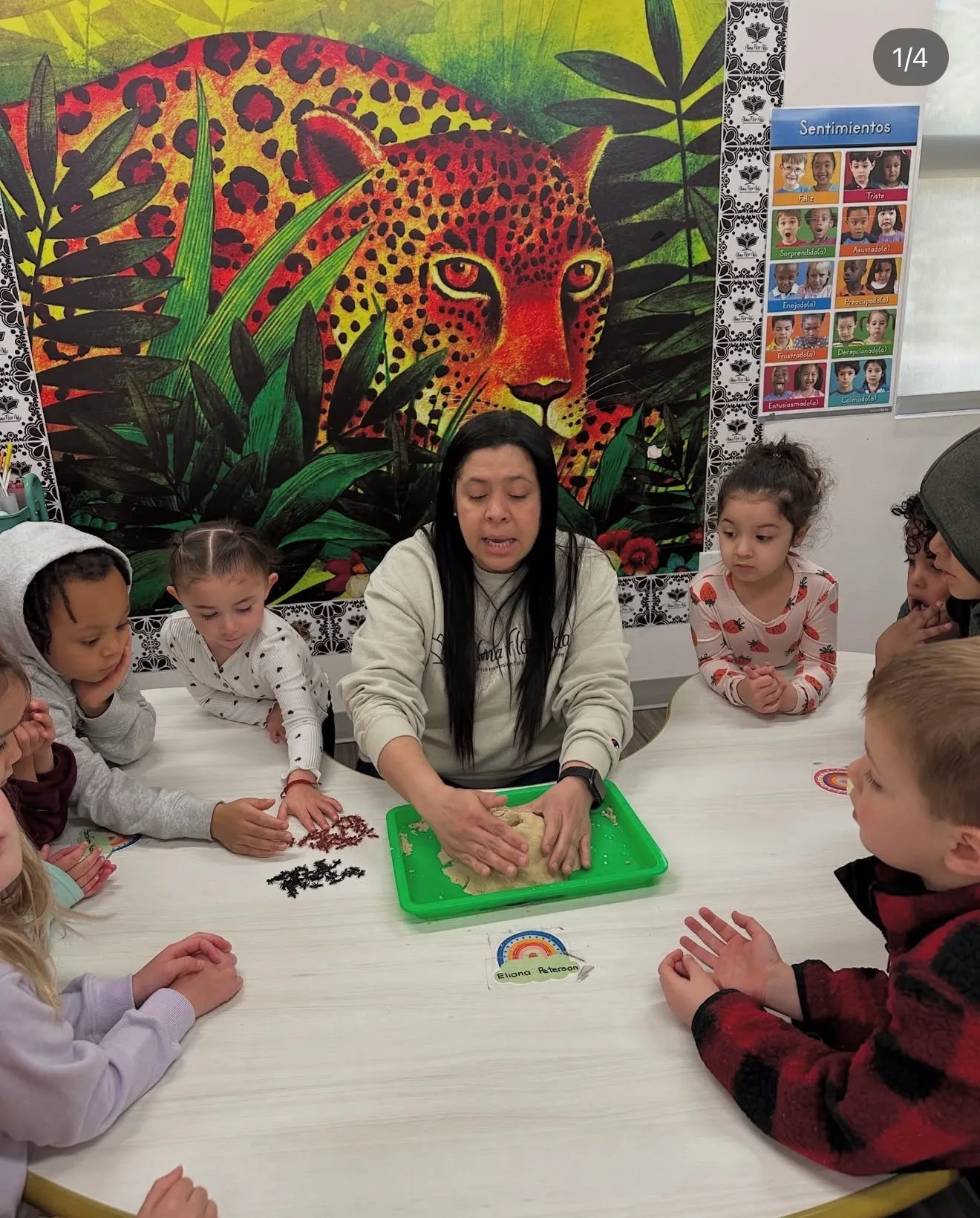
Young children read safety long before they read vocabulary. Tone of voice, a warm face, a predictable routine, and a teacher who narrates what is happening while showing it are what tell a child they are secure. Our native Spanish speaking teachers pair language with gesture, objects, and visuals all day long, so meaning arrives with the words rather than after them. Our 90/10 model is also built to ease children in gradually rather than drop them into the deep end.
If you want to see how the rhythm of the day supports that, our overview of a day at Alma Flor Ada walks through it hour by hour. And if you are worried you cannot reinforce Spanish at home, we wrote a whole piece on whether you need to speak Spanish for immersion to work. The short version is no.
Partner with your child’s teachers
The families who have the smoothest transitions are usually the ones talking with teachers early and often.
- Tell them what soothes your child at home, including the specific words or songs you use.
- Ask for a quick text or photo update mid morning during the first week. Seeing your child happily building with blocks twenty minutes after a tearful goodbye resets the whole day.
- Share anything unusual, like a rough night or a new sibling, so the team can read behavior accurately.
- Ask what their handoff looks like, so your ritual and theirs fit together instead of competing.
Building a school where families are genuine partners rather than spectators is a large part of why we started this academy in the first place.
When adjustment is taking longer than expected
Some children are simply slower to warm, and that temperament is a strength, not a problem. But if your child is still in real distress well past the first month, or the anxiety is spilling into sleep and appetite at home, say so. Talk with your child’s teacher first, and loop in your pediatrician if it continues. That is a reasonable conversation to have, not an overreaction.
Come see the room before the first morning
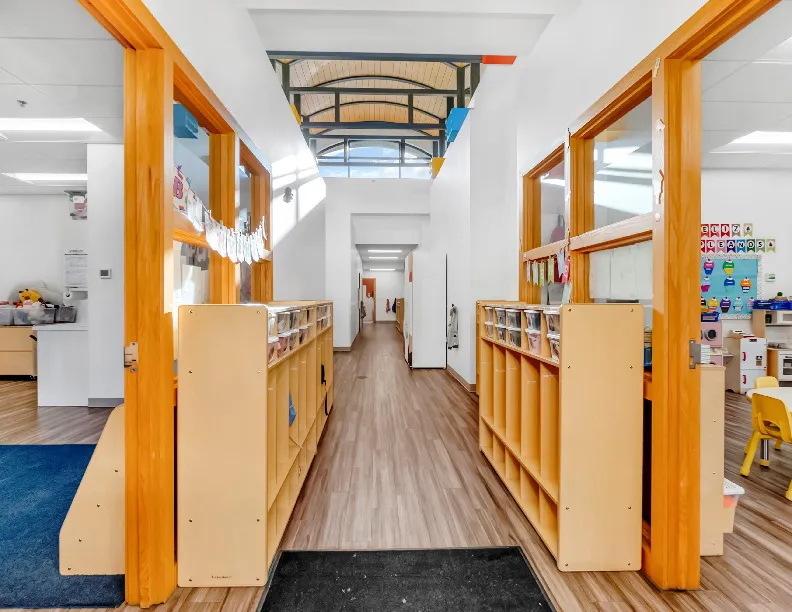
The single best thing you can do for a nervous child, and a nervous parent, is to make the place familiar before day one. Walk the hallway, find the cubby, meet the teacher, and let your child touch the toys.
Come schedule a tour in Woodbury, or if you already know this is the right fit, start your application. We would love to meet your family, and we will take good care of that first goodbye.
Frequently Asked Questions
How long does it usually take a child to adjust to preschool?
Should I stay in the classroom on the first day?
My child is fine at drop off but falls apart at pickup. Why?
Can my child bring a comfort item from home?
About the author
Juliana Capdevila, Parent Engagement Manager & Assistant Director
Juliana Capdevila is the Parent Engagement Manager and Assistant Director at Alma Flor Ada Spanish Immersion Early Learning Academy. Originally from Buenos Aires, Argentina, she is a native Spanish speaker and has lived in Woodbury, Minnesota for 19 years with her husband and two daughters. She holds a Bachelor's degree in Marketing and brings experience in nonprofit work, family relocation support, and business management. Juliana works closely with AFA families every day, helping them understand the immersion program and supporting their children's bilingual journey.
Curious about Spanish immersion for your child?
Schedule a tour of our Woodbury academy. We would love to show you around and answer your questions.