Culture
Hispanic Heritage Month in Preschool: A Family Guide
Hispanic Heritage Month in preschool can open joyful conversations about language, family, and culture. Find thoughtful ideas for Woodbury families today.
Juliana Capdevila
Parent Engagement Manager & Assistant Director
Hispanic Heritage Month in preschool is an invitation to help young children connect language with people, places, stories, and family life. It is not a checklist of flags or a single day of themed crafts. At its best, the month gives children a joyful first look at the variety within Hispanic and Latino communities, while showing them that every family’s language and culture deserve curiosity and respect.
That approach fits naturally in a Spanish immersion setting. Children are already learning that Spanish is a living language used to welcome a friend, sing a song, tell a story, solve a problem, and share a meal. Hispanic Heritage Month gives families and educators another reason to slow down and notice the people and traditions carried through those words.
When is Hispanic Heritage Month, and why does it span two months?
National Hispanic Heritage Month runs from September 15 through October 15. According to the official national Hispanic Heritage Month portal, September 15 connects to the independence anniversaries of Costa Rica, El Salvador, Guatemala, Honduras, and Nicaragua. Mexico marks its independence on September 16, and Chile on September 18.
The observance began as a week in 1968 and expanded to a 30-day period in 1988. Its purpose is broader than commemorating a few dates. It recognizes the histories, cultures, and contributions of Americans whose ancestors came from Spain, Mexico, the Caribbean, Central America, and South America.
For preschoolers, the calendar is simply a starting point. The meaningful work is helping them understand that Spanish connects many communities, but those communities are not all the same.
What can young children learn from the celebration?
Preschoolers can begin to understand that culture is both shared and wonderfully varied. Two families may speak Spanish and still use different words, prepare different foods, enjoy different music, or tell different stories. That is not a contradiction. It is part of what makes the Spanish-speaking world so rich.
Young children do not need a long history lesson to grasp this idea. They learn through details they can see, hear, and feel:
- A picture book set in Cuba may sound and look different from one set in Argentina.
- A song from Mexico may have a different rhythm and purpose than a song from Puerto Rico.
- A family may use a special nickname, greeting, recipe, or saying that carries a story.
- The same Spanish word may be pronounced differently or replaced by another word in a different country.
These small discoveries teach a big lesson: there is no single way to be Hispanic or Latino.
How does cultural learning belong in Spanish immersion?
Language and culture are connected because language carries more than vocabulary. It carries humor, affection, memory, manners, music, and ways of seeing everyday life.
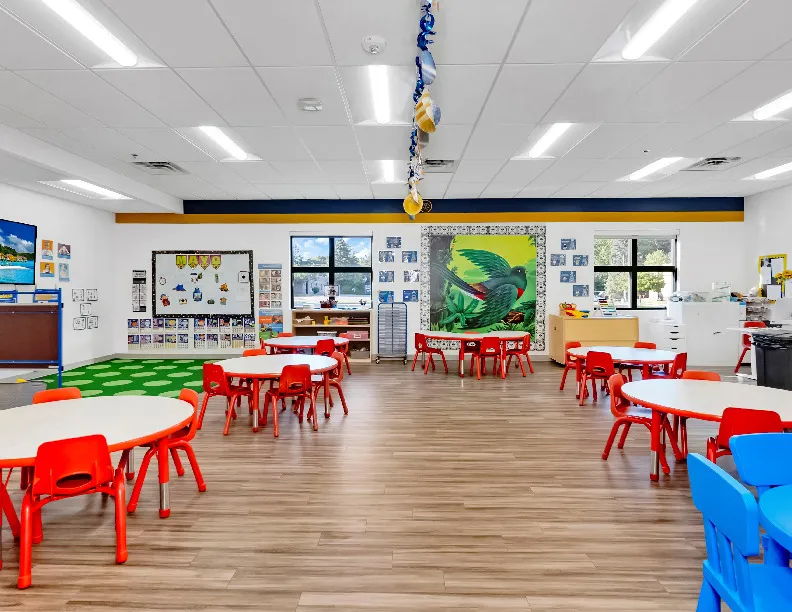
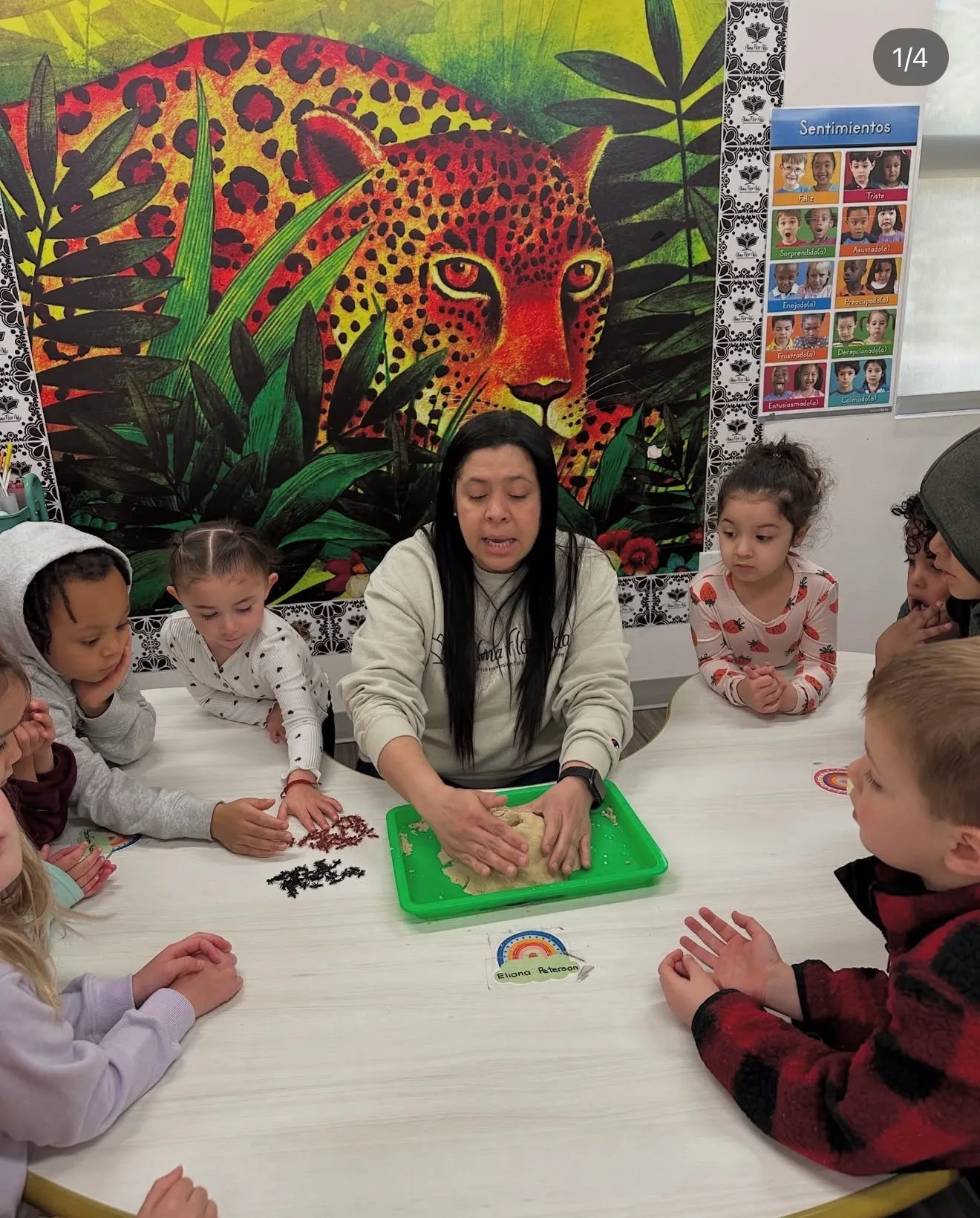
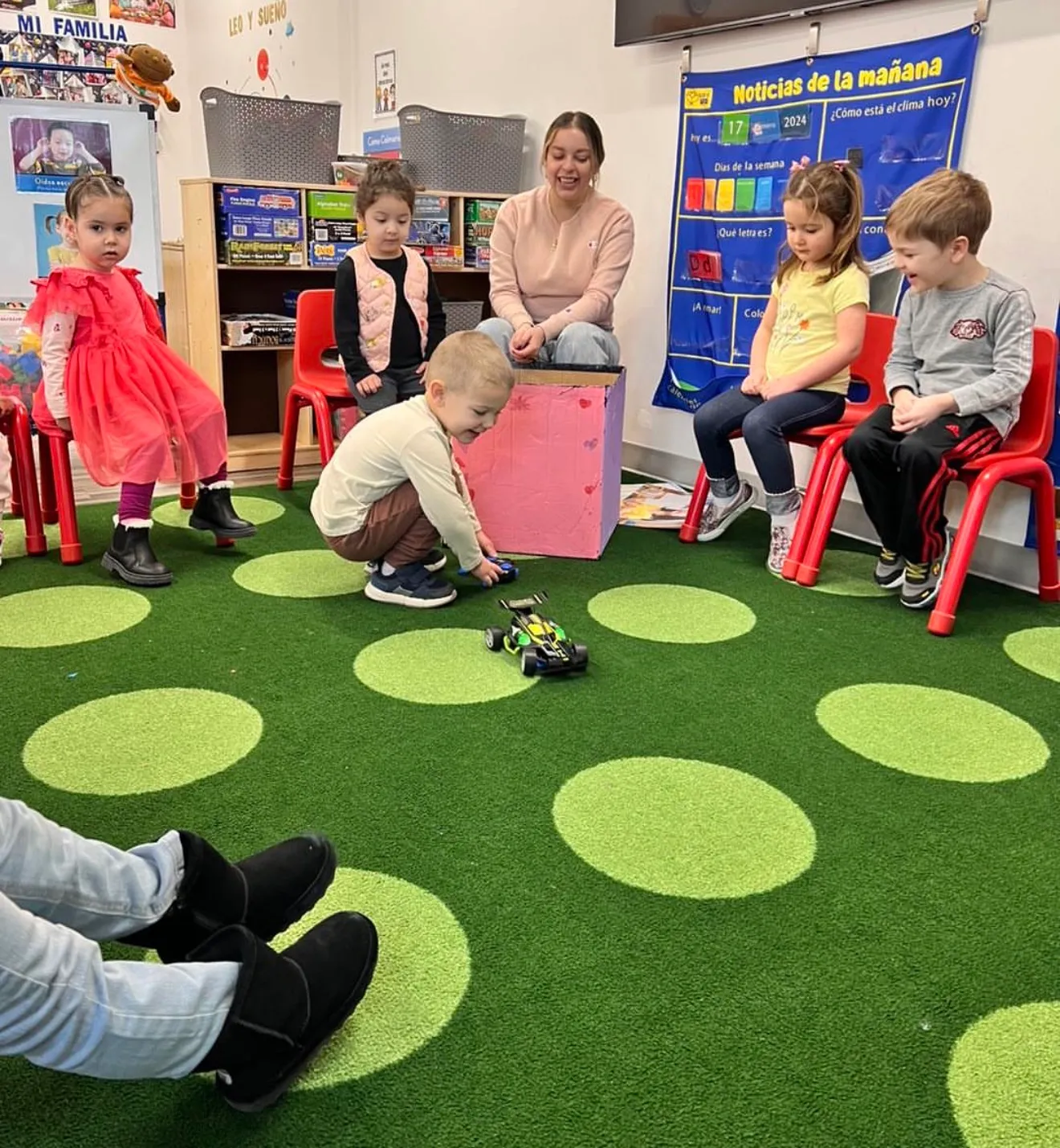
At Alma Flor Ada, children experience Spanish throughout the day through conversation, play, stories, movement, and routines. Our 90/10 Spanish immersion approach helps children build meaning from relationships and context, not from memorizing isolated word lists. Cultural learning works the same way. It becomes more meaningful when it is woven into real experiences instead of presented as a separate performance.
Our academy’s name offers one example. Dr. Alma Flor Ada was born in Cuba and became an educator, scholar, poet, and author of children’s books. Learning about a real person’s life and work gives children a fuller connection than a generic symbol ever could. A person has a family, a place, a voice, and a story.
What are thoughtful ways to celebrate with preschoolers?
Begin with one specific story, song, person, or place, then give children time to explore it. Depth is kinder and more memorable than racing through a different country every day.
Read books that open a real window
Choose picture books created by Hispanic and Latino authors and illustrators, and look for stories in which children and families have full everyday lives. A good reading list can include celebration, humor, imagination, migration, neighborhood life, and quiet family moments.
Pause to notice the setting, the names, the family relationships, and any Spanish words in the text. Ask open questions such as, “What did you notice?” or “What feels familiar to you?” Children do not need to produce a correct interpretation. They need room to observe.
Use music and movement as an entry point
Music lets preschoolers participate before they know every word. Pick a song connected to a named country or community, identify where it comes from, and listen more than once. Clap the rhythm, move together, and notice the instruments.
Naming the source matters. “This song comes from Colombia” teaches more than placing every Spanish-language song into one broad cultural bucket.
Welcome family stories without assigning homework
Families are valuable partners, but no child or parent should be asked to represent an entire culture. An invitation can stay gentle and optional: share a favorite song, record a short story, send the title of a beloved book, or tell us about a word your family uses.
The National Association for the Education of Young Children recommends that educators involve children and families in learning activities and make sure their languages, customs, and cultures are meaningfully reflected in the environment. Its guidance for early childhood educators also emphasizes avoiding stereotypes and learning directly from families.
Connect culture to the ordinary day
Celebration does not have to interrupt learning. It can live inside story time, art, music, dramatic play, and conversation. That is already how young children make sense of their world. You can see how these experiences fit into a typical day at AFA, where Spanish is part of play, routines, meals, movement, and learning.
How can families continue the conversation at home?
You do not need to speak Spanish or plan an elaborate activity. A few specific, repeatable habits are enough to make cultural learning feel natural.
- Let your child choose a bilingual or culturally specific picture book from the library.
- Find the story’s setting on a map and notice that Spanish is spoken across many regions.
- Listen to a children’s song in Spanish, learn where it comes from, and play it again later in the week.
- Ask relatives about a family saying, song, recipe, or tradition, including traditions from your own background.
- Practice saying authors’ and characters’ names carefully instead of shortening unfamiliar names.
The last idea may seem small, but names are often a child’s first lesson in whether differences will be treated with patience. When an adult says, “Teach me how to say it,” a child sees respect in action.
What does respectful celebration look like after October 15?
The strongest celebration does not end when the month does. Books by Hispanic authors can stay on the shelf. Spanish music can stay in the rotation. Families can keep sharing stories. Children can continue seeing many cultures represented in their classroom throughout the year.
Hispanic Heritage Month gives us a useful moment to pay closer attention. The larger goal is a learning community where culture is not a special topic brought out once a year. It is part of how children understand themselves, care for one another, and grow curious about the wider world.
If you would like to see what that looks and sounds like in a full-day Spanish immersion classroom, schedule a tour of Alma Flor Ada in Woodbury. You do not need to speak Spanish at home. Bring your questions, and we will help you picture how your child can belong here.
Frequently Asked Questions
When is Hispanic Heritage Month?
How can preschoolers learn about Hispanic Heritage Month?
Do parents need to speak Spanish to celebrate at home?
How can families avoid stereotypes during cultural celebrations?
About the author
Juliana Capdevila, Parent Engagement Manager & Assistant Director
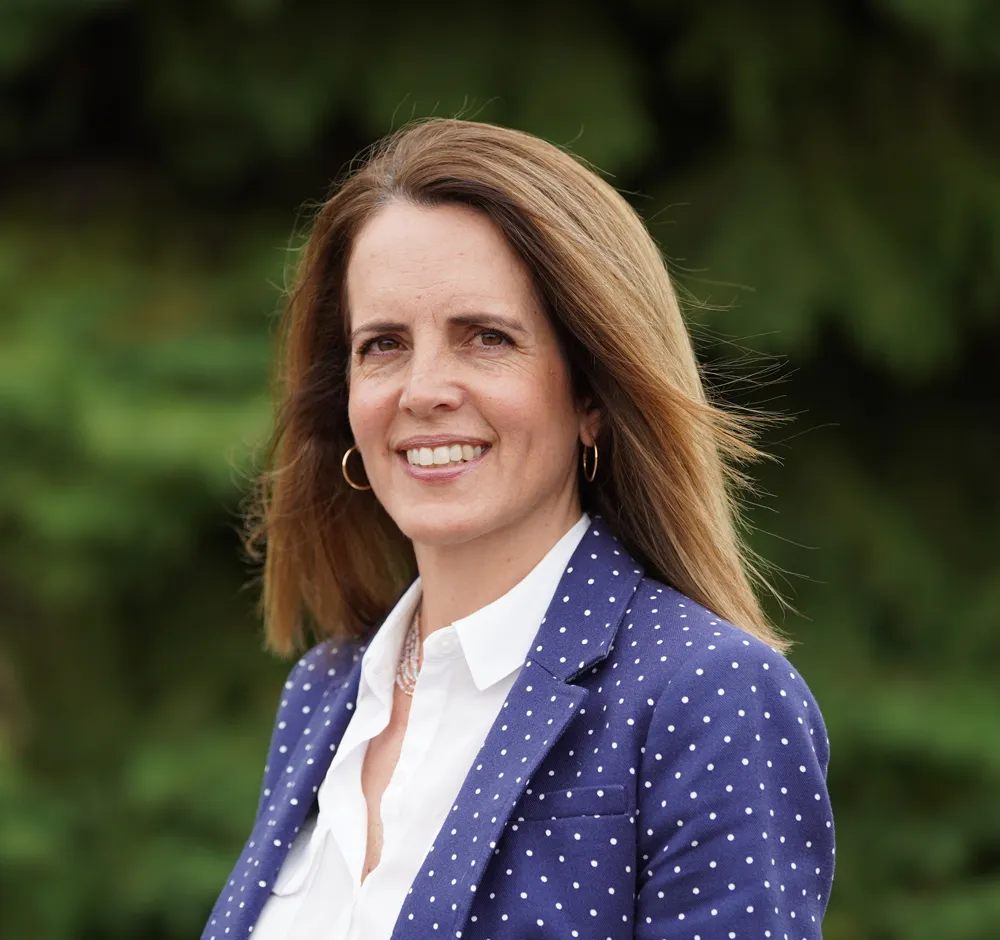
Juliana Capdevila is the Parent Engagement Manager and Assistant Director at Alma Flor Ada Spanish Immersion Early Learning Academy. Originally from Buenos Aires, Argentina, she is a native Spanish speaker and has lived in Woodbury, Minnesota for 19 years with her husband and two daughters. She holds a Bachelor's degree in Marketing and brings experience in nonprofit work, family relocation support, and business management. Juliana works closely with AFA families every day, helping them understand the immersion program and supporting their children's bilingual journey.
Curious about Spanish immersion for your child?
Schedule a tour of our Woodbury academy. We would love to show you around and answer your questions.