Early Learning
A Day in the Life at a Spanish Immersion Academy
A Spanish immersion preschool daily schedule from drop-off to pickup at Alma Flor Ada in Woodbury, MN: circle time, centers, meals, rest, and more.
Melissa Thaemert
School Director
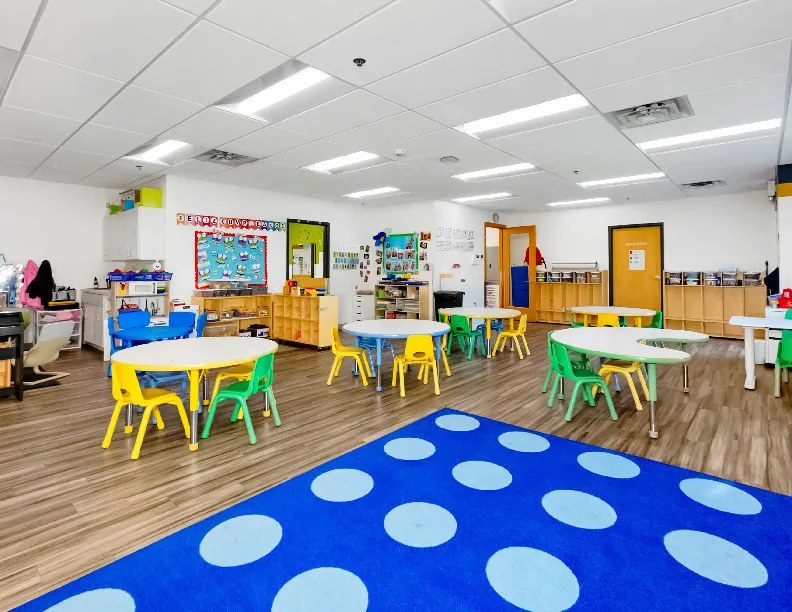
Wondering what a real Spanish immersion preschool daily schedule looks like? At Alma Flor Ada in Woodbury, a typical day flows from a warm Spanish greeting at drop-off through circle time, learning centers, outdoor play, lunch, rest, and afternoon enrichment, all the way to pickup. Spanish is woven into every moment, not taught as a separate subject. Here is how a full day actually unfolds, hour by hour.
As School Director, I walk many parents through this rhythm during their first visit. The structure is intentional, but the feeling is joyful and unhurried. Children thrive on knowing what comes next, and our consistent daily flow is part of what makes immersion work so naturally.
What happens at drop-off and before care?
The day can start as early as 6:30 a.m. for families who use before care, with core hours beginning at 8:00 a.m. Children who arrive early settle into quiet play, books, and a calm welcome before the full group gathers.
From the very first hello, the language of the room is Spanish. A teacher greets each child with “buenos días” and a warm smile, helps them hang up their things, and eases them into the morning. That gentle, predictable start matters. A child who feels welcomed and secure is a child who is ready to learn. You can see how this fits into our broader program structure across all five levels.
What is morning circle time like?
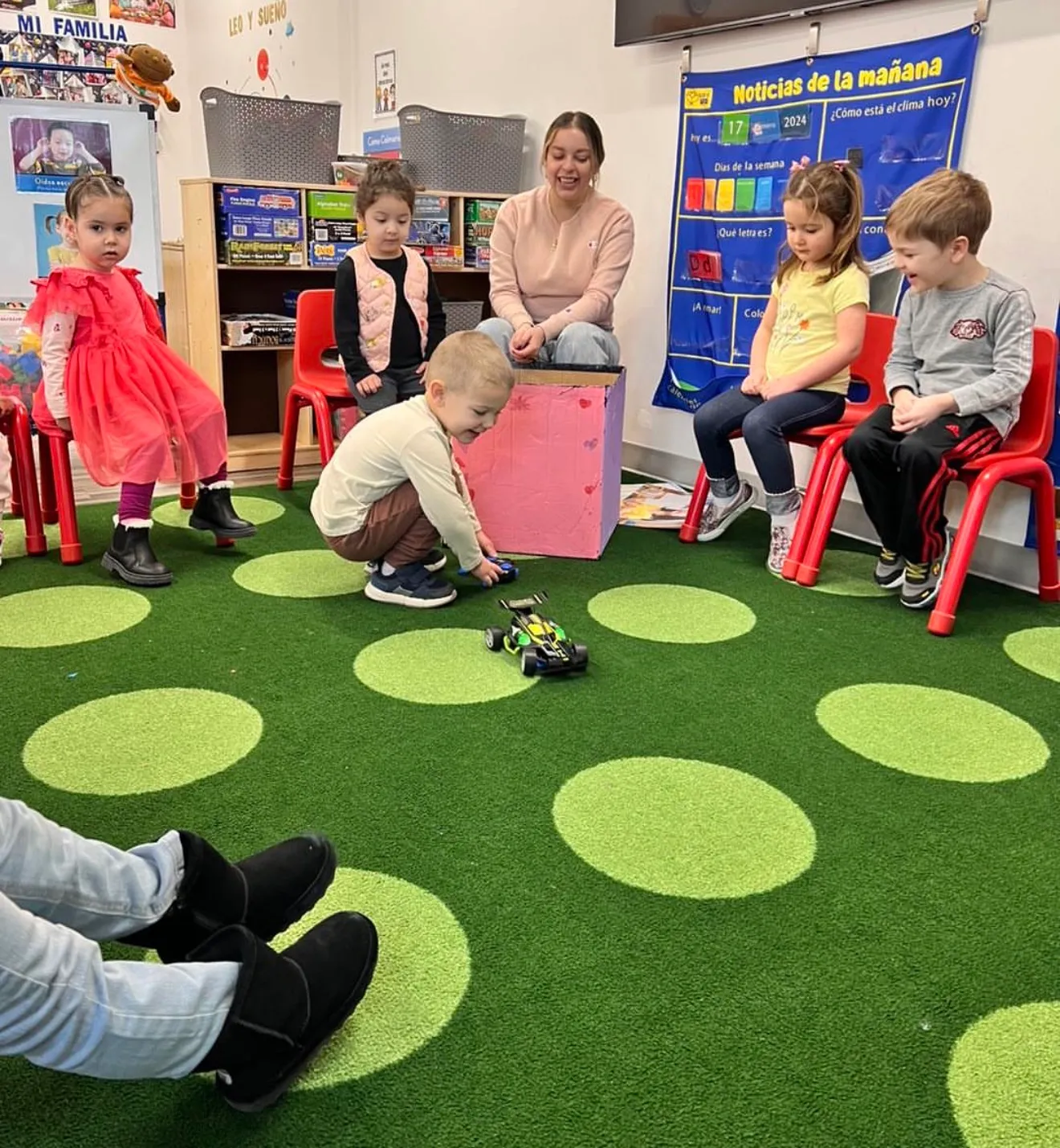
Morning circle, or “la asamblea,” is the anchor of the day, usually beginning around 8:30 a.m. The whole class comes together on the rug to start the day in Spanish through song, movement, and shared routines.
During circle, children:
- Sing the days of the week and greeting songs in Spanish
- Track the calendar and count the date together
- Talk about the weather, “el clima,” and look out the window
- Move and stretch with action songs that wake up the body
None of this feels like a lesson. Children are singing, clapping, and laughing, and the Spanish comes along with the fun. Repetition day after day is what turns “lunes, martes, miércoles” into vocabulary they own for life.
What do learning centers look like?
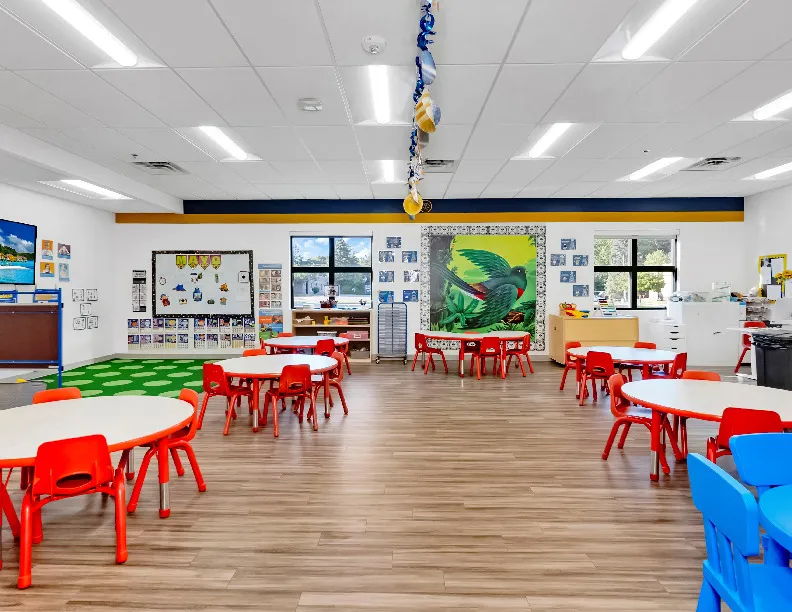
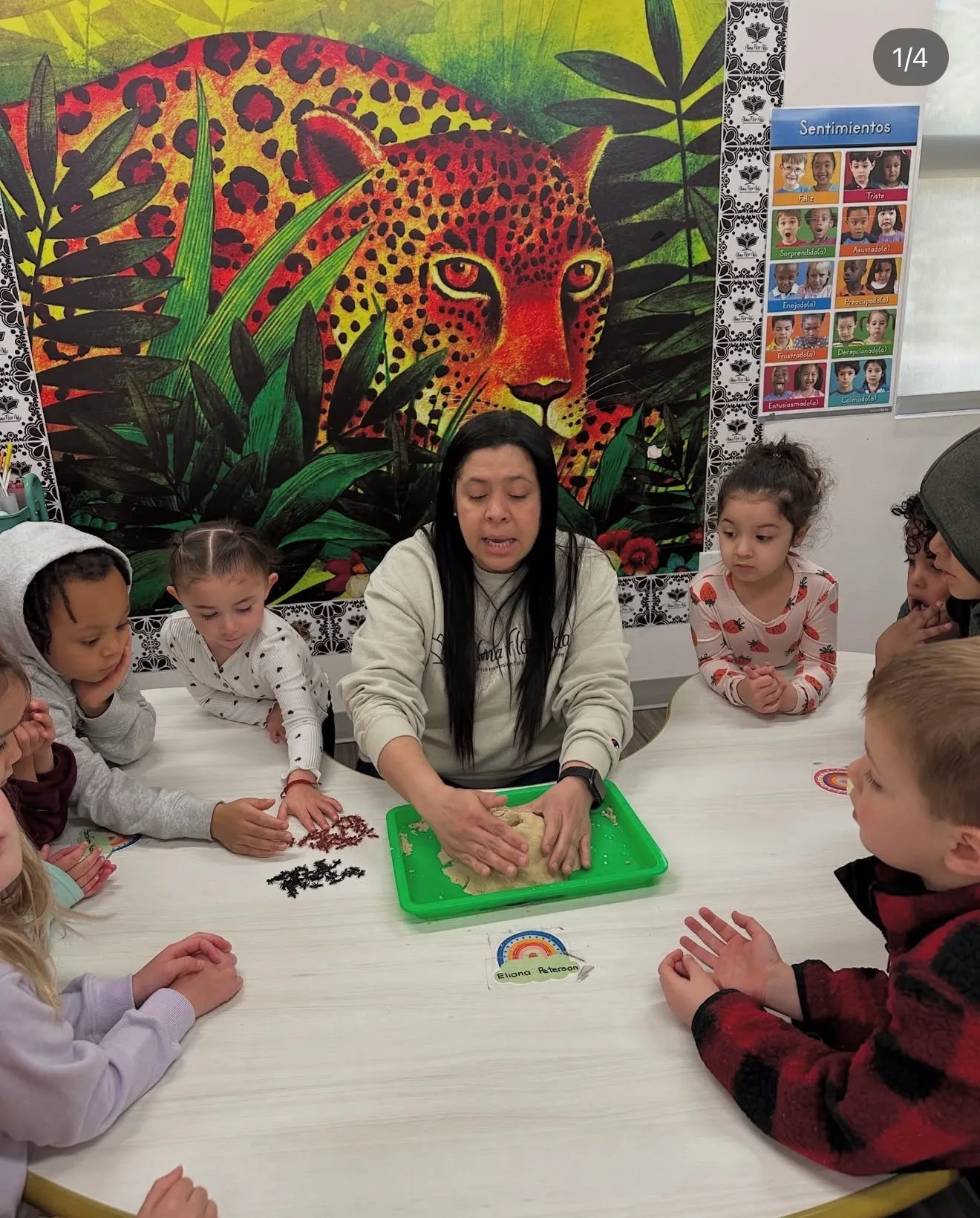
After circle, children move into learning centers, the hands-on heart of the morning. Centers are small, play-based stations where children choose activities like building, art, dramatic play, puzzles, sensory bins, and early literacy and math games.
Teachers float between stations, narrating, asking questions, and extending play entirely in Spanish. A child stacking blocks hears “¿cuántos bloques?” A child in the play kitchen is invited to “preparar la sopa.” This is where so much language acquisition happens, because the words are attached to things children genuinely care about doing. Our youngest learners build these foundations from 16 months, which we describe in our guide to toddler Spanish immersion at 16 months.
When do children play outside?
Outdoor play is a daily priority, weather permitting, and it is one of children’s favorite parts of the day. Running, climbing, and playing together is essential for healthy development, and at AFA it is also rich language time.
Outside, Spanish keeps flowing. Children hear “tu turno” at the slide, count as they jump, and call out colors and shapes they spot on the playground. Movement and fresh air reset everyone for the afternoon, and the language never takes a break.
What are meals and lunch like?
Snacks and a full lunch are included every day, so you never pack a thing. Meals are not a break from immersion. They are some of the most natural language moments of the day.
Around the table, children hear “vamos a lavarnos las manos” before eating, request “más agua, por favor,” and chat with friends and teachers in Spanish. Sharing food together also builds the warm, family-style culture we care about deeply. As we like to say, tu familia es nuestra familia, and that spirit shows up most clearly at the lunch table.
What does rest time look like?
After lunch comes a calm rest period, sized to each child’s age and needs. Lights dim, soft music plays, and the energy of the room slows down on purpose.
Younger children nap, while older children who have outgrown naps rest quietly with a book or a soothing activity. Even rest has a gentle bilingual touch, from quiet Spanish lullabies to the calm cues teachers use to settle the room. It is a predictable, comforting pause that helps children recharge for the afternoon.
What happens in the afternoon?
Afternoons are for enrichment: art, music, movement, and cultural activities that bring the Spanish-speaking world to life. This is when creativity takes center stage.
A typical afternoon might include:
- Painting or crafts, with colors and materials named in Spanish
- Music and dance, singing songs from across Latin America and Spain
- Stories and dramatic play that introduce traditions, holidays, and culture
- Hands-on activities that blend early STEM thinking with language
Because our teachers are native Spanish speakers, children get real cultural context, not just vocabulary. The afternoon is where the “why” of immersion really shines, growing kind, curious, globally aware kids. Families exploring next steps can learn more about our Pre-K program and how the day deepens as children grow.
How does pickup and after care work?
Core hours end at 3:30 p.m., when many families pick up. For those who need more time, after care runs until 6:00 p.m. with relaxed play, books, and a calm wind-down.
At pickup, teachers share a quick note about the day, a new word your child used, a friend they played with, a project they were proud of. Children often surprise their families with the Spanish they have picked up, and those little moments are some of the most rewarding parts of the immersion journey.
If you would like to see a day like this in person, we would love to show you around. Schedule a tour of our Woodbury academy or call us at 651-999-3952 to watch immersion in action.
Frequently Asked Questions
What are your hours?
Do you provide meals?
What does rest time look like?
How is Spanish used throughout the day?
About the author
Melissa Thaemert, School Director
Melissa Thaemert is the School Director at Alma Flor Ada Spanish Immersion Early Learning Academy in Woodbury, Minnesota. She is a Minnesota educator with 24 years of experience as an elementary teacher, instructional coach, and administrator, and has served as an elementary administrator for the past nine years. She holds advanced degrees in educational leadership, professional studies, adult learning, and elementary education.
Curious about Spanish immersion for your child?
Schedule a tour of our Woodbury academy. We would love to show you around and answer your questions.